Inside the DEADLIEST POLICE OPERATION in Rio de Janeiro, the battle with Comando Vermelho revealed near-military arsenals, contested terrain, and an international backlash
Rio de Janeiro experienced one of the most violent and controversial security operations in its recent history when state forces launched Operação Contenção against the Comando Vermelho faction. What officials described as a response to an armed, territorial insurgency quickly became the DEADLIEST POLICE OPERATION in the city in years, drawing international headlines, political debate, and demands for investigations.
The operation unfolded in remote, mountainous forest zones where police say heavily armed CV units had established fortified camps, trenches, and logistics hubs. Authorities described the scene as an “active combat zone,” not a neighborhood, and said they encountered guerrilla-style positions that forced a military-style response, according to local government briefings and reporting by Agência Brasil and the Financial Times.
Numbers that shocked the world
Early tallies of the death toll varied as bodies were retrieved from the forest. InfoMoney reported, “119 dead (initial count). Then 121. Then 130+.” Swissinfo and Folha de S.Paulo also described the scene as a running battle, and government figures said that nearly 100 assault rifles were seized, listing AKs, AR-15s, and sniper rifles among the weapons, according to the Government of Rio. The scale of the operation, and the weaponry recovered, reinforced the authorities’ argument that they were facing a parallel armed force, not loosely organized street gangs.
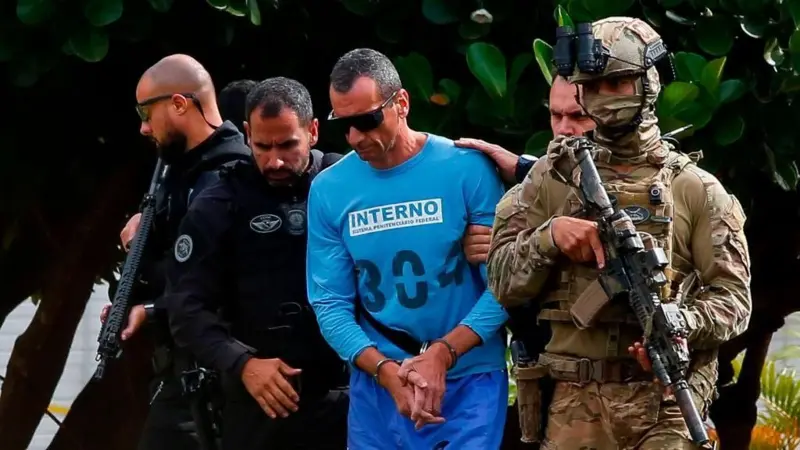
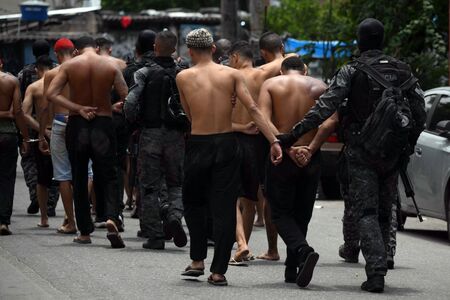
Journalistic accounts and official statements converged on one stark fact, Reuters reported, that despite the high death toll, “no major CV leader was captured or killed,” a point that many analysts say highlights the limits of targeting foot soldiers while command structures remain intact. CNN Brasil likewise noted that “None of the 115 identified dead were named in the judicial decision that authorized the operation,” underscoring the difficulty of matching battlefield deaths to judicially approved targets.
Battlefield or massacre, the political split
International media framed the event in starkly different terms. The Guardian called it “a slaughter,” while El País quoted President Lula using the Spanish word “matanza,” translated as “massacre.” CBS News described it as a “raid that triggered protests and outrage.” Those reactions were immediate and intense, drawing NGOs and foreign outlets into a debate over proportionality, procedure, and human rights.
Domestically, voices on the right emphasized the operation as a necessary reclaiming of state authority. Conservative commentators and some editorials argued that when criminal groups wield military-grade weapons and control territory, the State must act decisively to restore its monopoly on force. Gazeta do Povo noted the operation had “acertos e falhas,” that is, hits and misses, but that its scale reflected the urgency of the problem.
On the left, critics labeled the killings evidence of police brutality, racial profiling, and the failure of a security model that relies on lethal force. Human rights groups demanded investigations and international scrutiny. Yet multiple outlets, including the Financial Times and Folha de S.Paulo, reported that police entered a combat situation initiated by armed militants, who according to those sources fired first from fortified positions.
What the sources agree on
Reporting aggregated from Reuters, Financial Times, The Guardian, El País, CNN Brasil, Swissinfo, Agência Brasil, Folha de S.Paulo, InfoMoney, Nexo Jornal, Gazeta do Povo, Government of Rio, CBS News, and Times of India forms a consistent outline. First, the operation was massive, historic, and deadly. Second, the CV leadership largely escaped direct capture or elimination. Third, the terrain and arsenals turned the raid into open combat instead of a targeted law enforcement sweep. Fourth, global reactions were swift, often moralizing, and sometimes detached from on-the-ground complexity. Finally, the operation illustrated how much of Rio had been operating under parallel criminal governance for decades.
Sources also pointed to practical failures. Reuters and local papers reported that while weapons and supplies were seized, the absence of high-level captures means the command structure remains. Analysts warn that eliminating foot soldiers will not dismantle an organization that retains financing, leadership, and recruitment capabilities.
Choices ahead, and why this matters
This episode crystallizes a painful choice for Brazil, and for Rio in particular. If the State insists on reasserting control with force, it must invest in sustained intelligence, judicial processes that connect battlefield results to legal accountability, and follow-up operations aimed at dismantling command networks. If it continues to avoid acknowledging the quasi-military nature of these factions, responses will keep swinging between emergency crackdowns and public criticism, without a durable solution.
The operation also forces a reexamination of familiar narratives. For years, many explanations for violence in the favelas emphasized poverty and lack of opportunity. While those factors matter, the recent operation exposed a different face of the problem, an organized, well-armed group that taxes local economies, administers its own order, and fields combat tactics. That reality complicates calls for purely social or humanitarian interventions, even as it heightens the urgency for transparent investigations into every death linked to the operation.
As international scrutiny continues, and calls for probes multiply, Brazilian authorities and civil society face a test of accountability. Transparent judicial inquiries that match actions on the ground with legal authorization will be essential to address accusations of excess, and to validate legitimate efforts to reclaim territory from criminal control.
What remains certain is that this was not a small police raid. This was a major, violent moment that exposed the scale of organized crime in Rio, and forced Brazilians and the world to confront the question of how to restore state authority without abandoning rule of law and human rights. The DEADLIEST POLICE OPERATION label will follow this episode as investigators, politicians, and communities try to make sense of the cost, the tactics, and the path forward.
The aftermath will be judged both in courts and in neighborhoods, and the central debate will remain: can Brazil combine force, intelligence, and justice to dismantle parallel powers, or will cycles of violence and outrage repeat until the deeper political choices are made?