Chaos in Belém forces rapid Blue Zone evacuation, raises generator, wiring and venue readiness concerns ahead of final climate negotiations
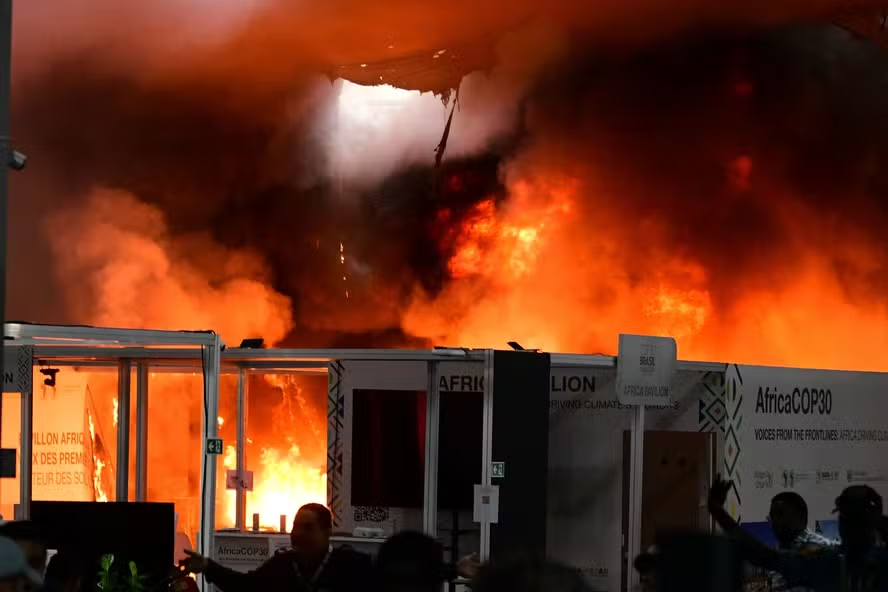
A sudden blaze inside the restricted negotiation area at COP30 in Belém interrupted talks and highlighted safety gaps just days before the summit was due to conclude. The incident, described by many participants as chaotic and frightening, remade a diplomatic arena into an active emergency scene and sharpened questions about infrastructure, emergency planning, and the optics of a fire in the heart of global climate negotiations.
What happened, and who responded
At about 14:00 local time, witnesses said they heard shouts of “fire!” as black smoke filled corridors inside the Blue Zone, the area where diplomats and negotiators meet. Security teams and local firefighters moved quickly. The Brazilian Corpo de Bombeiros said they “used 244 fire extinguishers, hoses, and mobilized 56 agents.” Officials said the blaze was “controlled in just six minutes,” but even within that short window, panic spread among delegates and volunteers.
The fast response limited what organizers described as physical harm, though the human impact was more visible. Authorities said “13 people were treated for smoke inhalation.” Brazil’s Tourism Minister Celso Sabino told journalists on-site that, remarkably, “no one was seriously injured.” UN and COP30 leadership noted the fire “left only minor damage” and that the evacuation was carried out “fast.” Still, the scene left many shaken and raised urgent operational questions.
Cause, location, and material risks
Local officials and the summit presidency said investigators suspect a technical fault may have started the blaze. Pará Governor Helder Barbalho said authorities suspect either a generator failure or a short circuit in a booth. Reports indicate the fire began near the China Pavilion and affected adjacent structures, including pavilions for African delegations and youth groups.
Those pavilions are temporary structures, some made with reinforced canvas or fabric. Organizers said they were built with flame-resistant materials, yet the fire still consumed parts of the coverings and spread quickly across connected booths. The use of temporary electrical systems and generators inside compact, high-traffic tents now appears to be a central safety concern. Experts and participants warned that exposed wiring, open plywood floors, and parts of the site still under construction may have increased risk.
Evacuation, inspections, and the Blue Zone question
Volunteers and security staff helped guide people out of the Blue Zone, though testimonies describe confusion about exit routes and mixed messages from guards. One volunteer, Gabi Andrade, recalled her shock, saying, “It’s so sad for us … we all worked so hard.” The UNFCCC sent delegates a message saying that while local safety checks were underway, as long as the area was operating under the “authority of the host country” (Brazil), it could not yet be considered a Blue Zone.
After inspections, COP30 organizers issued a note that operations in the Blue Zone would resume “as of 20:40 local time,” though uncertainty remained about whether all negotiations would restart the same evening, or if delays would ripple into the summit’s final hours. The clock was pressing, since COP30 was scheduled to wrap up on Friday, and many negotiators hoped to finalize contentious items on climate finance and fossil-fuel transition.
Political fallout, symbolism, and next steps
Beyond immediate safety concerns, the incident has political and reputational consequences. The Blue Zone is the summit’s core political arena, the space where countries try to draft final agreements on emissions targets and fossil fuel phase-out. That the fire erupted there felt more than accidental to some observers, who described the event as a stark, literal symbol of fragility at a moment when trust and logistics are already strained.
Observers quoted the UN Secretary-General, saying, “We are down to the wire and the world is watching,” capturing the urgency delegates felt as they returned to tense talks. Activists and Indigenous delegations, who have already protested at the summit, may use the episode to press for stronger accountability and to spotlight how fragile the negotiating process can be when infrastructure and planning fail.
In practical terms, authorities have promised an investigation into the origin of the fire, and organizers are likely to face scrutiny over venue readiness, wiring and generator placement, and emergency protocols. Critics argue host countries, sponsors, and UN bodies must tighten standards for temporary structures, certify temporary electrical systems more rigorously, and ensure full completion and safety checks before opening high-stakes negotiation zones.
The incident also exposed the emotional toll on volunteers and staff who helped build the site. One volunteer’s remark, “It’s so sad for us … we all worked so hard,” summed up local disappointment. For Brazil, the blaze is a reputational test: while spotlighted for hosting, the country now must show it can keep delegates safe and preserve the integrity of the COP process.
As talks attempt to resume, the immediate questions are practical, and the longer-term questions are institutional. Will the inquiry identify technical faults that can be fixed quickly, and will it recommend immediate changes to how temporary COP zones are built and powered? Will delegates be willing to push forward with fragile negotiations after an event that underscored how physical vulnerabilities can intersect with political ones?
Whatever the technical findings, the imagery of smoke inside the Blue Zone has already become a potent reminder that climate diplomacy operates in a tense environment. For many, the episode was both literally and symbolically disruptive, a brief emergency that exposed broader structural weaknesses. With the summit’s end approaching, organizers, investigators, and negotiators must now balance the urgency of finishing talks with the need to ensure safety, accountability, and renewed trust.