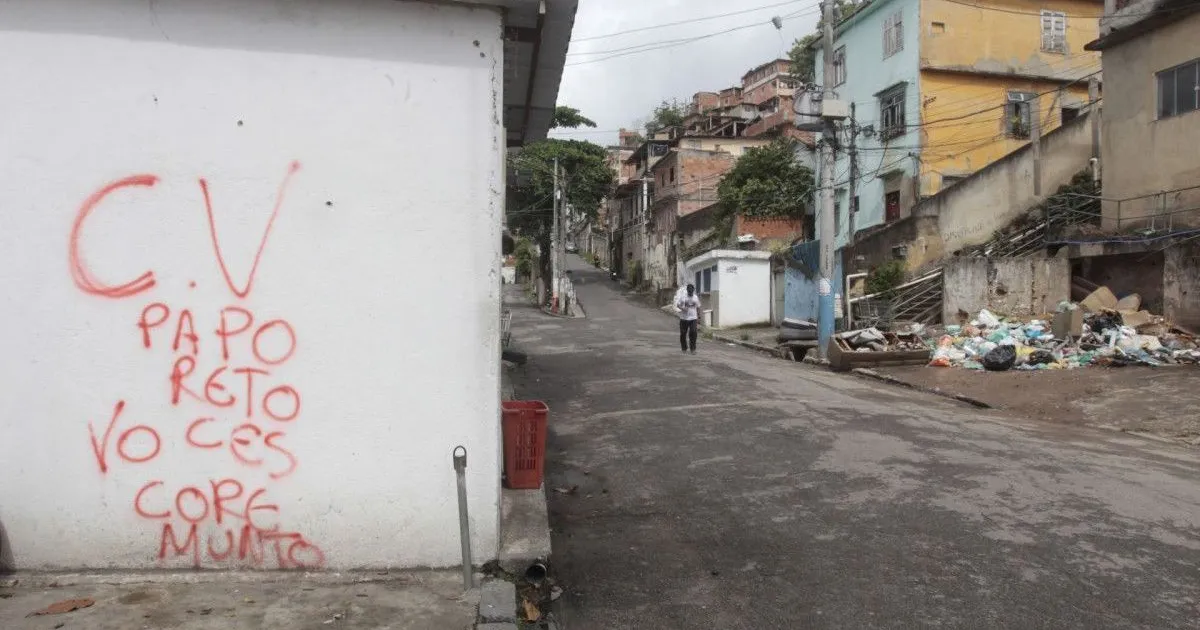
FBSP research shows organized crime factions in the Amazon rose from 178 cities in 2023 to 344 in 2025, with the Comando Vermelho expanding while PCC slightly declines
New data from the Fórum Brasileiro de Segurança Pública, or FBSP, shows a sharp expansion of organized crime factions in the Amazon region over the past two years. The report traces a steady increase in the number of municipalities reporting the presence of criminal groups, and highlights a clear shift in the regional balance of power.
What the numbers say
According to the FBSP, “of the 772 cities of the Amazônia Legal, 178 cities had influence of criminal factions in 2023; the number rose to 260 in 2024. The 2025 count identified 344 cities with faction presence.” Those figures show that organized crime factions in the Amazon now affect nearly half of all municipalities in the region.
The report breaks down the presence of specific groups. It notes that 286 municipalities report the presence of the Comando Vermelho, or CV, a rise described by the FBSP as “an increase greater than double the 2023 record.” By contrast, the FBSP records a slight drop for the Primeiro Comando da Capital, or PCC, from 93 municipalities to 90.
Comando Vermelho’s geographic advance
The FBSP points out that the Comando Vermelho is present in every state of the Amazon region, and has advanced into areas where other factions had previously been dominant. The report states that “there are 202 municipalities dominated exclusively by the group in the Amazônia Legal.” It also documents growth in Pará, and confirms that the CV is present in 85 municipalities in Mato Grosso, where it holds hegemony in 71 municipalities.
These shifts show how organized crime factions in the Amazon are not static, but adapt and expand into new territories, often capitalizing on weak state presence, logistical corridors, and local disputes.
Scope and diversity of groups
The FBSP lists 17 factions active in the Amazon, specifying that they include 14 national groups and three foreign groups. The report also mentions that the Rio-based group ADA, Amigos dos Amigos, was observed operating in association with B40 in some Maranhão municipalities, but “because it does not operate autonomously in any locality, it was not counted as an active faction.”
From a structural perspective, the FBSP highlights that, of the 772 municipalities surveyed, 258 are led by only one faction, and 86 have the presence of at least two organizations. These patterns reflect both monopolies of control and zones of contestation, which can result in spikes in violence and civilian displacement.
State-level impact and hotspots
At the state level, the report identifies important concentrations. The FBSP records that the state of Acre shows the highest penetration, with presence of factional actors in 100% of its 22 municipalities. Roraima follows with faction presence in 80% of its 15 municipalities.
Mato Grosso emerges as the state with the largest total number of affected municipalities, the FBSP says, recording that 92 of the state’s 141 municipalities report at least one faction, representing 65.2% of the state. These figures point to a widespread reach for organized crime factions in the Amazon, and to different regional dynamics that require tailored responses.
Implications and what to watch next
The expansion of organized crime factions in the Amazon raises several concerns for public security, environmental protection, and local governance. As the FBSP numbers show, the CV’s expansion is the most prominent trend, while the PCC’s slight decline indicates that territorial control is shifting rather than uniformly increasing for all groups.
Policymakers and security forces will need to consider a mix of law enforcement, community engagement, and regional cooperation to address these trends. The FBSP’s data, including the explicit counts and state breakdowns quoted above, provides a baseline for tracking whether interventions curb the spread of organized crime factions in the Amazon.
Key data points from the FBSP report, translated: “of the 772 cities of the Amazônia Legal, 178 cities had influence of criminal factions in 2023; the number rose to 260 in 2024. The 2025 count identified 344 cities with faction presence.” “286 municipalities report the presence of the Comando Vermelho, an increase greater than double the 2023 record,” and the PCC fell “from 93 to 90.” The FBSP confirms “17 factions are active in the Amazon, 14 national and three foreign,” and details state-level figures such as 100% of Acre’s 22 municipalities and 92 of Mato Grosso’s 141 municipalities, representing 65.2%.
For readers tracking the spread of organized crime factions in the Amazon, the FBSP report is a stark reminder that criminal influence continues to grow in geographic scope. The coming months will be critical to see if coordinated policy and enforcement responses can reverse these trends, or if the footprint of violent groups will expand further into already vulnerable communities.