
A Comprehensive Investigative Report by Alexandre Andrade “FalloutObserver”
Public security, in any democracy, is never a simple matter of legislation or police strategy; it is a battlefield of narratives, principles, and ideological boundaries. Among the many tensions that cross this field, one of the most persistent is the repeated resistance from sectors of the political left to legislative initiatives aimed at strengthening punitive measures against organized crime. This resistance, observed in several countries and documented across respected publications, is not accidental nor rooted in simplistic motivations, but the product of a historical, philosophical, and institutional tradition that prioritizes civil liberties, human rights, and skepticism toward the punitive capacities of the State. At the same time, another dimension of this debate unfolds behind the concrete walls of penitentiaries: organized criminal groups exert enormous influence inside prisons, frequently adopting political language that resembles the same discourse promoted by human rights activists and left-leaning sectors of society. This proximity has fueled suspicion and controversy, often framing public debate in ways that obscure rather than clarify the actual structural dynamics at play.
Across numerous publications, such as The Guardian in the United Kingdom, El País in Spain, Folha de S.Paulo in Brazil, and the New York Times in the United States, an observable pattern emerges: left-leaning political groups consistently oppose legislation that increases sentences, expands the power of police forces, or introduces exceptional legal mechanisms such as anti-terrorism classifications for gang-related crimes. For instance, The Guardian reported in 2020 that Labour MPs had clashed with Conservative leaders regarding stricter sentencing policies, arguing that such measures lacked evidence-based effectiveness and threatened to deepen mass incarceration. The Spanish newspaper El País published several analyses in 2018 documenting the position of PSOE and Unidas Podemos against reforms that targeted gang-related violence, claiming these policies represented “punitivist shortcuts” that failed to address structural causes of crime. In Brazil, Folha de S.Paulo wrote in 2017 that left-wing parties resisted legislative proposals aimed at isolating members of large criminal factions in high-security units, defending the position that such practices amounted to human rights violations. In the United States, the New York Times highlighted how Democrats repeatedly opposed mandatory minimum sentencing expansions, labeling them discriminatory and ineffective.
These positions are sustained by an academic tradition that has shaped criminology for decades. Authors such as David Garland, in his influential book The Culture of Control, argue that modern societies are over-reliant on incarceration as a tool for social management. Jonathan Simon, from UC Berkeley, emphasizes in Governing Through Crime that excessively punitive strategies often serve political symbolism rather than producing measurable results in reducing violence. International institutions such as the UNODC also emphasize the need for rehabilitation, prevention, and alternatives to incarceration, frequently aligning with positions typically defended by left-leaning political actors. From this perspective, the resistance of the left is part of a coherent ideological framework, built over decades, that interprets crime as a social symptom rather than an isolated act to be punished.
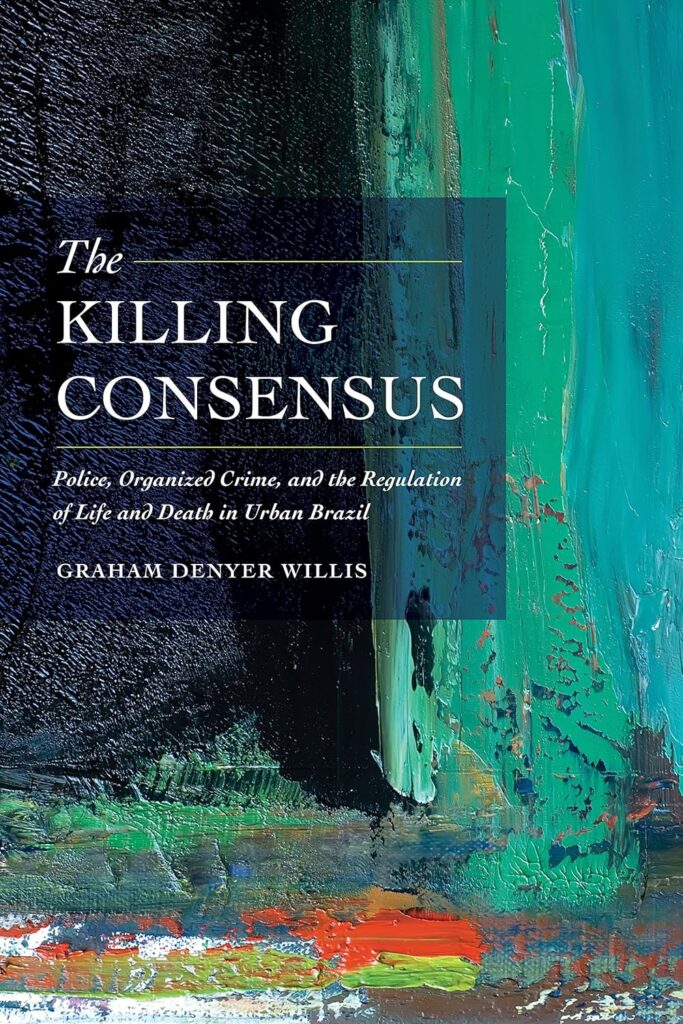
Yet, beyond the realm of legislative debate and academic analysis, another reality unfolds inside prisons—one that complicates the entire discussion. Across Latin America, Europe, and North America, criminal organizations exert substantial control inside penitentiary systems, operating as parallel authorities with their own governance structures, codes, and systems of punishment and reward. Investigations by InSight Crime, O Globo, the FBI’s Annual Gang Report, and Italian newspapers such as Corriere della Sera reveal prisons functioning as operational bases where criminal factions regulate daily life, recruit members, maintain external communications, and impose internal justice. In Brazil, researchers such as Camila Nunes Dias, in her widely cited work A Guerra: A Ascensão do PCC, explain how factions like the Primeiro Comando da Capital (PCC) developed a socio-political language based on concepts of rights, dignity, and resistance to state oppression. In Mexico, reports from InSight Crime document how cartels use prisons as centers of influence and negotiation with state actors. In the United States, the FBI identifies gangs such as the Aryan Brotherhood and MS-13 as powerful actors within penitentiary systems, capable of organizing operations both inside and outside prison walls.
Multiple academic publications have highlighted that incarcerated populations often resonate with messages that criticize state oppression, highlight abuses, and call for structural reforms—discourses that tend to be more common among activists, NGOs, and left-wing sectors advocating for prison reform. The Journal of Criminology & Social Justice published in 2019 that inmates often adopt political language drawn from external social movements to articulate their resistance to state control. The Harvard Review of Latin America observed how Latin American criminal factions frequently incorporate rhetoric about dignity and anti-oppression to strengthen internal cohesion. Julita Lemgruber, a Brazilian researcher with CESeC, documented that inmates often support groups that oppose mass incarceration and advocate for better prison conditions. These studies do not claim political alignment between criminals and the left; rather, they show a pattern of discursive appropriation. Criminal factions adopt and adapt human-rights-oriented narratives because such discourses weaken punitive mechanisms that threaten their operations.
Inside prisons, this discursive overlap becomes visible in numerous forms: graffiti that denounce state violence, manifestos criticizing oppressive environments, and communications that cast the State as an adversary. Reports from O Globo in 2016 documented graffiti in Rio de Janeiro’s prisons containing phrases like “menos repressão” and “estado assassino.” Academic archives at NEV-USP show the PCC’s “13 Mandamentos,” which highlight values such as respect, dignity, and resistance against oppression—terms drawn from broader human-rights vocabulary rather than partisan ideology. In Mexico, cartel messages often justify violence as reactions to state misconduct, according to InSight Crime investigations. These expressions reveal that the rhetorical environment inside prisons and the discourse of prison-reform activists share thematic similarities because both oppose excessive punitive force—though they do so for fundamentally different reasons.
The crucial question, however, is why criminal factions and the political left often appear aligned in the public imagination when opposing punitive measures. Detailed investigations show that the motivations differ entirely. Criminal organizations resist harsher laws because such laws directly threaten their structures of power, communication, and survival. They oppose longer sentences, isolation regimes, restrictions on communications, and broader definitions of organized crime because these tools reduce their operational capabilities. International reports by Human Rights Watch, UNODC, and Reuters on gang-controlled prison systems in Central America consistently show that criminal factions react aggressively to state measures aimed at increasing control inside penitentiaries.
Meanwhile, left-wing political groups oppose harsher laws based on philosophical and humanitarian grounds related to human rights, state overreach, systemic racism, and concerns about mass incarceration. Academic works by scholars such as Rodrigo Ghiringhelli de Azevedo (PUC-RS) and Marcos Rolim (UFRGS) show that left-wing resistance is rooted in concerns about structural inequality and the abuse of punitive power. The Brookings Institution published studies in 2021 noting that political resistance to punitive laws and the resistance of prison gangs often coexist in fragile democracies, though without evidence of coordination or shared objectives.
What emerges from this complex landscape is a phenomenon of discursive overlap, not political alliance. Criminal factions benefit from rhetoric that reduces the State’s punitive reach; left-leaning political groups endorse rhetoric defending civil liberties and opposing mass incarceration. The similarity of language does not imply cooperation, but its coexistence generates fertile ground for public misunderstanding. The presence of NGOs, educators, activists, and religious groups inside prisons—many with progressive ideologies—exposes incarcerated individuals to political messages emphasizing human rights, dignity, and social justice. Criminal factions then appropriate these narratives because they provide symbolic legitimacy to their resistance against state control.
Case studies across Brazil, Spain, El Salvador, and the United States reveal this dynamic. In Brazil, factions such as the PCC oppose maximum-security isolation and expanded anti-terrorism laws for criminal reasons, while left-wing parties oppose the same measures for humanitarian and constitutional concerns. In El Salvador, left-wing parties criticized Bukele’s mega-prison as authoritarian, while gangs also opposed the state’s escalating enforcement—but for reasons tied to their operational vulnerability. In Spain, left-wing parties resisted harsher laws targeting youth gangs, while those gangs resisted for their own survival. Across all these contexts, the motivations differ but the political consequences often blur, creating narratives of alignment that do not withstand empirical scrutiny.
The conclusion that arises from this extensive review is that the public debate often simplifies a phenomenon that is structurally complex. Sectors of the political left resist harsher criminal legislation due to ideological commitments to human rights and skepticism of state punitive power; criminal factions resist the same measures because such laws threaten their control and operational freedom inside and outside prisons. The overlap in rhetoric stems from shared opposition to the expansion of state control, not from political alignment or coordination. Available evidence from reputable sources shows correlation but does not establish causation. And yet, this overlap is powerful enough to shape political narratives, influence public perception, and deepen ideological polarization. Understanding these nuances is essential for a mature debate about public security, one that avoids simplistic accusations and instead confronts the structural weaknesses of state institutions, the chronic failures of prison systems, and the challenges posed by criminal organizations that exploit every vacuum of authority to maintain their dominance.