Examining the Comando Vermelho’s prison origins, territorial control, and why the Complexo do Alemão raid yielded tactical gains but limited strategic disruption
The police operation in the Complexo do Alemão in 2025 reopened a familiar national debate about security, civil liberties, and the limits of force. The operation’s scale and contentious aftermath sparked polarized narratives, with some framing it as necessary law enforcement, and others as state overreach. To understand why neither interpretation fully explains the outcome, it is necessary to trace the structural origins of the Comando Vermelho, and how those origins inform contemporary patterns of territorial control and resilience.
From prisons to parallel power: the historical anatomy
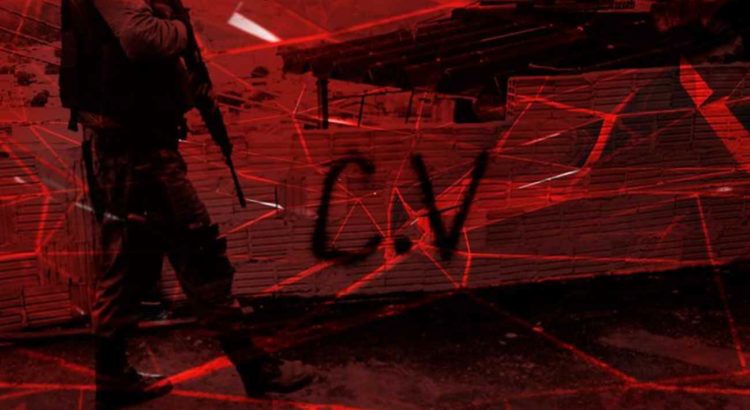
The Comando Vermelho originated within Brazil’s penal system, where a specific historical period known among scholars as the Ilha Grande era saw common criminals and political prisoners coexisting in confined institutions. That convergence produced enduring institutional traits: an internal hierarchy, coded loyalty, territorial claims, and collective rules that functioned as a rudimentary parallel governance model. These features were not merely tactical adaptations, they formed a strategic culture that anticipates and survives short-term disruptions.
State absence and chronic prison failures acted as accelerants. Where custody systems failed to separate political and criminal actors, ideas, networks, and organizational discipline migrated from cells to the streets. Over decades, what began as informal coordination evolved into territorialized authority, enforced through a blend of coercion and provision of local order. That historical trajectory helps explain why the Comando Vermelho behaves today less as a disorganized gang, and more as a resilient, adaptive actor with embedded social reach.
Operational dynamics in Rio: asymmetries and the hydra effect
Modern operations against the Comando Vermelho must contend with several structural asymmetries. The faction benefits from superior local intelligence, high mobility in urban terrain, and deep community embeddedness that confers early warning and escape routes. Police actions, by contrast, are episodic and visible, producing tactical results—arrests, seizures, temporary reductions in open violence—but rarely sustained disruption of the group’s command capacity.
This dynamic produces a familiar cycle. Large-scale raids and sustained presence force short-term dislocation, but the organization often splinters, conceals leadership, and reconstitutes via decentralized cells. Analysts describe this as a hydra effect, where head removal prompts rapid regeneration. Without parallel investments in sustained governance, social services, and local intelligence partnerships, policing alone struggles to convert tactical victories into strategic defeat.
The 2025 Complexo do Alemão operation: immediate outcomes and social costs
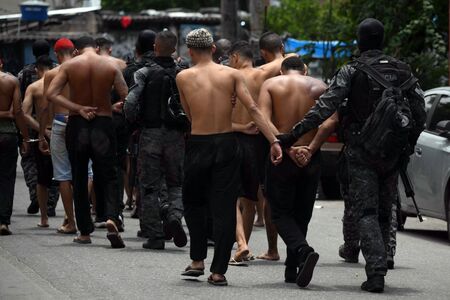
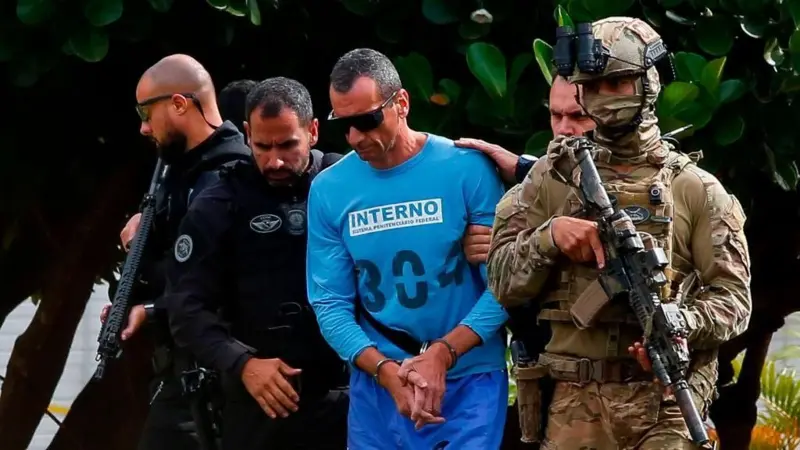
The 2025 operation produced visible tactical markers, including arrested operatives, weapons seizures, and a temporary reduction in street-level armed confrontations. The operation’s public framing, however, became a contested battlefield. Media coverage and political statements polarized into two dominant narratives: one emphasizing the necessity of enforcement to reassert state authority, the other portraying the intervention as disproportionate state aggression against marginalized communities.
The social impact was tangible. Local mobility was disrupted for days, public services were interrupted, and residents reported heightened fear and mistrust towards authorities. These consequences risk deepening the very structural fractures that enabled criminal governance to take root, because parallel order often fills voids created by inconsistent state presence. In short, the operation addressed an acute security symptom while leaving many chronic drivers untouched.
Information warfare compounded the operation’s limited strategic payoff. Competing messages, selective footage, and partisan amplification magnified mistrust, and obscured objective assessment of outcomes. In such an environment, misperceptions harden, and policy options narrow, increasing the likelihood that future interventions will again default to kinetic measures without complementary reforms.
Several critical questions remain unresolved. Can territorial operations meaningfully dismantle a network that developed inside the prison system and evolved into a social institution? Are police actions intended primarily to disrupt immediate threats, or are they designed to resolve long-term criminal governance? How can the state effectively compete with parallel systems that, for some residents, provide predictable order? And finally, what would a structural victory look like, if not measured only in arrests and seizures?
A sober strategic reflection suggests that durable change requires more than episodic force. It demands integrated policies that address prison reform, sustained local governance, economic inclusion, and evidence-based community policing. Absent that architecture, the pattern of tactical success followed by organizational recovery will persist. The 2025 Complexo do Alemão operation demonstrated capacity for coercion, but not a pathway to structural resolution. Comando Vermelho remains an expression of broader institutional fractures, rather than an isolated anomaly.
When the dust settles, we begin.