A clear, accessible look at The Atomic Bombings of Hiroshima and Nagasak, their human cost, long-term health research, and the moral debates that still shape policy
On August 6 and 9, 1945, the United States dropped atomic bombs on the Japanese cities of Hiroshima and Nagasaki, forever transforming not only those cities, but the course of global history. (source: The Atomic Bombings of Hiroshima and Nagasaki: A Complex Legacy)
Those two attacks were the first and only use of nuclear weapons in war, and their effects continue to reverberate biologically, socially, politically, and ethically, more than eight decades later. This report walks through the historical context, the immediate shock of blast and radiation, the long-term health and social consequences tracked by institutions like the Radiation Effects Research Foundation, and the enduring moral debates that followed.

Historical context and strategic calculus
By mid-1945, World War II in Europe had ended, but Japan remained defiant in the Pacific. Allied planners anticipated a bloody invasion of the Japanese home islands, and many argued that an invasion could cost hundreds of thousands of lives on both sides. Against that backdrop, U.S. leaders viewed the atomic bomb as a way to hasten surrender and to demonstrate power on the global stage.
As the original reporting noted, “The Franck Report, produced in June 1945 by prominent Manhattan Project scientists, warned strongly against using the atom bomb on cities. The report foresaw a nuclear arms race and urged a demonstration of the weapon’s power, not its deployment on civilian populations.” (source: The Atomic Bombings of Hiroshima and Nagasaki: A Complex Legacy, Wikipedia)
Debate also centers on geopolitics. Some historians argue that the United States sought to shape postwar influence in relation to the Soviet Union, while others emphasize Japan’s choices and the Soviet declaration of war as decisive. The context was therefore military, strategic, and political, layered with urgent moral questions.
Immediate humanitarian catastrophe, blast, fire, and radiation
The physical power of the two bombs is captured in precise figures: “The bombs used on Hiroshima (“Little Boy”) and Nagasaki (“Fat Man”) had yields of approximately 15 and 20 kilotons of TNT, respectively.” (source: The Atomic Bombings of Hiroshima and Nagasaki: A Complex Legacy, MDPI, PMC)
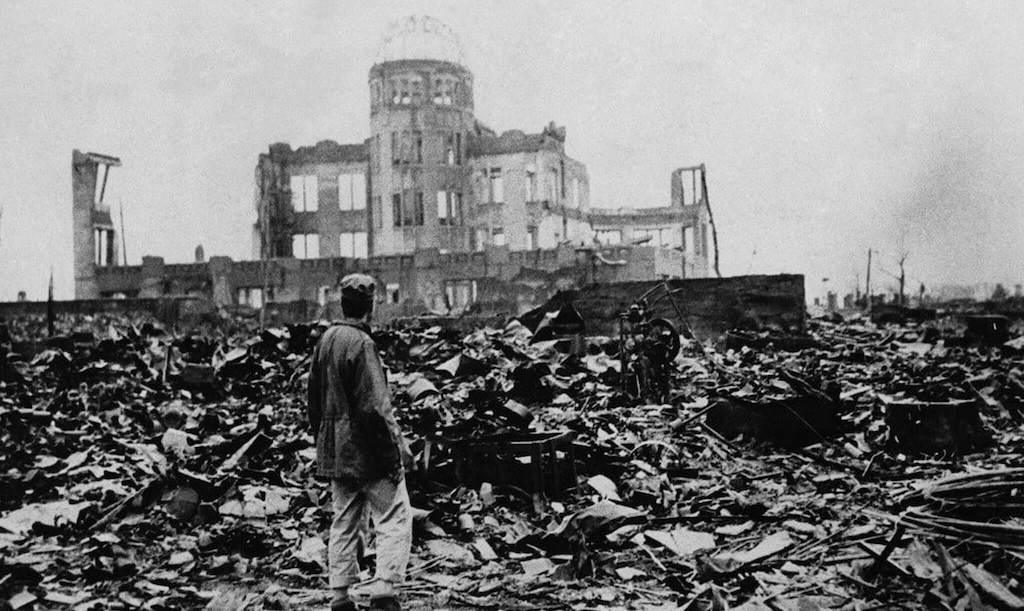
The human and material devastation was immediate and terrible. As one source summarized, “about two-thirds of Hiroshima’s infrastructure was wiped out, and tens of thousands died instantly.” (source: The Atomic Bombings of Hiroshima and Nagasaki: A Complex Legacy, Gregory P. Pavlik, IHR) Survivors faced horrific injuries from burns and blast, and many developed acute radiation sickness that overwhelmed local medical capacity. The Red Cross documented that “health systems were overwhelmed,” and medical services struggled to care for the scale and variety of injuries. (source: The Atomic Bombings of Hiroshima and Nagasaki: A Complex Legacy, Red Cross / ICRC)
Beyond immediate mortality, radiation produced long-term biological effects. Elevated cancer rates, leukemia, and other illnesses emerged over years and decades, leaving survivors, known as hibakusha, with chronic health burdens and social stigma.
Decades of research and the long shadow of illness
Studies spanning generations have clarified the health costs. “The Radiation Effects Research Foundation (RERF), a U.S.-Japan joint body, has been instrumental in studying long-term effects on survivors.” (source: The Atomic Bombings of Hiroshima and Nagasaki: A Complex Legacy, Wikipedia) RERF data underpin much of our understanding of radiation-linked cancer risks and other illnesses among survivors.
As one review put it, “In a recent editorial, Samet, Rajaraman, Pine, and Shibata provide an 80-year retrospective on cancer research among survivors.” (source: The Atomic Bombings of Hiroshima and Nagasaki: A Complex Legacy, PMC) Those long-term studies show complex outcomes, including raised risks for certain cancers, and also illustrate how research itself raises ethical questions around consent, privacy, and the implications of genomic studies for survivors and their descendants.
Socioeconomic research has documented nonmedical legacies as well. For some survivors, the bombings meant lifelong disadvantages in employment, mental health, and outlook. One study noted that while metrics like average education may not show dramatic differences, other areas revealed persistent, negative effects on survivors’ lives. (source: The Atomic Bombings of Hiroshima and Nagasaki: A Complex Legacy, Shimizutani & Yamada, IDEAS/RePEc)
Ethics, alternatives, and the imperative of disarmament
From the first days after August 1945, moral objections have been central to reflection. Critics point out that the attacks struck largely civilian populations, raising serious questions under doctrines of just war and humanitarian law. The ICRC emphasizes the “horrific humanitarian consequences: the immediate blast, radiation, long-term disease, and inability of health systems to respond.” (source: The Atomic Bombings of Hiroshima and Nagasaki: A Complex Legacy, ICRC)
Alternatives were proposed at the time. The Franck Report, for example, urged a demonstration of the weapon on an uninhabited area rather than the deployment against cities. “The Franck Report (1945) is one of the most famous documents urging against using the bomb on cities. Its authors argued for a demonstration on an uninhabited area to force Japan to surrender without mass civilian casualties.” (source: The Atomic Bombings of Hiroshima and Nagasaki: A Complex Legacy, Wikipedia)
Some historians now argue Japan might have surrendered without the bombs, particularly after the Soviet Union entered the war. Others maintain the bombs shortened the conflict. The evidence has been scrutinized intensely, and no single explanation fully resolves the moral complexity.
Looking outward from 1945, the bombings ignited a global conversation about nuclear control. The humanitarian and environmental legacies, including radioactive contamination from weapons production, testing, and use, make nuclear disarmament not only an ethical goal, but a practical necessity. As one commentator observed, nuclear weapons create an “unsustainable legacy” because radioactive waste persists for generations and because no universally accepted disposal solution exists. (source: The Atomic Bombings of Hiroshima and Nagasaki: A Complex Legacy, arXiv, Heinrich-Böll-Stiftung)
Lessons for today and tomorrow
The story of Hiroshima and Nagasaki holds several clear lessons. First, the human cost is permanent. Survivors’ health, psychology, and social lives were forever altered, and these effects echo across families and communities. Second, scientific responsibility matters. Institutions like RERF show how long-term study can both aid healing and raise new ethical dilemmas, especially as genomic research advances.
Third, policy must be informed by humanitarian concerns. Strategic arguments that ignore civilian suffering risk normalizing mass destruction. The Franck Report’s plea, that power be demonstrated without mass death, still resonates. Fourth, disarmament is not mere idealism, it is practical risk reduction, because the humanitarian impact of any nuclear detonation today would overwhelm health systems and societies.
Finally, new technologies complicate the calculus. Autonomous systems and artificial intelligence may affect command and control, and experts warn that emerging tools could increase the risk of accidental or inadvertent use. The modern ethics of nuclear risk must therefore consider technological change alongside the historical lessons of Hiroshima and Nagasaki.
The Atomic Bombings of Hiroshima and Nagasak remain a defining rupture in modern history. The events of August 1945 tied scientific achievement to unprecedented destruction, and they left a legacy that mixes deep human sorrow with ongoing scientific, legal, and moral challenges. Remembering the survivors, honoring rigorous research, and shaping policy that puts humanitarian protection first are concrete steps toward ensuring those fires are never lit again.