A clear look at the Budapest Memorandum, why Ukraine gave up nukes in 1994, and how Crimea 2014 and the 2022 invasion exposed the limits of political guarantees
On December 5, 1994, in Budapest, Ukraine, representatives of the United States, the United Kingdom, and the Russian Federation signed what became known as the Budapest Memorandum on Security Assurances. In return for Ukraine’s accession to the Treaty on the Non-Proliferation of Nuclear Weapons, and the surrender of what the memorandum described as the “third-largest nuclear arsenal on Earth”, the guarantors promised to respect Ukraine’s sovereignty and territorial borders, and to refrain from economic coercion.
Those assurances were, crucially, political, not legally binding. The text included a pledge by the guarantor powers to “respect the independence and sovereignty and the existing borders of Ukraine.” It also included an assurance against economic coercion, promising not to use economic pressure “to subordinate to their own interest the exercise by Ukraine of the rights inherent in its sovereignty.” Those lines read as a compact contract of trust, but they lacked formal enforcement mechanisms.
Why Ukraine surrendered its weapons, and what it was promised
When the Soviet Union collapsed in 1991, Ukraine inherited a massive nuclear legacy. Hosting delivery systems and warheads that made it, on paper, a major nuclear power created a grave dilemma for a fragile new state. Maintaining a secure command-and-control architecture for those weapons would have been expensive and risky.
Western powers, led by the United States, pushed for disarmament as the safest route for Europe. The logic was straightforward, and rooted in nonproliferation doctrine: fewer nuclear states reduced the risk of accidental or unauthorized use, and brought stability to a volatile post‑Soviet space.
Under the terms surrounding the Budapest Memorandum, Ukraine agreed to transfer warheads to Russia or dismantle them, and to join the NPT as a non‑nuclear‑weapon state. In exchange, Kyiv received political assurances meant to guarantee its territorial integrity, and the promise of closer ties to the West. For many Ukrainian leaders, disarmament seemed to be a path to international legitimacy and a stepping stone toward Western institutions.
When the promises failed: Crimea 2014 and the full-scale invasion of 2022
The first major test came in 2014, with Russia’s annexation of Crimea. That action directly contravened the memorandum’s pledge to “respect the independence and sovereignty and the existing borders of Ukraine.” Kyiv’s appeals for consultations under the memorandum found little traction. Western responses ranged from condemnation to sanctions, but they stopped short of military intervention.
Eight years later, the stakes rose dramatically with the 2022 invasion. The conflict reinforced a stark fact: because the Budapest Memorandum was a set of political assurances rather than a treaty, the guarantors had no binding obligation to respond with armed force. The United States and United Kingdom provided diplomatic support, sanctions, and military aid to Ukraine, but they did not deliver the kind of collective defense that would have resembled NATO’s Article 5 guarantees.
For many Ukrainians, the contrast was devastating. They had relinquished a powerful deterrent, believing that political assurances and deeper Western ties would suffice. When those assurances failed to stop aggression, the memorandum came to be seen as a cautionary tale about the limits of nonbinding guarantees.
How misjudgments, competing strategies, and short-term choices widened the gap
Several interconnected errors explain why the Budapest Memorandum unraveled. First, the memorandum’s nonbinding nature meant it had no enforcement mechanism. Diplomats in the 1990s understood this was a political document, not a security alliance, yet the tradeoff was accepted as pragmatic.
Second, Western policymakers underestimated the depth of Russian revanchism. Many believed that integrating Russia into global economic and diplomatic institutions would temper aggressive tendencies. That assumption proved overly optimistic.
Third, Ukraine accepted a deal that made strategic sense in the short term, but left it vulnerable in the long term. Disarming seemed to promise Western integration and security, but NATO membership, the formal alliance that could have provided real deterrence, remained out of reach for decades.
Finally, the memorandum exposed tensions around NATO’s eastward expansion. While the guarantors were promising security assurances to Ukraine, NATO enlargement continued, in the view of Moscow, as a contradictory and provocative policy. That contradiction complicated the guarantee Kyiv had been given, and amplified the risks that political promises alone could not manage.
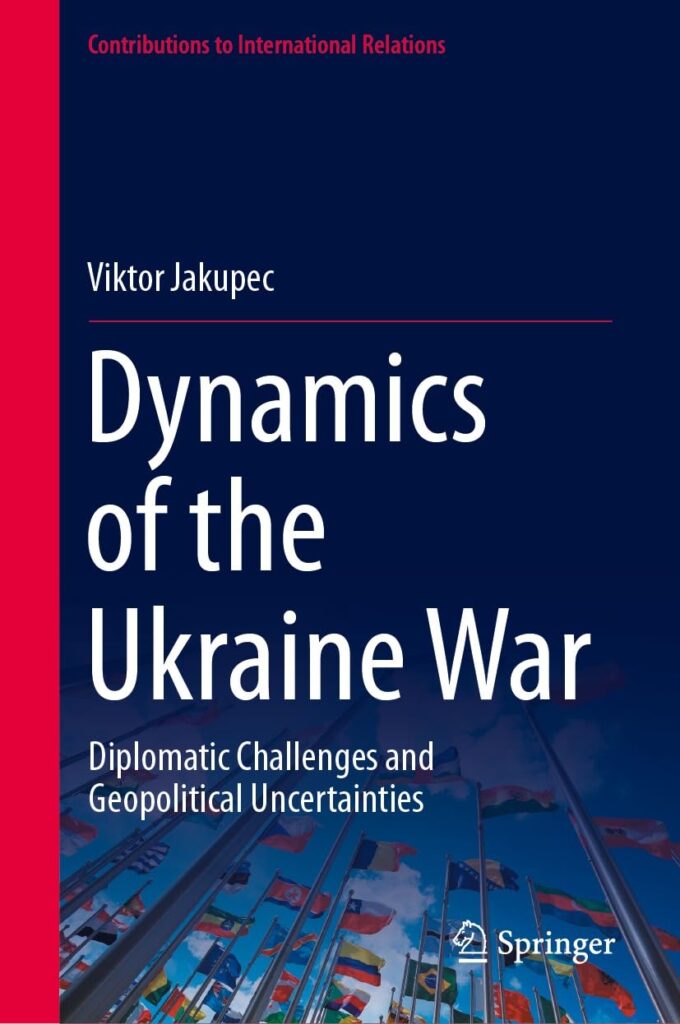
What the Budapest Memorandum means for nonproliferation and future deals
The implications of the memorandum’s failure go beyond Ukraine. If states perceive that giving up nuclear weapons brings only conditional, unenforceable promises, the credibility of nonproliferation incentives weakens. The lesson is stark: security assurances that are not anchored in binding alliances or hard guarantees may be insufficient to deter existential threats.
Policy lessons are clear. First, words matter, but so does the capacity and willingness to back those words with action. Second, institutions that include enforcement clauses, and clear mechanisms for consultation and response, provide more durable security than standalone political statements. Third, for countries weighing disarmament, a realistic appraisal of the guarantor states’ political will and military capacity is essential.
For Ukraine, the memory of the Budapest Memorandum is more than historical regret, it is a living grievance. Kyiv now presses for binding security guarantees, including permanent defense arrangements and, for many, full NATO membership. The cost of relying on nonbinding promises has been paid in lives, infrastructure, and displacement across a nation at war.
In the end, the Budapest Memorandum was a bold experiment in diplomacy, one rooted in the hope that words could substitute for weapons. That experiment taught a painful lesson: in matters of national survival, political assurances without enforcement can collapse under the pressure of force. The memorandum remains, therefore, both a monument to strategic idealism, and a reminder that durable security often requires institutions with the power to act.