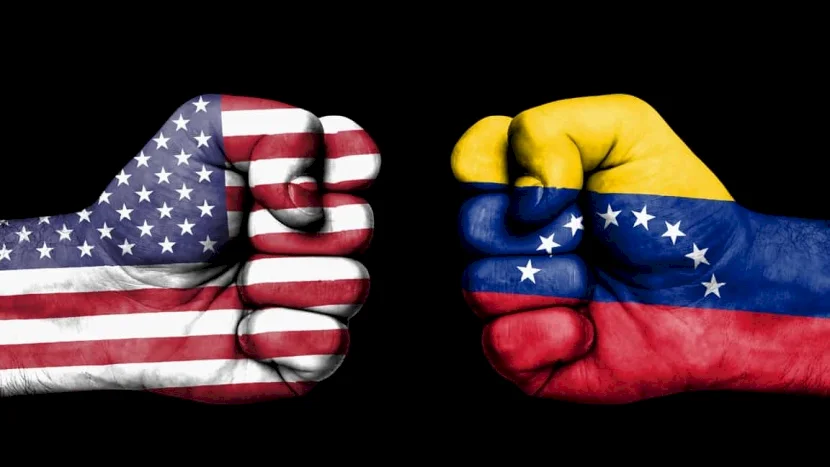
The framework helps explain the deep roots and regional risks of the current Venezuela Tension
The escalating Venezuela Tension with the United States is often described in pragmatic terms, such as sanctions, energy markets, or human rights. Yet, a different lens, drawn from Samuel Huntington’s controversial work The Clash of Civilizations and the Remaking of World Order, highlights cultural and historical fault lines that help explain why clashes with Caracas persist, and why they can provoke strong regional reaction.
Huntington did not predict specific conflicts, but he proposed that global politics are shaped by broad civilizational groupings. One of his more debated claims was that Latin America forms a distinct civilizational entity, separate from the West, despite shared Christian heritage. In Huntington’s terms, the hemisphere is a mosaic rather than a single cultural space, and this perspective illuminates why the current Venezuela Tension carries emotional and identity weight beyond immediate policy disputes.
Huntington’s map, and why it matters now
Huntington contrasted the United States as the archetype of Western civilization, with Protestant foundations, Anglo-Saxon political traditions, and institutions centered on representative democracy and secular governance. Latin America, he argued, developed along different trajectories because of Iberian influence, Indigenous and African legacies, and distinct patterns of social organization. He suggested that these differences create a civilizational boundary that sits alongside geographic ones.
Applying that framework to contemporary events does not mean endorsing strict cultural determinism, but it does highlight why some U.S.–Latin America conflicts feel deeper than policy disagreements. In the case of Venezuela, the Venezuela Tension looks less like a bilateral anomaly, and more like a moment when a civilizational boundary has been reactivated by modern geopolitics.
Why Venezuela looks like a civilizational outlier
Venezuela does not fit neatly into Huntington’s notion of a ‘‘torn’’ country. Instead, it stands out as a Latin American state whose political culture, external alignments, and public narratives diverge sharply from Western norms. In his original work Huntington used the phrase “torn countries” for states straddling civilizational identities, but Venezuela’s recent trajectory places it outside the Western model in several respects.
First, Venezuela’s governance under recent administrations has emphasized centralized authority, revolutionary legitimacy, and claims of ideological sovereignty. These features contrast with the pluralist, institutional norms the United States typically defends. Second, Caracas has deepened relationships with Russia, China, and Iran, embedding itself in networks that complicate simple regional alignments. Third, Venezuelan public discourse often frames external pressure as cultural encroachment, asserting a narrative of resistance to perceived foreign domination.
Those elements together intensify the Venezuela Tension, because they turn disputes over policy into disputes over identity, sovereignty, and legitimacy.
How the United States views the dispute
From Washington’s perspective, disagreements with Venezuela are framed in terms that emphasize security, democratic norms, and regional stability. The U.S. often presents its actions as defending universal values such as democracy and human rights. Huntington’s critique of this posture is that what the United States calls universal can be experienced by others as distinctly Western, and therefore intrusive.
Seen through that lens, U.S. responses to Caracas look less like neutral interventions, and more like actions by a state that perceives itself as a custodian of Western civilization in the hemisphere. That perception raises the stakes of the Venezuela Tension, because the conflict becomes as much about cultural and civilizational norms as about oil, sanctions, or regional influence.
Regional governments frequently respond with caution. Even when they disagree with Venezuela’s domestic choices, many Latin American leaders resist overt military pressure from Washington. That hesitation often stems not from support for Caracas, but from a shared civilizational reflex against perceived external imposition, a phenomenon Huntington’s map helps illuminate.
What a U.S.–Venezuela confrontation could trigger
Huntington warned that civilizational boundaries are sometimes “the bloodiest” because they merge identity conflicts with geopolitics. A military or intense diplomatic confrontation over Venezuela could therefore activate broader regional dynamics. Several outcomes are possible.
Diplomatically, Latin America could split along cultural and political lines, with some states aligning with the U.S. approach and others emphasizing sovereignty and nonintervention. Narratively, a conflict framed as Western dominance versus Latin autonomy could inflame nationalist sentiment across countries that are otherwise politically diverse. Geopolitically, an overreach by Washington might accelerate Latin American states’ outreach to non-Western powers such as China and Russia, reinforcing patterns of distance Huntington described.
These consequences would not be automatic, but the civilizational framing helps explain why the Venezuela Tension can spill beyond immediate bilateral concerns, and why regional reactions are often ambivalent rather than simply cooperative with U.S. policy.
Limitations, and why the map is a lens rather than a script
Critics rightly point out that Huntington’s theory can oversimplify complex identities and ignore cultural exchange. Nations and societies are dynamic, and many political disagreements reflect specific interests rather than deep cultural divides. Huntington was not a prophet, but he highlighted recurring patterns that remain useful for interpretation.
In practical terms, policymakers should treat civilizational explanations as one of several analytic tools. Recognizing how identity, history, and cultural narratives shape perceptions can improve diplomacy, reduce mutual incomprehension, and lower the risk that tactical clashes escalate into broader regional ruptures. Understanding the cultural contours that feed the Venezuela Tension can help de-escalate rhetoric, design more nuanced regional engagement, and avoid scenarios in which a bilateral dispute becomes a wider civilizational contest.
The United States and Venezuela are not destined to confront one another because of culture alone, but Huntington’s framework explains why tensions persist, why they escalate easily, and why Latin America as a whole may react in ways that simple realist analyses do not fully predict. In that sense, the current Venezuela Tension is both a geopolitical dispute and a reminder that cultural maps still shape global politics.
ALEXANDRE ANDRADE – “FalloutObserver”