A clear-eyed look at The Imbalance of Power, U.S. military dominance, and why Latin American defenses would struggle in a high-intensity confrontation
The Imbalance of Power in the Western Hemisphere is not an abstract debate, it is a measurable, structural reality. The United States fields a military that combines unmatched funding, global infrastructure, and technological depth, while most Latin American countries maintain forces optimized for internal security and limited budgets. Understanding that gap helps explain why a hypothetical confrontation involving the U.S. and Venezuela would likely be decided quickly, and why regional governments tend to favor diplomacy over military escalation.

The scale of U.S. military capacity
The analysis is blunt about the differences in capacity. As the report states, “the United States spends more on defense than the next several countries combined, with annual budgets exceeding $850 billion.” That financial edge supports a global footprint that includes “more than 750 bases abroad,” a logistics network capable of sustained operations worldwide, and technology layers that few states can match.
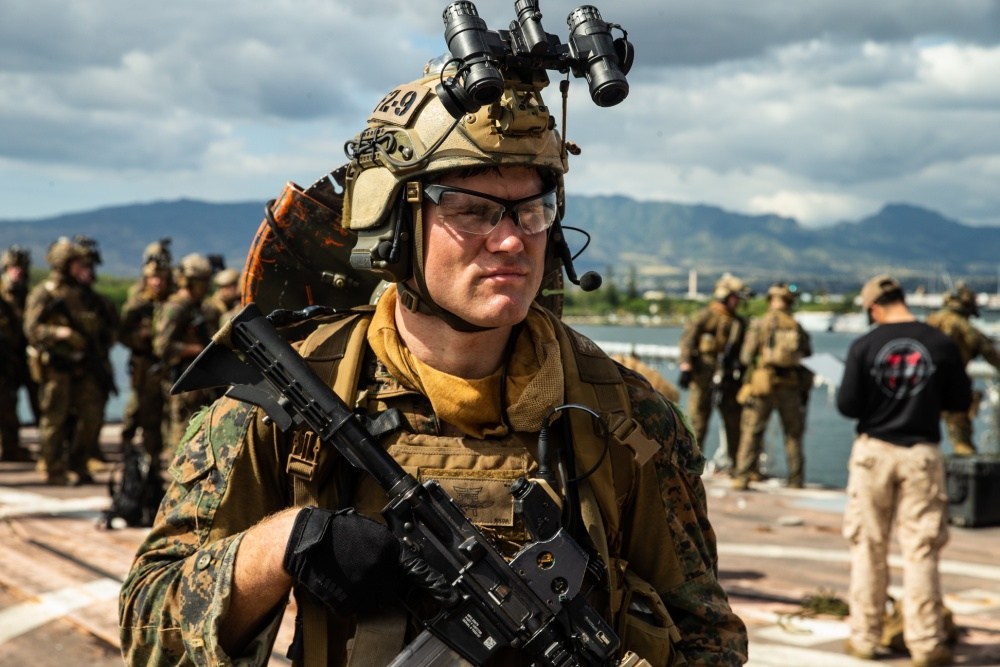
Numbers matter. The U.S. Navy alone operates “11 nuclear-powered aircraft carriers,” assets that allow sustained air projection across thousands of kilometers, while the Air Force fields stealth fighters, large tanker fleets, and space-based sensors that provide real-time battlefield awareness. The U.S. also benefits from a permanent wartime industrial base, meaning private and public production lines can manufacture aircraft, missiles, and warships continuously if required, a factor the analysis highlights as decisive in prolonged conflict.
Latin America’s defense constraints
By contrast, most Latin American militaries focus on internal security missions: border control, counterinsurgency, and policing roles. The region’s defense spending, the piece notes, is modest, with “Most Latin American defense budgets fall between 0.8% and 1.5% of GDP.” That financial reality constrains acquisitions of high-end platforms, integrated air defenses, and strategic lift, leaving many countries equipped with older fighters, small patrol ships, and ground units structured around small-arms engagement rather than networked, high-intensity warfare.
Technological and industrial limitations amplify those budget gaps. While a few nations, such as Brazil and Chile, maintain stronger programs and some indigenous production, the analysis observes that the region lacks a unified, large-scale defense industrial base. Dependence on imports creates logistical vulnerabilities in a crisis, and limited training hours and maintenance shortfalls reduce effective operational readiness across many forces.
What a U.S.-Venezuela clash would look like
Using Venezuela as a case study, the assessment underscores how the structural imbalance would play out. Venezuela does possess a relatively large force and Russian-supplied systems such as Su-30 fighters and S-300 air defenses on paper, but economic collapse and maintenance shortfalls have degraded readiness. If Washington chose military action, the analysis argues, U.S. forces would rapidly establish superiority.
First, air dominance would be a near-term objective. The U.S. would deploy stealth aircraft, electronic warfare platforms, AWACS, and tankers to defeat defenses, a pattern seen in prior campaigns. The report states plainly that “air dominance achieved within hours” is a likely outcome, given the U.S. mix of stealth, precision munitions, and integrated surveillance.
Second, naval power would shape maritime control. Carrier strike groups, submarines, and destroyers would secure sea lanes and pressure coastal infrastructure. The Venezuelan navy, principally composed of aging frigates and patrol craft, lacks the blue-water reach and anti-submarine capability to contest a sustained U.S. maritime campaign.
Third, precision strikes would target command, control, and logistical nodes, isolating forces and degrading their ability to coordinate. Finally, although a full-scale ground invasion is unlikely to be necessary, any deployed U.S. ground units would bring overwhelming advantages in mobility, firepower, and sustainment, compounding the operational gap.
Regional ripple effects and policy implications
Even if military escalation beyond Venezuela were improbable, the consequences would not be contained to a single border. The analysis warns of several spillover effects that would press on neighboring states. Large refugee flows could strain Colombia, Brazil, and Caribbean nations, while illicit actors might exploit chaos, generating localized violence along borders. Economic disruptions, especially in energy markets and trade, would hit countries tied to Venezuelan oil or U.S. commerce, creating broader instability.
Politically, the disparity in capability informs how Latin American states behave. With little prospect of matching U.S. conventional power, most governments prefer diplomacy, regional institutions, and political pressure as tools of influence. The paper concludes that any discussion of regional security must begin with the simple observation that the structure of military power in the hemisphere is “unmistakably asymmetrical.”
That assessment matters for policymakers. If the region wants to reduce vulnerability, options range from targeted investments in surveillance and resilience, to cooperative civil defense planning, to deeper regional diplomatic mechanisms designed to manage crises before they escalate. However, the report is realistic about constraints: even if debates about modernization rise after a dramatic crisis, budgetary and industrial realities mean change would be slow, and the core imbalance would persist.
Finally, the appraisal frames the conversation as descriptive, not moral. As the authors put it, “This analysis is not a value judgment. It is an examination of military reality.” Recognizing that reality, the piece argues, is the first step toward crafting policies that reduce risks, manage humanitarian consequences, and prioritize diplomatic solutions in a hemisphere defined by unequal instruments of power.
ALEXANDRE ANDRADE – “FalloutObserver”