How Alexander the Great reshaped three continents, from Macedon to Babylon, with bold tactics, cultural fusion, and relentless ambition
Born in 356 B.C. in the rugged highlands of Macedon, Alexander the Great rose from a provincial crown to rule a transcontinental empire before his thirty-third year. He trained in the innovations of his father, King Philip II, and under Aristotle, he developed a curiosity for science, geography, and the idea that the world could be remade. That combination of practical military reform and expansive intellectual hunger defined his short, relentless career.

When Philip II was assassinated, the twenty-year-old Alexander inherited a kingdom fragile with internal dissent and threatened on multiple fronts. Within two years, he had suppressed revolts, destroyed Thebes as a warning, and secured Macedon’s borders. He then launched the campaign that would alter the ancient world, moving against the Persian Empire with a speed and audacity that stunned contemporaries and later historians alike.
Mastery on the battlefield, according to ancient witnesses
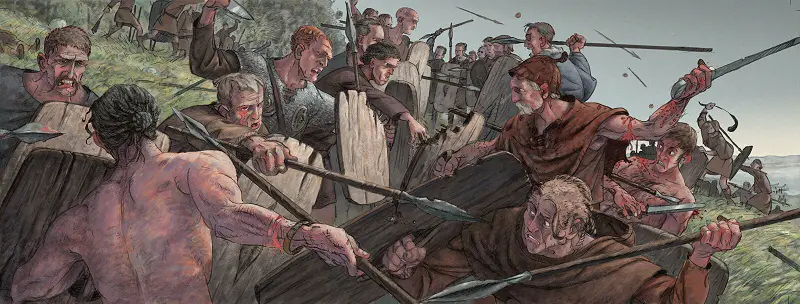
Arrian’s Anabasis Alexandri, the most reliable of the ancient sources, presents a commander who navigated the early phases of the Persian War with masterful clarity. That judgment captures what happened at engagements like the Battle of Granicus in 334 B.C., where Alexander personally led cavalry through a hail of arrows, breaking Persian lines, and at Issus, where his targeted assault forced Darius III to flee. Each victory displayed the same pattern, boldness combined with tactical precision, traits that turned Macedonian forces into a mobile, decisive instrument of conquest.
After the brilliant capture of Tyre, followed by a welcomed reception in Egypt, Alexander founded the city of Alexandria and visited the Oracle of Siwa, which reportedly declared him “son of Zeus-Ammon,” a pronouncement that deepened his sense of destiny and affected how he ruled newly conquered peoples.
From Gaugamela to empire, and then beyond
The decisive victory at Gaugamela in 331 B.C. proved his ability to defeat numerically superior foes. Facing Darius on a plain chosen to favor Persian numbers, Alexander used feints and precise cavalry maneuvers to shatter the Persian army. By age twenty-five, he stood as ruler of a realm stretching from the Aegean to the Persian Gulf, and he set about consolidating power by blending Greek and eastern customs, a policy that enraged some Macedonian officers but aimed to create a more stable, fused polity.
Alexander’s ambition did not end with Persia. He pushed into Bactria and Sogdiana, regions of fierce resistance in today’s Afghanistan and Uzbekistan, where guerrilla tactics and harsh terrain tested his leadership. There he married Roxana and attempted to secure loyalty through alliances and cultural gestures. Still, the campaigns took a personal toll, visible in acts like the drunken killing of Cleitus the Black, which revealed a leader strained by relentless war and mounting paranoia.
India, the turning point, and the costly return
In 327 B.C., Alexander crossed the Hindu Kush and initiated a campaign into India, culminating in the brutal Battle of the Hydaspes River. Facing King Porus and war elephants, Alexander fought in monsoon conditions and emerged victorious, then restored Porus to power, a move that mixed severity with clemency and won him local allies.
However, at the Hyphasis River, Alexander’s exhausted army refused to go further east. His persuasion, anger, and fasting could not change their minds, and he ordered a reluctant return. The choice to cross the Gedrosian Desert on the way back proved disastrous. Historians such as Peter Green call the march reckless, and contemporary accounts record massive losses from heat and thirst, reducing an army that had once poured across continents to a hollow shadow of its former strength.
When Alexander finally reached Babylon, he was only thirty-two, but the world he commanded was immense: Greece, Egypt, the Levant, Persia, and parts of Central and South Asia. He planned further campaigns into Arabia and perhaps Carthage, but fate intervened. In June 323 B.C., after a fever lasting days, he died. The cause remains debated, with theories ranging from malaria and typhoid to poisoning, but no consensus exists.
Legacy, division, and lasting cultural transformation
His death triggered the Wars of the Diadochi, as generals scrambled to divide his realm, and the empire he built fragmented into Hellenistic kingdoms. Yet the cultural impact of his conquests endured. The spread of Greek language, art, and institutions across three continents created the Hellenistic World, a fusion of Mediterranean and eastern elements that transformed science, religion, and urban life for centuries.
Modern scholars differ on motive and meaning, debating whether Alexander was a visionary uniter, a megalomaniac consumed by ambition, or both. Historians such as Robin Lane Fox emphasize his charisma and daring, Paul Cartledge calls him a geopolitical tornado, and Peter Green highlights both military genius and catastrophic flaws.
Ancient authors also show the same contradictions. Plutarch paints a figure torn between human impulses and godlike aspiration, Arrian praises discipline and courage, and Curtius Rufus exposes the psychological strain of endless ambition. These varied portrayals combine into a single, enduring image: a leader capable of great cruelty and great generosity, a destroyer and a founder at once.
As one succinct line from contemporary retellings puts it, “In thirteen years, Alexander reshaped the world.” That sentence captures the paradox of a life that built a cultural legacy far longer lasting than the political structure he left behind. Cities like Alexandria became hubs of learning, and Greek influence mixed with eastern traditions to create new forms of art, governance, and science.
For readers today, the story of Alexander the Great serves as a vivid lesson in the double-edged nature of ambition, the capacity of individuals to alter history rapidly, and the unpredictable mixture of brilliance and hubris that often accompanies sweeping change.
His empire died, his legend did not, and the debates about his character, motives, and consequences remain central to our understanding of how the ancient world became, in many ways, the world we inherit now.