A clear, concise guide to the Israel Hamas conflict, its deep historical roots, Hamas’ rise, and why slogans like “From the river to the sea” matter
The Israel Hamas conflict is the product of centuries of history, competing nationalisms, and repeated political failures, mixed with acute human suffering. Understanding how the dispute evolved helps explain why violence cycles, and why simple slogans carry such heavy meaning. The land itself carries layered claims and memories, and those competing claims shape politics and pain on the ground.
Historical roots and the Nakba
As one recent analysis put it, “The land between the river and the sea has been home to the Jewish people for millennia—ancient Israelite kingdoms, the Temple era, the Roman dispersal—all of which left an unbroken thread of Jewish presence in the land.” This continuity is central to Israel’s cultural and existential claim to statehood.
Jewish communities lived alongside Arabs, Samaritans, and Druze for centuries. After the Ottoman collapse and the British Mandate period, tensions grew as Zionist immigration increased, and Arab national identity hardened. The 1947 United Nations partition plan aimed for two states, but war followed Israel’s 1948 declaration of independence. Hundreds of thousands of Palestinians fled or were expelled in what they call the Nakba, “catastrophe”, and the pattern of contested statehood and cycles of violence was established.
The rise of Hamas and its dual role
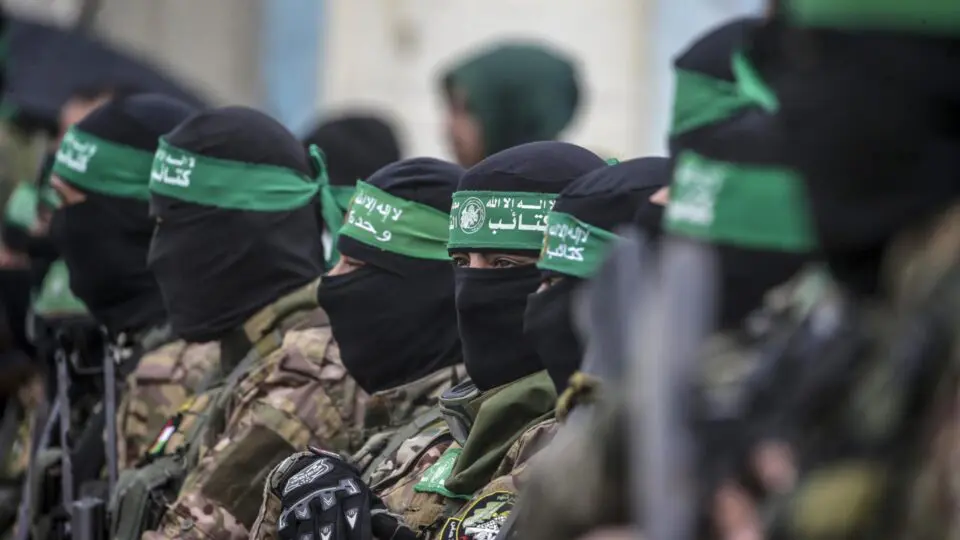
Into that volatile context, “Hamas—formally founded in 1987 amid the First Intifada.” (Encyclopedia Britannica). From its start, Hamas combined militant activism with social services in Gaza, providing schools, clinics, and charitable networks while also carrying out attacks. As described in reporting, “Two key features define Hamas: its ideological commitment to erase the State of Israel (as expressed in its 1988 charter) and its combination of militant actions with social-welfare activity in Gaza.” (Wikipedia).
Hamas’ political power grew quickly. “Hamas’ political rise accelerated after it contested and won the 2006 Palestinian parliamentary elections, then violently seized control of Gaza in 2007.” (Wikipedia). Since then, Israel has maintained a blockade of Gaza, citing security reasons, and Hamas has fired rockets, carried out terror attacks, and used tunnels to launch incursions into Israeli territory.
Analysts note that “Hamas’ evolution owes much to its Islamist roots in the Muslim Brotherhood, its funding through informal networks in the region, and indirect support from states hostile to Israel’s existence.” (Council on Foreign Relations). That mix of ideology, external backing, and local governance has allowed Hamas to entrench itself in Gaza, even after repeated Israeli military campaigns.
Cycles of violence and the human cost
Violence has repeatedly derailed diplomatic efforts. The 1967 Six-Day War, the occupation that followed, the 1979 Egypt–Israel treaty, and the 1993 Oslo Accords each offered potential pathways to peace, but each was undermined by distrust, extremist actions, or political collapse.
Recent flash points have been particularly brutal. A targeted abduction of young Israeli musicians, or youth at a music event, set off a sharp and devastating cycle of retaliation. The details of that specific attack are contested, but the human consequences were not. Families were torn apart, communities shocked, and retaliatory strikes on Gaza killed civilians, destroyed infrastructure, and deepened mistrust on both sides.
There is, as observers and historians emphasize, no neat equivalence between a sovereign state and an armed nonstate group that declares the state’s elimination. Still, warfare inflicts severe civilian harm across both populations. Hamas has launched rockets into Israeli population centers, and has been accused of restricting humanitarian services in Gaza for strategic reasons. Israel, for its part, has used overwhelming force that has produced heavy collateral damage, with some casualties that observers judge avoidable, and others that were an inevitable cost of fighting embedded militants.
The language of eradication and its consequences
The slogan “From the river to the sea, Palestine will be free” carries explicit implications for Israel’s survival, because it is seen as erasing the Jewish state. Many Israelis and their supporters treat that slogan as a call for elimination, not merely statehood. That rhetoric matters, because it shapes policies, political possibilities, and public sentiments, and because compromise becomes harder when the declared goal is the other side’s disappearance.
At the same time, Palestinians confront governance failures, fragmentation, and a political landscape where some leaders oscillate between providing social services and sponsoring militancy. Those contradictions have weakened prospects for a unified Palestinian negotiating partner that could pursue statehood through diplomacy.
Paths forward, and why a two-state solution remains central
Despite repeated failures, a two-state solution remains the framework most diplomats and many citizens see as the only realistic path to reconciling two national identities on one contested land. For that to become viable, key shifts are necessary. Hamas would need to abandon maximalist rhetoric that refuses Israel’s existence. Israel would need to engage in negotiations that address Palestinian sovereignty, security, and dignity without preconditions that preclude compromise.
A meaningful path to peace must also address the humanitarian reality in Gaza, restore credible Palestinian governance that prioritizes civilian life and infrastructure, and secure Israeli safety through verifiable arrangements. The long-term balance requires security, justice, and recognition from both sides, and it demands international attention that is principled and realistic.
History shows that slogans and ideology shape reality as much as battlefield outcomes. “Israel’s right to exist is grounded in historical continuity, international recognition and the desire of the Jewish people for safety, sovereignty and dignity.” That claim is central to Israeli identity, and it sits beside Palestinian claims to self-determination and justice. Until both sides confront the hard facts honestly, cycles of violence will continue to define lives in the region.
The Israel Hamas conflict is rooted in deep history, complex politics, and urgent human needs. Understanding the past, and the precise roles of actors like Hamas, helps explain why lasting peace remains distant, and why the human toll continues to mount. For policymakers, journalists, and citizens who follow this conflict, the path forward requires clarity about facts, realism about security, and a renewed commitment to political solutions that protect civilians and recognize both peoples’ rights.