The New Battlefield: Invisible, Economic, Total
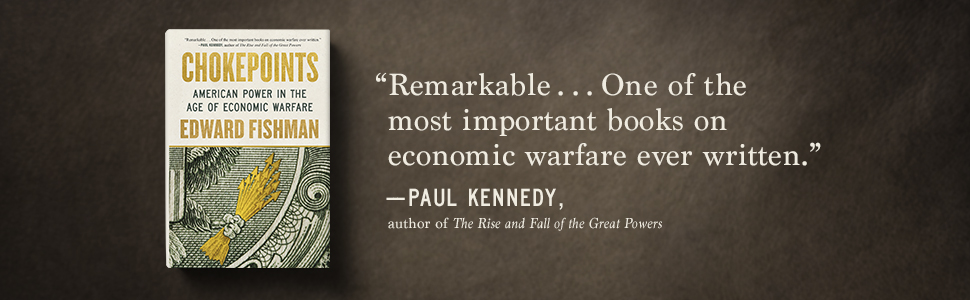
Edward Fishman’s groundbreaking book, “Chokepoints: American Power in the Age of Economic Warfare”, isn’t just another analysis of international strategy. It’s a deep dive into the hidden machinery that powers global influence, pulling back the curtain on how the United States shapes economies, from Russia’s oil revenues to the crucial chips found in Chinese smartphones. Fishman, a former State Department official deeply involved in U.S. sanctions policy, writes with the sharp precision of an intelligence report and the compelling narrative of a war correspondent. Across numerous reviews from prestigious publications like The Economist, Foreign Policy, and The Wall Street Journal, a consensus emerges: this is a **highly consequential book** about 21st-century power, focusing on economic leverage rather than military might.

This analysis synthesizes key insights from ten critical reviews, distilling Fishman’s central arguments about **chokepoints** and their implications for a world increasingly defined by strategic competition. Fishman argues that the most significant chokepoints today are not geographic locations on a map, but rather systemic vulnerabilities within global networks. These include the U.S. dollar system, intricate semiconductor supply chains, the global maritime insurance market, international payment infrastructures, and sophisticated export control regimes. He powerfully describes these systems as “the arteries of globalization,” and posits that the United States, whether by design or circumstance, has positioned itself as the ultimate arbiter of who thrives and who suffers within this economic landscape.
The Dollar as a Double-Edged Sword
One of the most compelling aspects of Fishman’s work, according to reviewers, is his detailed examination of the U.S. dollar’s role as a potent weapon. The Wall Street Journal specifically praises Fishman’s explanation of how Washington has effectively transformed financial tools—such as the SWIFT network, correspondent banking relationships, stringent compliance standards, and asset freezes—into instruments of power that can be **sharper than most missiles**. The dollar’s global dominance grants the U.S. unparalleled insight into international financial flows and, crucially, the leverage to disrupt them at will.
Fishman illustrates how nations like Russia, Iran, and even China have repeatedly found themselves constrained by this dollar-centric financial architecture. The review from the London School of Economics (LSE) highlights that Fishman’s case studies not only demonstrate the **impact of these chokepoints** but also their inherent fragility. The LSE analysis points out Fishman’s warning that the **abuse of these systems** could fracture the global economic order and, paradoxically, accelerate the development of rival economic systems designed to circumvent U.S. influence.
Technology: The New Stranglehold on Global Economies
Fishman identifies control over critical technologies, particularly advanced semiconductors, as the **single most potent chokepoint** on Earth today. He argues that these chips are the essential “oxygen” of modern economies, and U.S. dominance in areas like advanced chip manufacturing, lithography machines, sophisticated software, and high-performance computing provides immense leverage. Reviewers from UCLA and the Belfer Center emphasize Fishman’s detailed account of the U.S. strategy to weaponize these technological chokepoints. This includes implementing rigorous export controls, exerting pressure on key international firms like ASML, forging alliances with countries like Japan and the Netherlands, and utilizing blacklists to target Chinese technology companies.
This strategy, as described by Fishman and highlighted in reviews, represents a form of **economic siege warfare**. It is conducted quietly, with remarkable precision, and on a global scale. Foreign Policy notes that Fishman presents this not as a series of disconnected policy actions, but as a **coherent, long-term strategy** aimed at degrading a competitor’s technological capabilities and slowing their economic ascent without resorting to direct military confrontation. It is, in essence, a war fought in the realms of bandwidth and nanometers, a testament to the evolving nature of geopolitical power.
Beyond Finance and Tech: Energy, Insurance, and Leverage
The analysis also sheds light on other critical chokepoints that underpin global trade, including maritime insurance, shipping registries, tanker logistics, and energy routing. Fishman demonstrates how the U.S. and its allies can leverage these systems to exert pressure on adversaries like Russia with remarkable surgical precision. The Economist praises Fishman for revealing how seemingly obscure bureaucracies, such as Lloyd’s of London or the Office of Foreign Assets Control (OFAC), have become significant strategic actors. While ordinary citizens rarely consider maritime insurance, the denial of such coverage to Russian tankers or Iranian oil vessels can cripple an economy far more swiftly than a traditional naval blockade.
Fishman meticulously details how the U.S. harnesses these legal and financial chokepoints with devastating effectiveness, though he also acknowledges the inherent strategic risks. The LSE analysis points out that adversaries are actively developing countermeasures, such as “shadow fleets,” alternative energy pipelines, and parallel trade routes, all designed to circumvent these U.S.-controlled bottlenecks. This dynamic suggests an expanding battlefield, increasing the potential for miscalculation and unintended consequences.
The Ethical Quandary of Economic Warfare
A central question that emerges from the reviews is whether these powerful economic tools are ultimately stabilizing or destabilizing the global order. Lawfare emphasizes that Fishman candidly addresses this paradox. Economic warfare, while often more humane and less destructive than kinetic warfare, carries significant unpredictability. It can push targeted regimes towards desperation, inflict severe poverty on civilian populations, and drive rival nations into long-term strategic realignments against the United States. Foreign Policy amplifies this tension, suggesting that the widespread and sometimes indiscriminate use of sanctions could hasten the creation of alternative financial systems, potentially dominated by China or emerging blocs like BRICS+.
RealClearDefense further warns that an overreliance on these chokepoints might provoke adversaries into developing aggressive countermeasures, including technological decoupling, sophisticated cyberwarfare, and even direct military escalation. Fishman, in his examination of **chokepoint power**, does not celebrate its capabilities. Instead, he analyzes it with the meticulous caution of a bomb disposal technician, appreciating its precision while deeply aware of its potential for catastrophic unintended consequences if mishandled. He presents a sober assessment of power, acknowledging both its effectiveness and its inherent dangers.
Behind the Scenes: The Architects of Economic Statecraft
A widely praised aspect of Fishman’s book is its exploration of the human element behind economic warfare. He opens a window into the U.S. bureaucracy, revealing the teams of policymakers, lawyers, and analysts who meticulously design, approve, and execute these complex strategies. The Wall Street Journal describes these chapters as “geopolitical drama,” offering insights into the internal debates that shaped critical decisions, such as the sanctions imposed on Russia following the annexation of Crimea and the early phases of negotiations concerning Iran’s nuclear program. Reviewers note that the book’s narrative, filled with accounts of late-night meetings, frantic coordination with international allies, and intense ethical debates within government circles, lends it a **thriller-like quality**. UCLA’s review specifically commends Fishman’s talent as a storyteller, capturing the high-stakes tension of modern statecraft with remarkable clarity. In an era where power is often perceived as loud and overt, Fishman masterfully reveals the **whispered decisions** that can profoundly shake continents.
A Call for Doctrine in Economic Statecraft
Perhaps the most significant takeaway from the reviews is Fishman’s compelling call for a formal, unified doctrine for economic statecraft. He argues that the U.S. often employs its **chokepoint power** reactively and without systematic, long-term planning, leading to improvisation and potential inefficiencies. As The Economist emphasizes, this lack of a cohesive doctrine risks undermining the very foundations of American economic dominance. The LSE review concurs, stating that Fishman’s most impactful contribution lies not just in identifying these critical chokepoints, but in urging policymakers to treat them as strategic assets demanding **discipline and foresight**. The careful and strategic use of these tools is paramount; mishandling them could erode decades of trust in global systems, while wise application could sustain U.S. influence long after traditional military supremacy begins to wane.
Global Responses: Resistance, Adaptation, and Realignment
Nations facing the pressure of American **chokepoints** are not passive bystanders. Reviewers highlight the active efforts by countries like Russia, China, and Iran, as well as some European states, to develop mechanisms that bypass U.S. leverage. These include the creation of alternative payment systems, the development of domestic chip industries, the establishment of “shadow shipping fleets,” the exploration of regional digital currencies, and the formation of strategic alliances designed to insulate them from sanctions. RealClearDefense warns that these countermeasures could ultimately lead to a fragmented global economy, characterized by distinct economic blocs, heightened competition, and pervasive distrust. Fishman himself stresses the importance of the U.S. recognizing this evolving landscape, acknowledging that while chokepoints are powerful, no form of power is eternal.
Power Without Gunfire: The Future of Grand Strategy
“Chokepoints” is fundamentally a book about the world we have collectively built—a world where global infrastructure is as decisive as aircraft carriers, where legal frameworks and financial regulations wield more influence than traditional military might, and where a disrupted payment can have consequences as severe as a missile strike. Across all the reviews, an unavoidable message emerges: Fishman is mapping out a new form of grand strategy. This strategy explains how the United States continues to exert global influence in an era marked by rising rivals and a declining global faith in American leadership. It is a depiction of **power without gunfire**—quiet, technical, pervasive, and immensely consequential.
Like all forms of power, it carries a significant shadow. If abused, it risks fragmenting the global order. If wielded wisely, it can maintain a fragile stability. Fishman offers no easy answers, but instead provides a crucial field manual for understanding the complex world we inhabit—a world where the most critical battles are fought within the unseen systems upon which we depend every single day.