Two Civilizations Collided and Reshaped the Ancient Mediterranean
The ancient world witnessed few conflicts as **transformative and brutal** as the Punic Wars. Spanning a staggering 118 years, from 264 to 146 B.C., these monumental clashes pitted the **rising Roman Republic**, a land-based power, against the **wealthy maritime empire of Carthage**, a civilization of Phoenician descent. Far more than just a series of battles, the Punic Wars were a **crucible that forged the Roman Empire**, determining control of the western Mediterranean and fundamentally reshaping economies, political identities, and the very course of history.

The Seeds of Conflict: Ambition and Sicily
The origins of this epic rivalry were rooted in **geography and ambition**. Carthage, with its **naval supremacy**, commanded vast trade routes, its influence stretching across North Africa, Sicily, Sardinia, and Spain. Rome, on the other hand, had recently unified the Italian peninsula and emerged from earlier wars with a **strengthened military and burgeoning aspirations**. The fertile island of **Sicily**, strategically vital and a crucial grain supplier for Carthage, became the inevitable flashpoint. For Rome, gaining a foothold on Sicily meant opening the door to Mediterranean expansion. When a dispute among Sicilian factions drew Roman intervention, Carthage perceived it as a direct threat, igniting the **First Punic War** in 264 B.C.
The First Punic War: Rome Takes to the Seas
The First Punic War (264–241 B.C.) was a testament to **Rome’s incredible capacity for adaptation**. Initially a land power with virtually no naval experience, Rome astonished its rivals by **constructing fleets at an astonishing speed**. They achieved this by reverse-engineering Carthaginian ships and introducing innovations like the **corvus**, a boarding bridge that transformed sea battles into infantry engagements, Rome’s forte. The conflict was long, costly, and incredibly fierce, marked by massive naval battles such as Mylae and Ecnomus. Despite Carthage’s naval expertise, they suffered from **inconsistent leadership and internal political disputes**. Rome, compensating for its inexperience with sheer **determination and logistical superiority**, ultimately triumphed at the Battle of the Aegates Islands. This victory granted Rome control of Sicily, its **first province outside Italy**, and marked the beginning of its imperial administration. However, the peace was **fragile**, leaving Carthage humiliated and financially depleted.
Between Wars: Carthaginian Resilience and Roman Expansion
While Rome consolidated its gains by expanding into Sardinia and Corsica, Carthage began to **rebuild its strength in the Iberian Peninsula**. This region, rich in silver and fertile lands, was essential for reviving its economy. Recent geoarchaeological research, analyzing **lead isotopes found in sediments**, confirms the **intense Carthaginian mining and metallurgy** during this period, showing sustained industrial activity despite the turmoil of the Mercenary War. It was here that the **Barcid family**, led by the legendary **Hannibal Barca**, constructed a powerful, quasi-independent empire. Cities like Qart-Hadasht (modern Cartagena) became fortified centers, training grounds for new armies, and repositories of the wealth that would later finance one of history’s most audacious military campaigns.
The Second Punic War: Hannibal’s Audacious Gamble
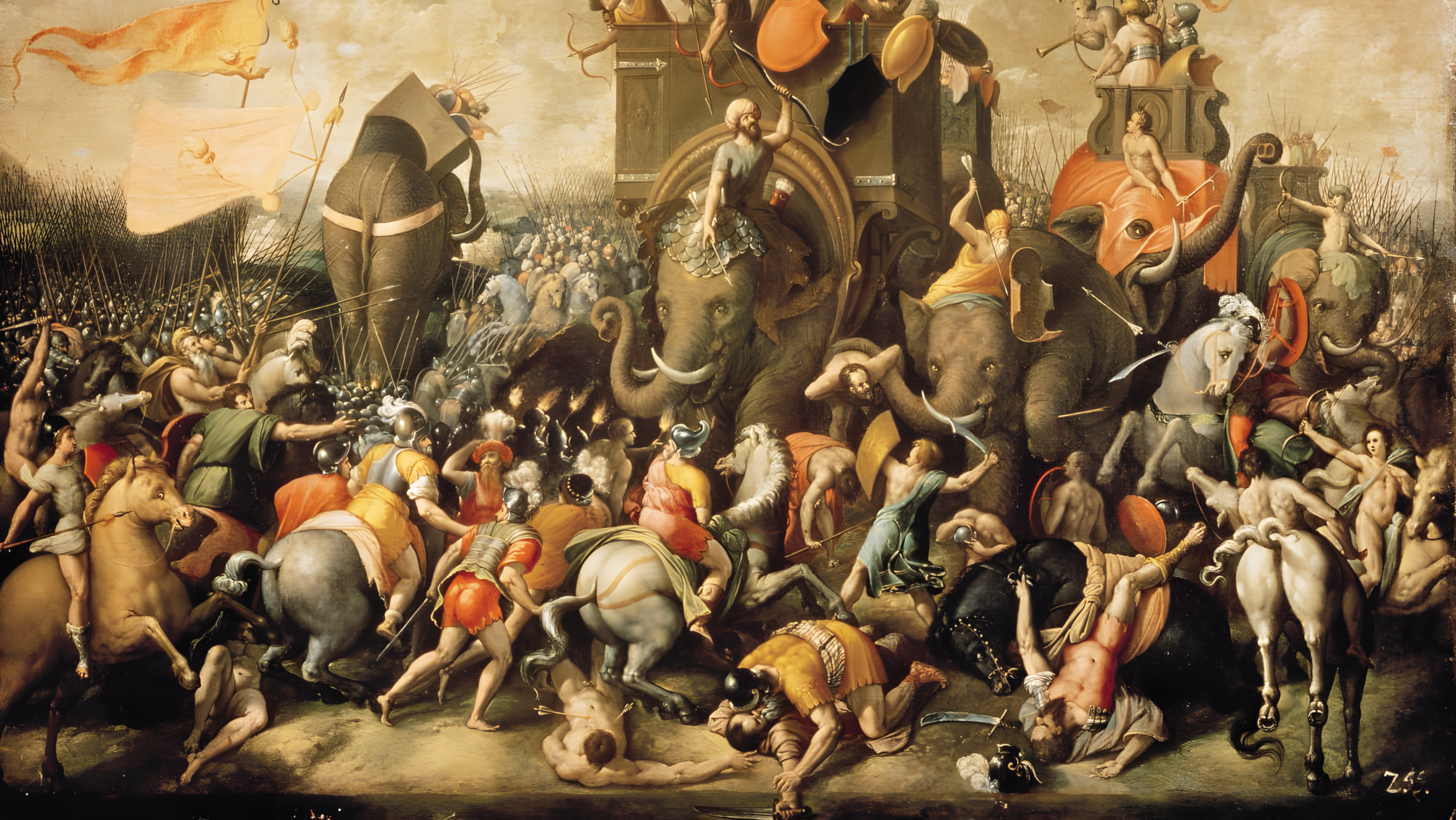
The **Second Punic War** (218–201 B.C.) is forever defined by the brilliant and daring general **Hannibal Barca**. When Rome interfered in Iberian affairs by allying with the city of Saguntum, Hannibal saw it as a **casus belli**. His response became the stuff of legend: he marched an army, complete with **elephants**, across the Pyrenees, through Gaul, and over the formidable Alps. This crossing, though mythologized, remains a remarkable feat of **logistical brilliance**. Hannibal’s military genius shone brightly on Italian soil, where he inflicted **catastrophic defeats** on Roman armies at Trebia, Trasimene, and most famously, **Cannae**. The Battle of Cannae remains a classic example of military strategy, a masterpiece of double envelopment where Hannibal **annihilated a force nearly twice the size of his own**. Despite these devastating losses, Rome did not collapse. Its **resilient political structure** and vast manpower reserves, combined with the cautious strategy of **Fabius Maximus** and shrewd diplomacy to maintain Italian allies, allowed Rome to endure. The tide turned when Rome shifted the war to Iberia and then North Africa under the bold general **Scipio Africanus**. Scipio’s invasion of Africa culminated in the decisive battle at **Zama in 202 B.C.**, where Hannibal was finally defeated. This victory forced Carthage to surrender its fleet, pay immense reparations, and abandon all military ambitions.
The Road to Annihilation: The Third Punic War
Though defeated, Carthage was not destroyed. It experienced a remarkable **economic recovery**, becoming an agricultural powerhouse. However, this resilience alarmed Rome. Fueled by **fear and political manipulation**, and often provoked by Numidian incursions encouraged by Roman diplomats, tensions remained high. The elder statesman **Cato the Elder** famously ended every speech with the chilling declaration, **”Carthago delenda est”** — “Carthage must be destroyed.” The final pretext arrived in 149 B.C. when Rome issued impossible ultimatums, demanding Carthage disarm and even relocate its population inland. Carthage’s refusal marked the beginning of the **Third Punic War** (149–146 B.C.).
The Destruction of Carthage and the Rise of an Empire
The Third Punic War was less a war and more a **brutal siege and execution**. Carthage, though weakened, resisted with fierce desperation. The city’s **monumental fortifications** and complex urban layout made the Roman advance painfully slow. The final assault in 146 B.C. was an **urban nightmare** of street fighting and house-to-house combat, culminating in a last stand at the Byrsa citadel. Modern scholarship highlights the **extreme brutality** of this phase, with fire, starvation, and massacre engulfing the once-great metropolis. When the city finally fell, it was **systematically burned**, its survivors sold into slavery. Carthage ceased to exist as a political entity. Rome had eliminated its greatest rival, but in doing so, it **crossed a psychological threshold**, symbolizing not just victory but **total domination**. The Punic Wars transformed Rome, turning it into a **naval power**, expanding its territory to include Sicily, Sardinia, Corsica, Iberia, and North Africa, and enriching its state through indemnities and access to resources. This expansion laid the **foundation for the Roman imperial system**. While the influx of wealth and slaves had destabilizing effects internally, the wars also forced Rome into deeper interactions with Hellenistic diplomacy, Carthaginian trade networks, and African cultures. The outcome was a **new world order**, a **Mare Nostrum** shaped by Roman power, law, commerce, and military supremacy.
Reassessing Carthage: Beyond the Roman Narrative
It is crucial to recognize that much of what we know about Carthage comes from **Roman writers**, who had a vested interest in portraying their enemy as treacherous and barbaric. **Modern research and archaeology** paint a more complex picture, revealing a **sophisticated, wealthy, and technologically advanced society** with impressive agricultural, metallurgical, and naval engineering achievements. Carthage’s economy proved remarkably resilient, and its diplomacy was far more nuanced than Roman narratives suggest. Rather than a simple villain, Carthage emerges as a **cosmopolitan hub**, deeply embedded in the ancient world’s commercial networks and tied to its Phoenician heritage. The Punic Wars, therefore, were a **crucible that forged the Roman Empire**, a conflict whose legacy continues to shape our understanding of history, military doctrine, and the enduring impact of civilizations clashing.