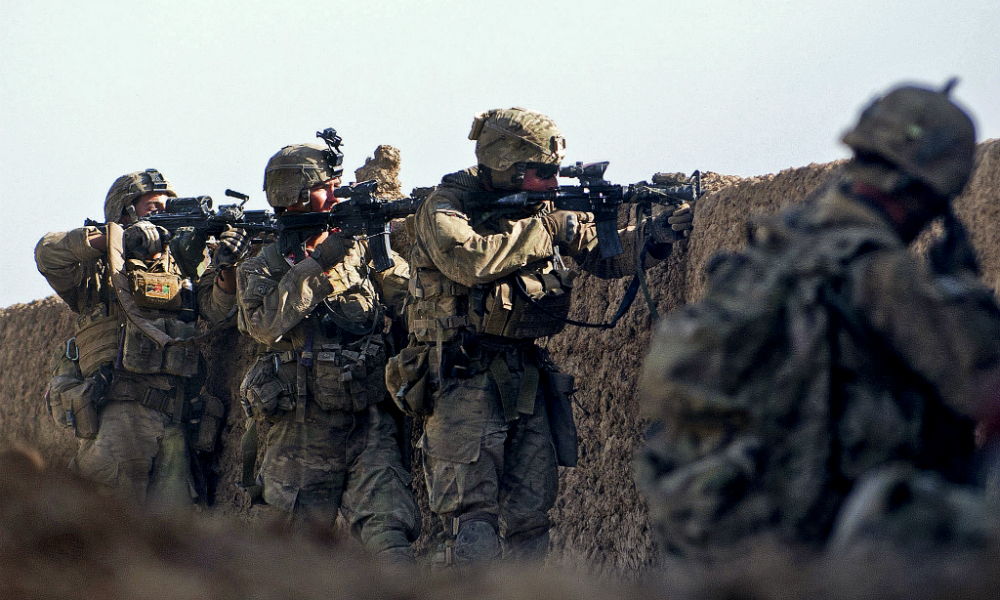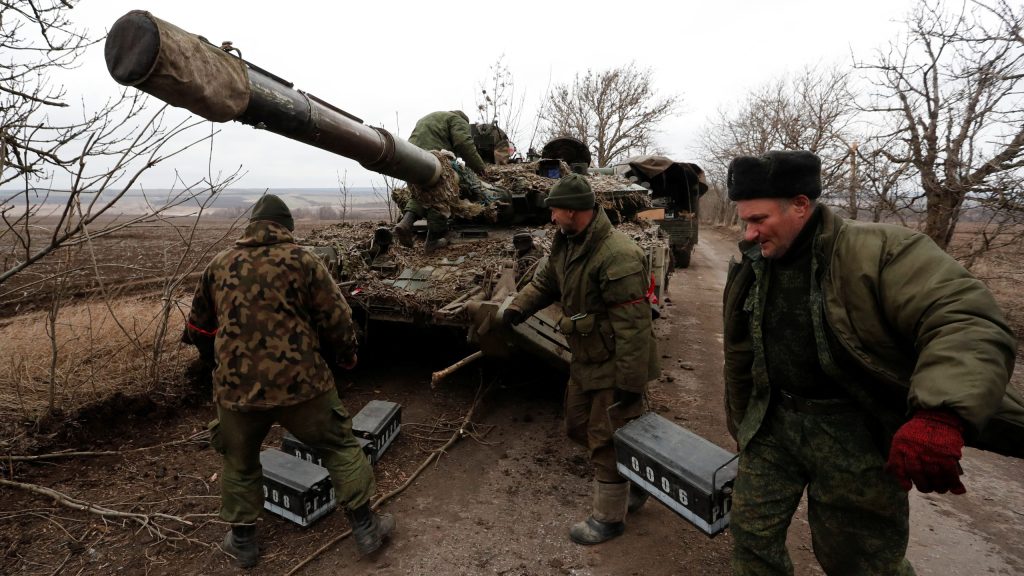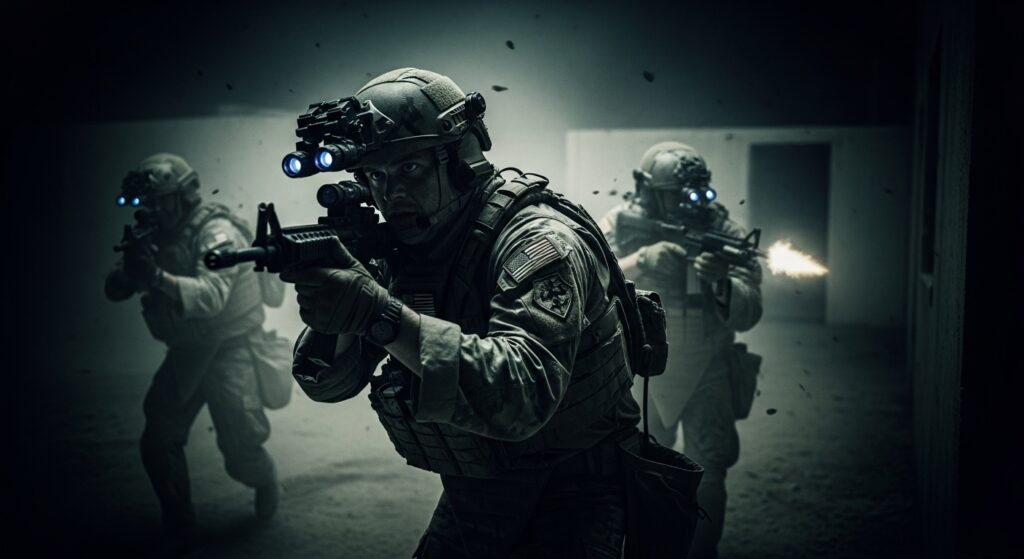
From Dwight D. Eisenhower’s warning about the “military-industrial complex” to postwar industry, the UNITED STATES OF AMERICA turned permanent war into global power
Walk through ruined neighborhoods in Sarajevo, Fallujah, Monrovia, or Kandahar, and you feel two shadows over the rubble. One comes from the bomb that shattered walls, and the other comes from history, shaped like a blade. That blade, in the modern world, was forged in a unique collision of money, technology, strategy, and culture that made the UNITED STATES OF AMERICA the most powerful war machine in human history.
Origins and the Rise of a Military-Industrial System
The story begins in public warnings and private transformations. In 1961, President Dwight D. Eisenhower delivered his farewell address and named the threat that would define decades to come, the “military-industrial complex”. That phrase crystallized a larger reality described by historians, that the United States had learned to see its identity through the lens of war. After 1945, the country possessed extraordinary material advantage, in part because it produced “half of the world’s industrial output”, and it held the only navy with true global reach.
Economic dominance and military capacity blended into a new national habit. Paul Kennedy’s theory in The Rise and Fall of the Great Powers helps explain this, because he argues that empires depend on a balance of economic and military strength. The UNITED STATES OF AMERICA had both, and it used Marshall Plan diplomacy and industrial conversion to cement its position. Stephen Biddle later summarized the result: weapons matter, but doctrine and the ability to employ them effectively matter as much, and the United States mastered that synergy.
Doctrine, Coercion, and Permanent Engagement
War stopped being an exceptional instrument, and became an organizing architecture for policy. Texts and strategies made that explicit, from Cold War containment doctrines to the 2002 National Security Strategy which, according to many analysts, marked a turning point by institutionalizing preemptive action. The post-9/11 era only intensified the shift, and later documents like the 2018 National Defense Strategy redirected the whole system toward great power competition with China and Russia.
Thinkers and officers learned to see power not simply as winning battles, but as coercion at scale. Thomas Schelling taught that military power can be used to shape choices without fighting, and H. R. McMaster’s study of Vietnam, Dereliction of Duty, showed how civilian hesitation and military assertiveness combined to make intervention continuous rather than episodic. In practice, the United States created an architecture in which rapid intervention, long-term presence, and the threat of force reinforced each other.
Global Geography of Power and the Logistics of Empire
What makes the American machine unique is mobility. As Chalmers Johnson observed, the real military map of the United States is global. Hundreds of bases, regional commands that cover whole hemispheres, and bilateral agreements create a web that lets the Pentagon appear quickly wherever it chooses. Naval carriers, airborne refueling, transport aircraft, reconnaissance satellites, and a logistics network that can sustain expeditions make projection possible at an unprecedented scale.
That reach is not just hardware, it is organization. Tim Weiner documented how intelligence networks and covert operations became instruments of policy, and Thomas P. M. Barnett mapped how the Pentagon classifies the world into zones where the United States must act, manage, or contain instability. In this sense, foreign policy is enforced by mobility, and mobility depends on a vast, integrated system of bases, ships, and contractors.
Technology, Industry, and the Culture of Militarism
Technological revolutions repeatedly expanded American advantage. From carrier aviation to nuclear weapons, from GPS and drones to cyber capabilities, each leap extended the reach and precision of force. Max Boot’s idea that military revolutions redefine dominance is visible in the U.S. record, because the country led or exploited many of those revolutions and then structured its institutions to preserve the edge.
Equally important is the economic structure that underwrites war. War is an industry, and in the modern U.S. model, private contractors, logistics firms, and defense corporations are part of the engine. That reality shapes doctrine and threat perception, as award-winning analysts note, turning military needs into business models and political priorities. Culture reinforces the system too, because films, games, think tank reports, and officer education all help make militarism acceptable. The United States produces stories that normalize intervention, and those stories tighten the bond between public sentiment and military policy.
The Costs, Blowback, and the Pillars of Hegemony
No machine operates without a cost. Chalmers Johnson coined the term blowback to describe how interventions produce unintended consequences, and the record is clear. Iran in 1953, Cold War meddling in Latin America and Africa, the wars in Afghanistan and Iraq all show how short-term gains can become long-term liabilities. Rupert Smith’s insight that modern war is fought “among the people”, not between armies, underscores why military solutions often fail to produce lasting political results.
Yet the system endures because it rests on durable foundations. The United States remains hegemonic because of five pillars identified in contemporary analysis, which include Unmatched global force projection, control of sea lanes and logistics, dominance in military technology, integration of economy and military power, and a cultural framework that legitimizes intervention. Those pillars make the American machine not only powerful, but resilient.
The result is a paradox. The UNITED STATES OF AMERICA became the greatest war machine in history through decisions meant to secure safety and prosperity, but those same choices made militarism central to political life, economic interest, and national identity. As Eisenhower warned about the “military-industrial complex”, the machine now shapes the country that built it, and that makes its hegemony hard to shake.
Understanding this is not an exercise in moralizing, it is a recognition of how institutions, money, doctrine, and culture interact. The blade that cuts through the ruins is forged by policy, industry, and ideas, and until those forces are addressed together, the shadow they cast will remain global.