What the flight to Santa Elena de Uairén reveals about hemispheric tensions
In late November 2025, an unusual aviation movement set off a wave of speculation across the Americas. A government-owned Conviasa Airbus A-319 flew from Caracas to Santa Elena de Uairén, a remote Venezuelan city located roughly 250 kilometers from the Brazilian frontier. That factual chain of events is confirmed by flight-tracking platforms and later reporting from outlets including CNN Brasil, Revista Oeste, and others.
The flight itself is verifiable. What is not verified is the central rumor it sparked, namely that President Nicolás Maduro was aboard, or that he attempted to cross into Brazil, or that he formally sought asylum there. Brazilian authorities including the Brazilian Army, Federal Police, and Itamaraty publicly stated that no such entry occurred, and the aircraft returned to Caracas after the stop, undercutting the most sensational claims.
What is verified, and what remains unproven
Open-source observers and multiple newsrooms confirmed the presence of a Conviasa A-319 in Santa Elena de Uairén. The proximity to Brazil, and the choice of a border airfield during a period of high diplomatic tension, made the movement notable.
Despite social media amplification and tabloid headlines speculating that Maduro had fled or was requesting refuge, there is no confirmed evidence that he crossed into Brazilian territory, was sighted on the ground there, or sought emergency asylum. The aircraft’s return to Caracas, and the lack of photographic or eyewitness reports placing Maduro at the scene, leave the scenario unsubstantiated.
Why the rumor gained traction
The episode occurred amid increased U.S. pressure on Caracas. Washington had escalated sanctions, limited flight rights into Venezuela, and intensified rhetoric about potential measures against the regime. In that context, commentators and analysts began discussing hypothetical escape corridors for Maduro, naming Colombia and Brazil, especially the Roraima border region, as plausible routes.
Political language added fuel to speculation. Some U.S. officials and commentators have argued that the patience of the United States was “nearly exhausted,” a phrase that circulated in coverage and helps explain why observers were primed to see an aircraft near Brazil as more than a routine movement.
Could Brazil legally and politically offer refuge?
Brazilian law recognizes both territorial and diplomatic asylum, but the legal mechanisms are not straightforward for a sitting head of state accused of repression and subject to sanctions. Diplomatic asylum normally applies to persons already inside a Brazilian mission abroad, which was not the case here. Territorial asylum would require formal evaluation by the Ministry of Justice and Itamaraty, and would be politically explosive.
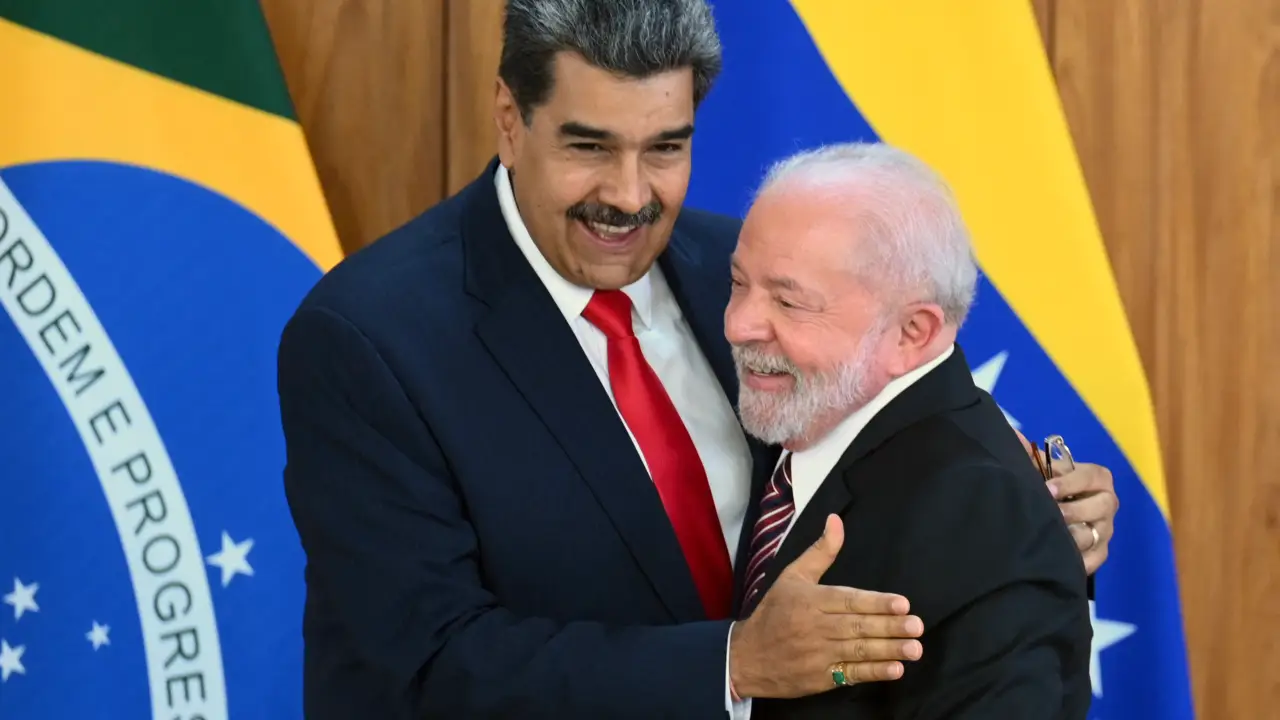
President Luiz Inácio Lula da Silva has generally favored dialogue with Caracas over isolation and sanctions, yet openly sheltering Maduro would represent a major escalation. It would risk deep domestic backlash, strain relations with Western democracies, and potentially be framed in Washington as a deliberate and hostile political gesture.
How the United States might react
If Brazil were perceived to be sheltering Maduro, the U.S. response would likely be swift and multilayered. Analysts point to four main pressure points. First, economic measures, including expanded tariffs or sanctions, could target Brazilian exports or officials linked to the decision. Second, diplomatic fallout would be immediate, with condemnation from Washington and possibly allied capitals. Third, intelligence collaboration on counternarcotics and transnational crime could be downgraded or suspended, harming operational cooperation across the region. Fourth, multilateral institutions, such as the Organization of American States, could become arenas for renewed confrontation and isolation.
Given ongoing trade disputes between the United States and Brazil, and American concerns about selective political prosecutions in Brazil, sheltering Maduro would be interpreted as evidence of a broader ideological realignment, accelerating bilateral deterioration.
Broader geopolitical consequences for Latin America
Beyond bilateral tensions, the matter could reshape regional alignments. Western partners including the European Union, Canada, and others would likely criticize Brazil. Colombia, Peru, and several Andean nations could tighten cooperation with Washington. Countries aligned with Venezuela and Brazil ideologically would offer rhetorical support, but practical backing would be limited.
Economic retaliation, such as tariffs or restrictions on multilateral financing, could hit Brazil’s export-dependent economy quickly. Security cooperation would fray, with fewer joint exercises and diminished intelligence sharing in the northern South American theater. All of these elements point to the episode’s potential to become one of the most serious diplomatic ruptures between Brasília and Washington in recent decades, if the hypothetical scenario materialized.
Why this episode matters even if it was just a flight
The facts remain: a Conviasa Airbus A-319 flew from Caracas to Santa Elena de Uairén, it landed near the border, and then it returned to Caracas. Brazilian authorities deny any entry by Maduro. Yet the mere suggestion that Brazil could be considered as a sanctuary for Maduro exposes deeper strains in hemispheric geopolitics and between Brazil and the United States.
In the current climate of heightened sanctions, tariff disputes, and polarized domestic politics, even an unverified rumor can catalyze real diplomatic and economic consequences. The episode is therefore less about proving whether Maduro crossed a border, and more about revealing fault lines in regional diplomacy, trade, and security cooperation.
For the moment, the story remains in the realm of speculation, but speculation in geopolitics is itself consequential. The movement of the Conviasa A-319 is a factual trigger, and the reactions it generated are a reminder that the geopolitical terrain in northern South America is shifting fast, and that Brazil’s choices will reverberate far beyond its borders.
Key takeaways: The flight to Santa Elena de Uairén is verified, there is no confirmed evidence that Nicolás Maduro entered Brazil, and the diplomatic, economic, and security costs of a hypothetical Brazilian sheltering of Maduro would be immediate and severe. As the region watches closely, the story remains an urgent test of Brazil–U.S. relations, and a case study in how unverified movements can become geopolitical flashpoints.