A clear guide to D-Day, Operation Overlord, and the ten facts every reader should know about the invasion that changed World War II
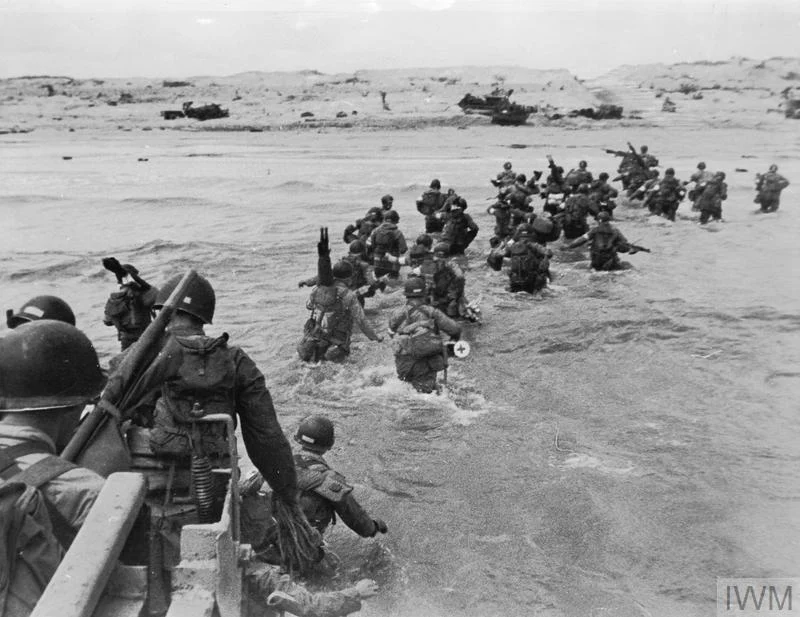
D-Day remains one of the most studied military operations in history, and its myths and realities matter for how we remember World War II. On the morning of 6 June 1944, Allied forces opened a massive, coordinated assault that combined air, sea, and land power. As the Imperial War Museums notes, “D-Day – 6 June 1944 – was the largest amphibious invasion in the history of warfare. The statistics of D-Day, codenamed Operation Overlord, are staggering. The Allies used over 5,000 ships and landing craft to land more than 150,000 troops on five beaches in Normandy.”
What D-Day meant and how it began
D-Day was, first and foremost, the opening day of Operation Overlord, the long-awaited western front assault designed to defeat Nazi Germany in north-west Europe. As planners put it plainly, “the ‘D’ in D-Day stands simply for ‘day’,” used to mark the start of a major operation. Early on 6 June, Allied airborne forces parachuted into drop zones across northern France, to secure inland positions and disrupt German command and supply lines. Later that day, ground troops struck five designated beaches, named Utah, Omaha, Gold, Juno, and Sword, and by nightfall had established the initial footholds they needed to begin the push inland.
Planning, scale, and international cooperation
The invasion was the product of years of planning and a unique Allied coalition. Lieutenant-General Frederick Morgan led planning work beginning in earnest after the Tehran Conference, and a command team under General Dwight D. Eisenhower coordinated the combined naval, air, and land components. The operation depended on cooperation across nations, industry, and logistics. The IWM records that, to assemble the force, “in the first half of 1944 approximately 9 million tonnes of supplies and equipment crossed the Atlantic from North America to Britain,” while a “substantial Canadian force had been building up in Britain since December 1939 and over 1.4 million American servicemen arrived during 1943 and 1944 to take part in the landings.”
The human dimension was international. By 1944, “over 2 million troops from over 12 countries were in Britain in preparation for the invasion.” On D-Day itself, the primary assault forces were American, British, and Canadian, but naval, air, and ground support also came from Australia, Belgium, Czechoslovakia, the Netherlands, France, Greece, New Zealand, Norway, Rhodesia, and Poland.
The operation delivered unmatched naval and air power
The size of the operation is still hard to imagine. The naval component alone, Operation Neptune, used nearly every type of warship available. According to IWM, “Nearly 7,000 naval vessels, including battleships, destroyers, minesweepers, escorts and assault craft took part in Operation ‘Neptune’.” That armada escorted and landed “over 132,000 ground troops on the beaches“, conducted coastal bombardments, and provided crucial fire support as troops advanced off the landing craft.
Airpower was equally critical. In the hours and days around D-Day, Allied air forces flew “over 14,000 sorties” to cover the landings, suppress German defenses, and protect the invasion fleet. To secure immediate tactical advantages, “shortly after midnight on 6 June, over 18,000 Allied paratroopers were dropped into the invasion area” to seize bridges, road junctions, and key terrain behind enemy lines.
German defenses, obstacles, and the campaign after the beaches
Germany constructed the so-called Atlantic Wall to block an invasion, but the fortifications varied in strength and readiness. Resistance activity and Allied deception campaigns helped blunt German responses, and command confusion within German ranks compounded problems for their defenders. Still, the fighting was fierce. On Omaha Beach, American forces nearly failed to establish a foothold, in part because preliminary bombardments did not neutralize key defenders, and because German troops on that sector proved hard fought and experienced.
The Normandy campaign did not end with the landings. The bocage, a Normandy landscape of sunken lanes and thick hedgerows, slowed Allied advances and favored defenders. Over the next weeks and months, the Allies committed to a grinding campaign to expand the beachhead and push into France. The IWM stresses that D-Day was only the start, and that “establishing a bridgehead was critical, but it was just the first step.” The bloody, protracted Battle of Normandy, however, ultimately paved the way for the liberation of much of north-west Europe.
The success of Overlord also depended on Allied efforts across other fronts. Control of the Atlantic, secured after the Battle of the Atlantic, allowed the massive logistics flow that enabled the invasion. Strategic bombing campaigns had weakened German industry, and operations in Italy, along with Soviet offensives such as Operation Bagration, tied down German forces elsewhere, reducing the reserves available to repel the Normandy assault. Ten weeks after D-Day, the Allies opened a second invasion of the French Mediterranean coast, further squeezing German defenses.
D-Day did not end the war instantly, but it began the decisive western campaign. By late August 1944, German forces were retreating from France, though fighting continued across the Western Front into 1945. The scale, secrecy, and coordination of D-Day left a lasting legacy for modern coalition warfare, logistics, and amphibious doctrine.
Why D-Day still matters
Beyond the statistics and the tactical details, D-Day symbolizes an Allied commitment to open a western front and defeat Nazi Germany. The Imperial War Museums summarize the operation’s scale and impact with striking detail, including the summary that the Allies used “over 5,000 ships and landing craft to land more than 150,000 troops on five beaches in Normandy.” Those numbers reflect logistics, planning, courage, and cost, and they help explain why D-Day remains central to how we understand World War II.
Remembering D-Day means recognizing both the enormous coordination that made it possible, and the human price paid on the beaches and in the hedgerows thereafter. For readers seeking a compact takeaway, the ten key facts behind the invasion — its purpose, planning, scale, international composition, naval and air power, German defenses, supporting campaigns, the extended Normandy fight, the campaign’s long-term strategic effect, and the broader use of the term “D-Day” for many operations — together tell the story of the operation that reshaped Europe.
Sources: Imperial War Museums, D-Day: 6 June 1944