Why the concept of an “Uncontrollable War” matters for strategy, training, and national security planning
War resists tidy formulas, clear forecasts, and perfect preparation. As one US Army strategist put it in a Modern War Institute essay, “War is hard. Even the sharpest mind can’t accurately predict or adequately prepare for trial by combat.” That blunt assessment captures a central truth about modern conflict, and it helps explain why planners, policy makers, and militaries should adopt a posture of strategic modesty rather than confident control.
Why war resists prediction
At its most basic level, the unit of war is the duel, two people fighting for a political purpose. Carl von Clausewitz framed the problem centuries ago when he wrote, “War is nothing but a duel on a larger scale,” a description that still matters because it highlights the human core of every clash. That atomic interaction, whether on the patrol route or at the negotiating table, is shaped by psychology, culture, law, chance, geography, and political calculation.
Those many influences make it impossible to create a single, reliable model that will tell us where any given war will go. Historians can study past events, and political scientists can analyze states, but few fields can capture the full mix of human motives and environmental contingencies that produce violence. Because we cannot know what will animate the actors in a future conflict, we cannot trace trend lines well enough to predict the next stages of fighting with confidence.
Why preparation falls short
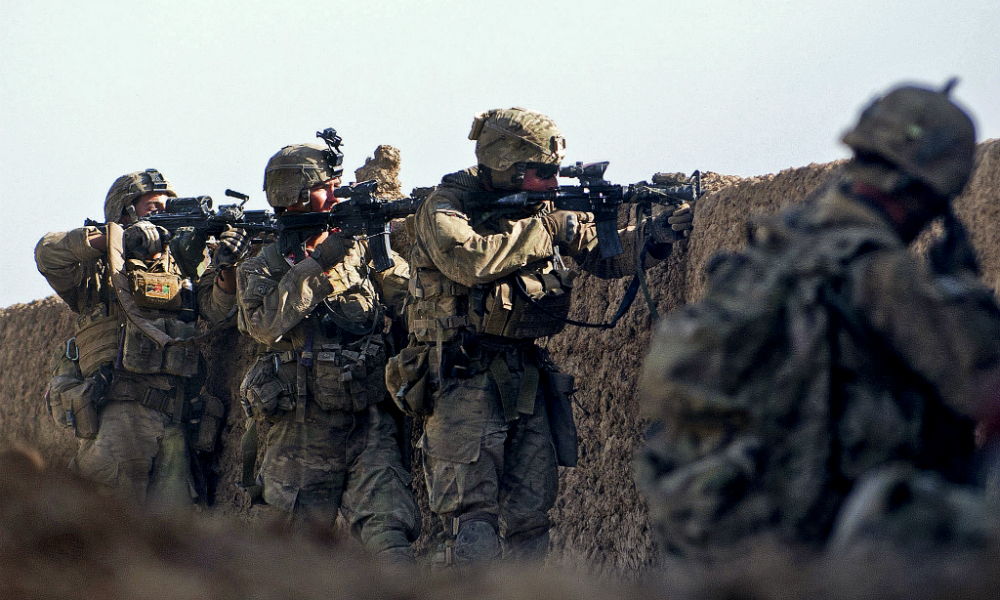
Preparation helps, but it cannot replicate the exact conditions of war. The essay uses a memorable comparison, saying “War is like ultra-distance running (i.e., any footrace beyond the marathon).” In an ultra, as in combat, competitors must perform beyond the bounds of what they could reasonably rehearse. You simply cannot simulate every stressor, every loss, and every surprise that will occur in a real fight.
That reality is personal for the author, who describes running an ultra in Moab with his wife, a former principal dancer with the San Francisco Ballet. Her background showed a career built on repetition and near-perfection, training to execute minutes of performance after endless preparation. By contrast, ultra-running flips that relationship, requiring people to do things they could not have rehearsed fully. As the essay notes, “we can’t go out and regularly run twenty-five or fifty miles to prep for a fifty-kilometer race or hundred-mile run; and we certainly can’t train for Sgt. Jones to die.” The same applies in combat, where no amount of training can fully prepare someone for the shock of loss, the fog of action, or the moral and psychological weight of real violence.
What this means for strategy and policy
Accepting that war is partly uncontrollable does not mean resigning to chaos. Instead, it calls for policies that emphasize resilience, adaptability, and realistic expectations. If strategists cannot predict every move of an adversary, then doctrine and training should prioritize distributed decision-making, flexible logistics, and mental toughness.
Influence and shaping are valuable goals, but they should be pursued with humility. The author summarizes this position when he argues that the best a strategist can expect is to shape war at the margins, because we cannot truly control its next stage. That position encourages preparations that accept uncertainty, focus on core capabilities, and build institutions that can absorb shocks.
Practical takeaways for military leaders and planners
First, emphasize adaptable training that conditions people to respond under stress, rather than attempting to rehearse every possible scenario. Second, design plans that assume some level of surprise, and that allow teams to improvise within a shared framework of intent. Third, invest in resilience, including mental health and units that can continue functioning after losses. Finally, cultivate strategic modesty, acknowledging the limits of prediction and control.
The Modern War Institute piece also included a formal caveat about perspective, reminding readers that “This essay is an unofficial expression of opinion; the views expressed are those of the author and not necessarily those of West Point, the Department of the Army, the Department of Defense, or any agency of the US government.” That note reinforces the idea that even expert views are partial, and that healthy debate and scrutiny should guide policy.
In short, the idea of Uncontrollable War reframes how we approach conflict. It pushes planners away from hubristic attempts at full prediction and towards practices that accept uncertainty, build adaptability, and prepare people to perform beyond what training can fully guarantee. That shift in mindset may be the most important strategic adjustment of all.