The Rise of Vladimir Putin mapped from KGB roots to presidential power, legitimacy shifts, kompromat networks, and the making of modern Putinism
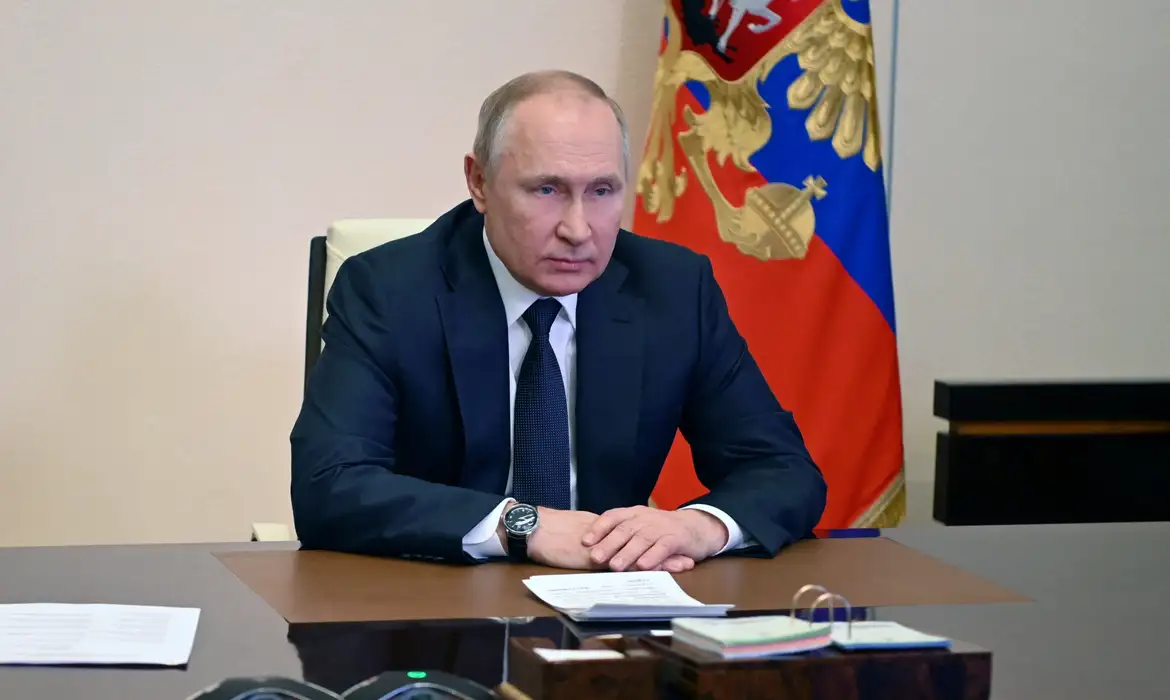
Vladimir Vladimirovich Putin’s political journey is one of the defining stories of 21st century geopolitics, and The Rise of Vladimir Putin helps explain how an obscure KGB officer became the central figure of a reinvented Russian state. Born in Leningrad in October 1952, Putin moved from intelligence work into politics, and his background in the security services shaped both his methods, and his long-term vision for power.
Putin’s climb accelerated during the chaotic 1990s after the Soviet collapse. The chaos of market reforms, weak institutions, and oligarchic influence created opportunities for strong centralized leadership. Crucially, on December 31, 1999, Yeltsin resigned, paving the way for Putin to become acting president. He was formally elected in March 2000. That transition marks the start of an era in which the presidency was rebuilt and redefined.
From spy craft to statecraft, the early consolidation
Putin’s time in the KGB and his later role as head of the Federal Security Service gave him networks and techniques he would later deploy in government. Scholars point out that, beyond timing, institutional reorganization after his election was decisive. Reports such as the Konrad Adenauer Foundation’s “Russia at the Beginning of the Putin Era” document how the early years involved strengthening the presidency, restraining regional leaders, and rebuilding state capacity. These moves created a structure that allowed power to flow toward the Kremlin, and away from fragmented regional authorities.
Observers note that Putin did not simply inherit institutions, he reshaped them. He surrounded himself with loyal siloviki, trusted bureaucrats, and managers who could implement centralized control. That institutional reconfiguration is a central reason why The Rise of Vladimir Putin led to a durable, if hybrid, authoritarian order.
Leadership style, charisma, and coercion
Scholars like Samir Novruzov have analyzed Putin’s traits and leadership style, arguing that he combines directive leadership, charisma, and pragmatic ruthlessness. Novruzov describes what he calls “pseudo-transformational leadership,” a blend of personal appeal and coercive power that allowed Putin to centralize authority and neutralize rivals. This mix made him both a symbol of stability for many Russians, and a leader who uses state instruments to enforce loyalty.
Putin’s narrative evolved with political needs. In the early 2000s, he presented himself as a stabilizer who would curb oligarchic excesses and restore order. After returning to the presidency in 2012, his message moved toward a more confrontational posture, framing Russia as threatened by the West and internal “fifth column” forces. That rhetorical shift helped fuse nationalism and conservative social values into his political brand.
Legitimacy, memory politics, and institutional control
Understanding The Rise of Vladimir Putin also requires looking at changing sources of legitimacy. Tina Burrett’s study, titled “Making Russia Great Again? Vladimir Putin’s Changing Sources of Legitimacy, 2000–2024,” argues that Putin reconfigured his foundational narrative in response to domestic and international changes. In the early years, legitimacy rested on promises of reform and stability. Over time, the emphasis moved to a defensive nationalism that invoked history, Orthodox values, and anti-Western frames to rally public support.
At the same time, the regime paired narrative with coercion. Elections under Putin retained formal procedures, while opposition, media, and civil society sectors faced legal, financial, and extrajudicial pressure. Institutional control extended across the security services, the judiciary, and the media, creating a system in which public legitimacy is reinforced by concentrated state power.
Kompromat, networks, and the mechanics of control
A darker, but central, element of The Rise of Vladimir Putin is the use of kompromat, compromising material that creates leverage over elites. Studies such as Dmitry Zinoviev’s network analysis, “A Social Network of Russian ‘Kompromat’,” show how kompromat functions as an embedded mechanism of power, binding business and political figures into dependencies. Through this networked leverage, loyalty becomes enforceable, and dissent becomes costly.
Historically, investigative reporting and scholarship have identified numerous instances where kompromat, financial ties, and intelligence tools helped manage elites. For Putin, mastery of these techniques was not accidental, it reflected the knowledge and instincts of someone who had spent years in security services, and who understood how secrets and influence translate into durable authority.
Putinism explained, and the international dimension
Political scientists have coined the term Putinism to capture the mix of personalized rule, conservative nationalism, and managed pluralism that defines the regime. Scholars such as Ana Paula Balthazar Tostes describe Putinism as a form of populism that revolves around a charismatic leader, strong symbolic politics, and centralized control. The regime’s use of history, from imperial narratives to the Soviet victory in World War II, helps legitimate its claims to national revival.
On the international stage, Putin framed Russia as a wronged great power, and after 2014, the annexation of Crimea intensified a narrative of confrontation with the West. This external framing served domestic ends, allowing the Kremlin to justify tougher measures at home, and to portray foreign pressure as validation of its claim to defend Russian sovereignty.
Contradictions, risks, and the future
Despite its durability, The Rise of Vladimir Putin is not without contradictions. The economy remains heavily reliant on natural resources, and sanctions create long-term risks. Generational change poses another challenge, as younger Russians may be less receptive to nationalist narratives and memory politics. Institutional adaptability has been a strength, but it can also mask vulnerabilities, especially around succession and elite cohesion.
Finally, the regime’s legitimacy paradox remains: coercion can sustain power, but overreliance on fear, and on symbolic appeals to history, may leave the system brittle in the face of major crises. Putin’s leadership succeeded in turning post-Soviet weakness into a centralized state, but that achievement is balanced by structural tensions that could test the future of Putinism.
In sum, The Rise of Vladimir Putin is a complex story of personal skill, institutional redesign, ideological framing, and coercive control. From KGB officer to Russian strongman, Putin’s trajectory reshaped Russia at home, and changed the global balance, and the long arc of his rule will continue to shape international politics for years to come.