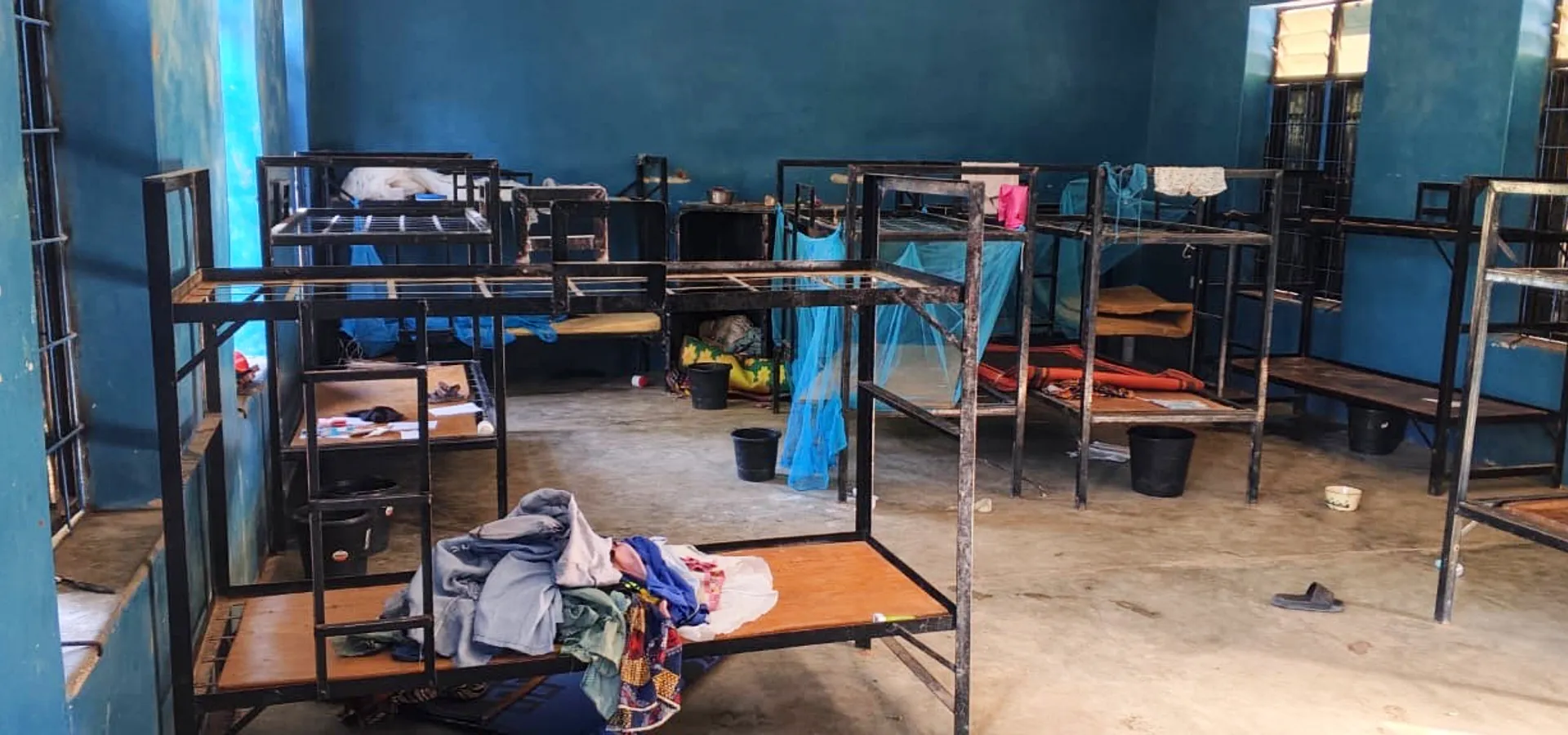
Inside the Nigeria school kidnapping crisis, the actors, the motives, and why children are being singled out for ransom and terror
A wave of abductions in Nigeria has revived painful memories of past mass kidnappings, after gunmen seized students and staff from two schools in the country’s north. According to local reports, armed men attacked Saint Mary’s Catholic School in Niger state and another girls’ school in Kebbi state, and the scale of the operation has left communities demanding answers. The incident has been described by local leaders and observers as one of the worst school abductions since Chibok.
What happened, and who was taken
Local Christian leaders said the attack on Saint Mary’s Catholic School in Niger state resulted in the kidnapping of 303 children and 12 teachers. As reported by Sarah Shamim, “Gunmen have kidnapped hundreds of students and teachers from two schools in Nigeria in the worst case of abductions since more than 270 girls from Chibok town were snatched from their school in 2014.” The students taken at Saint Mary’s included both boys and girls aged 10 to 18, according to Reverend Bulus Dauwa Yohanna, the chairman of CAN’s Niger chapter.
Fifty pupils managed to escape and were reunited with their families, leaving, as authorities put it, 253 children still being held by kidnappers. In a separate attack in Kebbi state’s Maga town, gunmen abducted 25 schoolgirls just days earlier. No group has publicly claimed responsibility for these latest abductions.
Who is likely behind the Nigeria school kidnapping, and why
Investigators and local journalists point to armed bandit groups, rather than organized extremist movements, as the most probable perpetrators. Ibrahim M Ndamitso, a journalist in Minna, said the area “has predominantly suffered banditry activity in recent times,” and he added the groups treat the region as “a transit point around the north of Niger, taking animals, stealing people’s cows, picking people for ransoms and all of these things.”
Security analyst Bulama Bukarti, a Nigerian human rights lawyer based in London, told reporters, “What these gangs do normally is to keep these children in captivity for weeks, sometimes months, and extort ransoms from either their families or from the government,” Bukarti said. “These ransoms can run into hundreds of dollars, hundreds of thousands of dollars before releasing them.” The economic motive, analysts say, is a defining factor in many of the region’s kidnappings.
Are these kidnappings religiously motivated
Experts caution against labeling the recent spate of abductions as sectarian. While the attack has reignited memories of Boko Haram’s 2014 abduction of 276 girls in Chibok, the pattern in northwest and north-central Nigeria is different. The recent incidents are widely described as carried out by amorphous “bandit” groups focused on ransom, not by the extremist networks whose attacks are driven by an explicit sectarian agenda.
The broader context includes long-running clashes between pastoralist groups and farming communities, and rising criminality across multiple regions. Official population estimates also show a mixed religious landscape, with “As of 2020, Muslims made up a majority of Nigeria’s population, accounting for 56.1 percent of the population, while Christians comprised 43.4 percent,” a statistic frequently cited in coverage of intercommunal tensions.
Government response, community impact, and international reaction
The Nigerian government ordered immediate school closures across multiple states, and Niger state’s regional government mandated the shutdown of all schools in its territory, measures that have interrupted education for thousands of children. President Bola Tinubu, during a security meeting, ordered the hiring of 30,000 more police officers, and directed that officers be removed from VIP protection duties so they can focus on securing remote areas prone to attacks. The government also said it would deploy the minister of defence to Niger state, and tactical squads along with local hunters have been dispatched in search of the hostages.
International and religious leaders have responded with calls for action. Pope Leo XIV said, “I make a heartfelt appeal for the immediate release of the hostages and urge the competent authorities to take appropriate and timely decisions to ensure their release,” the pope said on Sunday. The case has also drawn sharp criticism from international political figures, including a social media post from former U.S. President Donald Trump, who wrote, “If the Nigerian Government continues to allow the killing of Christians, the USA will immediately stop all aid and assistance to Nigeria, and may very well go into that now disgraced country, ‘guns-a-blazing,’ to completely wipe out the Islamic Terrorists who are committing these horrible atrocities.” Nigerian officials have rejected claims that Christians are being singled out for persecution, and they describe some of the violence as a “local farmer-herdsmen crisis.”
The human toll of insecurity in Nigeria extends beyond these recent abductions, and the government faces a difficult landscape. Observers note that “More than 1,400 Nigerian students have been kidnapped since 2014,” and that the recent case is the “13th such incident in the past 11 years,” according to analysts following the trend. Since President Tinubu took office in 2023, it is reported that “More than 10,000 people have been killed and hundreds kidnapped since Tinubu was elected president in 2023. As many as three million people remain displaced by the violence.” These figures underscore the scale of the security challenge.
For families and communities near the attack sites, the immediate priority is the safe return of the remaining hostages. Officials continue to search, while calling for calm and cooperation with security forces. The incidents highlight why the phrase Nigeria school kidnapping has again become a central concern for policymakers, parents, and international advocates, and why questions about motive, responsibility, and long-term protection of children remain urgent.
Authorities, analysts, and civil society say lasting solutions will require improved local security, stronger state capacity in remote areas, and targeted measures to reduce the economic incentives that fuel ransom-based abductions. Until those measures take hold, communities fear that schools and children will remain vulnerable to groups that see abduction as a source of income and leverage.