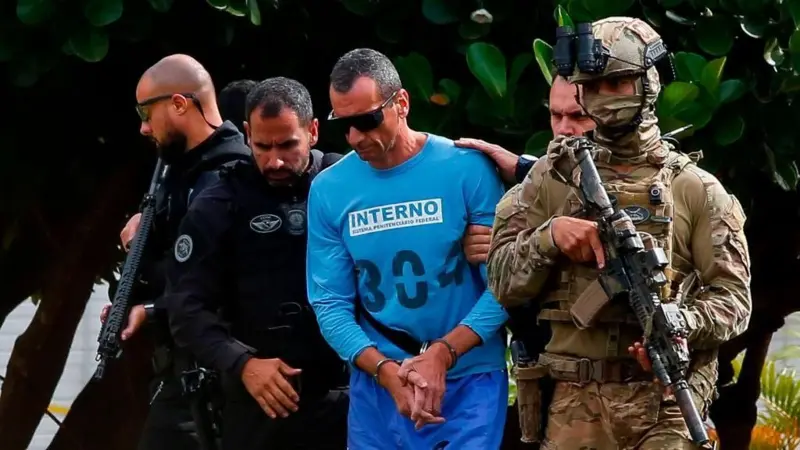
Inside how The PCC turned Brazilian prisons into a logistics hub, built Atlantic and Pacific cocaine routes, and modernized money laundering
The PCC, the Primeiro Comando da Capital, has grown from a São Paulo prison brotherhood into a transnational criminal network that now shapes drug flows, money laundering, and local governance across continents. Founded in 1993 after the Carandiru massacre, the group used incarceration not as a limit, but as infrastructure for organization, recruitment, and command. Over the past three decades, The PCC developed strict internal discipline, a corporate style of operations, and global logistics, turning prisons into the heart of a global criminal enterprise.

Origins and the prison as a command center
The PCC was born in Taubaté prison following the Carandiru massacre, and it quickly forged a collective identity based on loyalty, mutual protection, and retaliation against state violence. As reporting makes clear, prison life became an operational advantage, with hierarchy, communication networks, and a captive population that could be organized across facilities.
Analysts at the Brookings Institution call the group a “criminal governance structure”, a phrase that captures how the PCC fills gaps left by weak or abusive institutions. Inside and outside prisons, the faction enforces rules, collects monthly dues, and runs internal tribunals. Al Jazeera described this model as creating a “state within a state”, because the detention system doubles as a nerve center for recruitment, discipline, and strategic planning.
From pragmatic discipline to multinational logistics
What set The PCC apart from many other criminal groups was a strategic focus on business efficiency. As The Economist notes, the faction prioritized minimizing attention while maximizing revenue, emphasizing negotiation, discipline, and long-term planning rather than conspicuous violence. That approach allowed leaders to build durable partnerships with suppliers and transport operators across South America and beyond.
During the 2010s and 2020s, the PCC moved from being a dominant force within Brazil to a global logistics actor. Research by the Global Initiative Against Transnational Organized Crime maps how the group forged direct ties with producers and traffickers in Bolivia, Paraguay, Colombia, and Peru, cutting out intermediaries to raise profits. From those supply bases, networks were created to push cocaine through West Africa, Europe, and surprisingly, into Australia.
Routes, hubs, and international partnerships
West Africa emerged as a key transit corridor, because porous borders, political instability, and corruption created openings for large shipments. GI-TOC analysis shows the group diversified its routes, using maritime, air, and land corridors to reduce risk, and adopting a decentralized model similar to global shipping businesses. The result is resilience, because seizures or arrests in one corridor do not collapse the entire network.
European intelligence also signals growing PCC interest on that continent. According to the UK Government’s 2025 report on organized criminal groups, the faction has an active presence in Spain, Portugal, the Netherlands, and the UK. There, The PCC exploits Brazilian diaspora communities, corrupt port officials, and alliances with local mafias to move large quantities of cocaine into European markets.
In a development that surprised many analysts, Australian authorities have intercepted shipments linked to PCC operatives, reflecting the group’s pursuit of long-distance, high-margin markets. These moves show the PCC’s willingness to reach beyond Atlantic routes and to target regions with high retail cocaine prices.

Money laundering, financial adaptation, and digital tools
As logistics expanded, The PCC adapted financially, building laundering pipelines that mirror those of advanced criminal syndicates. U.S. Treasury sanctions and investigative reporting identify multiple techniques the organization uses to wash proceeds and reinvest into logistics, weapons, and influence. Common methods include offshore accounts, cryptocurrency transactions, fake import and export companies, cross-border cash smuggling, and real estate purchases used to clean funds.
Pressure from international sanctions and asset freezes has pushed the group toward more sophisticated and digital methods. Increased use of crypto, front companies, and complex corporate structures allows funds to move quickly across jurisdictions, making it harder for law enforcement to follow the money. Analysts warn that financial globalization and liberalized markets create loopholes that experienced syndicates exploit, and The PCC has proven adept at doing exactly that.
Parallel governance and social impact
In many neglected urban areas, the PCC provides services that the state does not, such as dispute resolution, small loans, and a form of security. This practical provision of order builds local legitimacy, because residents rely on the group out of necessity, not ideology. The Brookings Institution’s framing of the PCC as a “criminal governance structure” underscores how these functions erode state authority, and how a criminal organization can come to occupy the social and economic space of a formal government.
At the same time, the PCC’s operations sometimes overlap with networks associated with terrorism, particularly regarding logistics and financing. UNICRI notes opportunistic cooperation in border regions, where smuggling routes and laundering mechanisms converge. Even when the PCC pursues purely profit-driven aims, these intersections complicate international efforts to combat both organized crime and terrorism.
What the rise of The PCC means for global security
The ascent of The PCC illustrates larger trends in transnational crime. Criminal groups increasingly act like multinational corporations, seeking efficiency, diversification, and long-term survival. State borders matter less when a syndicate can coordinate shipments from South America through West Africa and into Europe or Asia, using corrupt officials and diaspora networks to anchor operations locally.
Prisons have shifted from containment facilities into command centers, and unless detention systems are reformed, other criminal groups may replicate the PCC model. International law enforcement faces a hybrid adversary, one that is neither a traditional cartel nor a terrorist group, but rather a transnational enterprise with ideological cohesion, logistical sophistication, and global reach. As The Guardian put it, the organization is now an “international criminal leviathan”, a phrase that captures the scale and adaptability of this new threat.
Looking ahead, intelligence and academic analysis point to several likely moves. The PCC will probably deepen its penetration into European ports such as Rotterdam and Antwerp, expand crypto-enabled laundering, reinforce alliances in West Africa and the Western Balkans, and diversify into non-drug markets like illegal mining, human trafficking, and cybercrime. Crucially, Brazilian prisons are expected to remain a central hub for command and recruitment unless major policy reforms change the incentives that made the PCC powerful in the first place.
The PCC is no longer a problem contained within Brazil. Its growth reveals a sobering truth about the twenty first century, namely, that fragmented states and interconnected markets can allow criminal organizations to evolve faster than the institutions built to contain them. Understanding this dynamic is the first step toward designing international responses that combine policing, financial controls, prison reform, and community investment, so that states can reclaim spaces now governed by criminal enterprise.