A clear, readable account of Saladin’s rise from Tikrit to Sultan, his military victories and diplomacy, and the legacy that shaped the medieval Middle East
Saladin remains one of the most recognizable figures from the medieval Near East, a leader whose combination of military skill, political savvy, and religious legitimacy created a lasting impression across cultures. His life took him from humble Kurdish origins to the rulership of a vast and multiethnic realm, and his actions during the late twelfth century reshaped the balance of power between Muslim states and the Crusader polities. This article explains how Saladin rose, ruled, and left a complicated but enduring legacy.

Origins and early years
Saladin was not born into royalty, and his background shaped the pragmatic, disciplined leader he became. According to reference works, “Saladin was born around 1137/38 in Tikrīt,” Encyclopedia Britannica. His family belonged to a Kurdish tribe, and both his father, Najm al‑Dīn Ayyūb, and his uncle, Shirkuh, served as military commanders under the Zengid dynasty. The young Saladin combined religious study with military apprenticeship. The record notes that “By the age of fourteen, Saladin was already with his uncle in Aleppo,” Enciclopédia Online, where he absorbed political and martial training that would later inform his leadership.
These early experiences gave him a dual reputation, as someone deeply devout, and as an effective organizer of men and resources. They also connected him to the major power networks of the region, especially the court of Nūr al‑Dīn, which helped open the path that led him into Egyptian politics.
Rise to power in Egypt, and the Ayyubid foundation
Saladin’s decisive opportunity came in Egypt, where the Fatimid state was weakened and vulnerable. After the death of his uncle Shirkuh, Saladin was appointed vizier to the Fatimid caliph. As vizier he consolidated influence and moved to reshape Egypt’s religious and political orientation. One modern summary states, “In 1171, he abolished the Fatimid caliphate and restored Sunni Islam in Egypt, aligning himself nominally with Nūr al‑Dīn and the Abbasid caliphate in Baghdad,” HISTORY. That shift did more than alter ceremonial allegiance, it created the institutional base for what would become the Ayyubid dynasty, named after Saladin’s father, Ayyub.
When Nūr al‑Dīn died in 1174, Saladin expanded his authority into Syria and beyond, consolidating control over Damascus and gradually bringing key regions like Aleppo, northern Mesopotamia, and Palestine into a multi‑centered Sultanate. Rather than ruling through direct bureaucratic centralization alone, he relied on a network of loyal emirs and family members, a structure that combined military command with decentralization.
Military strategy, Hattin, and Jerusalem
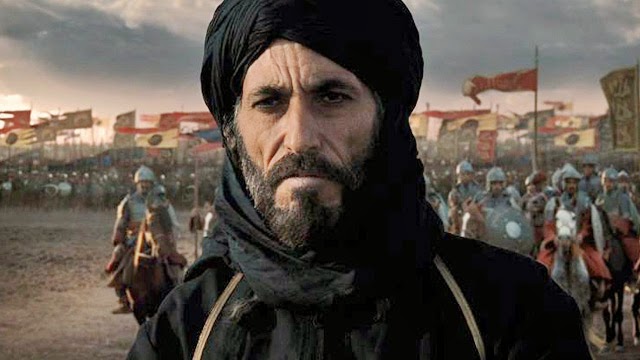
Saladin is best known for his military leadership, especially during the campaigns that culminated in the late 1180s. Historians note that “Perhaps his most famous victory came at the Battle of Hattin in 1187,” HISTORY, where his forces decisively defeated a Crusader army. His victory there was the result of careful planning, tactical use of terrain and logistics, and the coordination of allied contingents, which together neutralized the Crusaders’ ability to operate effectively.
Following Hattin, Saladin moved on Jerusalem, taking the city in October 1187. Contemporary and later accounts emphasize the contrast between his entry and many earlier sackings in the region, with acts that modern chroniclers describe as relatively restrained. His capture of Jerusalem had immense symbolic, religious, and political weight, and it prompted a major European response, the Third Crusade.
During the Third Crusade, Saladin faced some of Europe’s most famous monarchs, including Richard the Lionheart. Rather than pursuing perpetual total war, he mixed battlefield resistance with negotiation. The result was a complicated settlement that, while it left Muslim control of Jerusalem intact, allowed Christian pilgrims access to the city. That mix of force and diplomacy reflected Saladin’s goal of preserving the safety and stability of his realm while defending key religious and political objectives.
Governance, reputation, and limits
Beyond battlefield successes, Saladin governed with an emphasis on legitimacy. He patronized scholars, supported legal and religious institutions, and sought to create administrative frameworks that integrated the diverse populations under his rule. Accounts highlight his personal conduct as reinforcing his reputation, for example through acts of generosity and the image of submitting himself to legal processes rather than overriding justice by force.
Yet his model had limits. By dividing territories among relatives and allies, he secured short‑term loyalty at the expense of long‑term central cohesion. The Ayyubid polity after his death functioned as a federation of semi‑autonomous rulers, which made sustained unity fragile. As Encyclopedia Britannica records, “Saladin died on March 4, 1193, in Damascus.” After his death, succession disputes, internal rivalries, and the eventual rise of the Mamluks in Egypt diluted the Ayyubid hold on power.
Legacy and memory
The enduring power of Saladin is not only in the territories he commanded, it is in how he was remembered. Muslim chroniclers celebrated him as a unifier and a just ruler, while some European writers depicted him as a noble and chivalrous opponent. His biography by Baha al‑Dīn ibn Shaddād helped cement a moral portrait that later generations adapted for various national and religious narratives.
Saladin’s legacy includes the institutional foundations he set in Egypt and Syria, the military precedent of skillful coordination of armies, and a memory that has been mobilized in modern politics and culture. He remains a potent symbol of leadership, resistance, and moral authority, even as historians probe the practical limits of his model of governance.
In short, Saladin was a complex figure, a warrior and a statesman, who used faith, diplomacy, and military competence to create a remarkable, if ultimately fragile, polity. His victories at Hattin, his measured capture of Jerusalem, and his administrative choices shaped the medieval Middle East and left a legacy that continues to be debated and celebrated today.