Nayib Bukele’s Meteoric Rise: The Political Recalibration of El Salvador
In the dynamic landscape of Latin America, Nayib Bukele’s meteoric rise has captured global attention. His ascent wasn’t a sudden political coup or solely a product of savvy media manipulation. Instead, it was fueled by deep-seated societal weariness, decades of institutional decay, generational shifts, and a political system that had long failed to deliver solutions. Bukele’s emergence signifies a new era in El Salvador’s political evolution, characterized by disillusionment with traditional parties, a yearning for stability, and a populace increasingly willing to trade conventional democratic norms for tangible results. Understanding this rapid ascent requires examining the underlying fractures that shaped modern Salvadoran society.

The Pre-Bukele Political Battlefield: Decades of Stagnation
For decades leading up to Bukele’s arrival, El Salvador’s political arena was dominated by two entrenched rivals: the right-wing ARENA and the FMLN, a party born from the leftist guerrilla movement of the civil war. Their intense rivalry shaped every election, public discourse, and national institution. However, the peace accords of 1992 failed to bring about the profound transformation Salvadorans had envisioned. Instead, the nation transitioned from civil conflict to a pervasive climate of criminal violence.
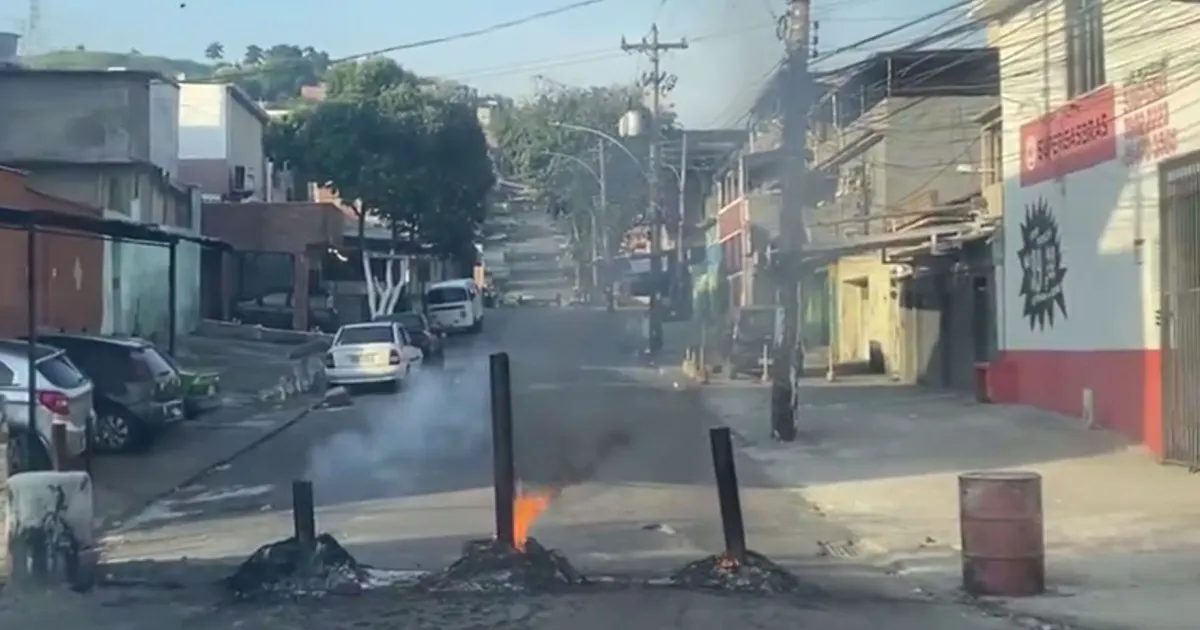
By the early 2000s, El Salvador was grappling with some of the highest homicide rates globally. Public institutions, including the judiciary, police force, and local administrations, were widely perceived as compromised. Corruption scandals plagued both major parties, while economic stagnation and mass emigration eroded public trust. As gang warfare escalated, a growing number of Salvadorans concluded that the established political class had either lost control or lacked the resolve to restore order.
The FMLN’s victory in 2009 briefly sparked hopes for significant change. Yet, economic mismanagement, internal divisions, and persistent allegations of corruption undermined its legitimacy. ARENA, weakened by its own scandals, struggled to offer a compelling alternative. By the mid-2010s, the bipartisan system that had governed Salvadoran politics for nearly three decades was visibly crumbling under its own failures.
A significant political vacuum was forming. A generation that had not experienced the civil war began to reject the ideological narratives that had defined their parents’ and grandparents’ lives. These younger Salvadorans were not swayed by appeals to revolutionary history or anti-communist rhetoric. Their priorities were straightforward: security, employment, and effective governance – a desire for basic survival rather than grand political ideals.
Into this void stepped Nayib Bukele, ready to reshape the political landscape.
Crafting a New Political Identity: Bukele’s Modern Approach
While Nayib Bukele’s meteoric rise is often attributed to branding, this explanation alone falls short. More accurately, Bukele embodied a novel political archetype. He presented himself as a leader with modern aesthetics, youthfulness, irreverence, and a mastery of technology, standing in stark contrast to the aging leadership of ARENA and the FMLN. His previous roles as mayor of Nuevo Cuscatlán and later San Salvador had already showcased his ability to blend governance with media acumen.
Social media was not just a supplementary tool for his strategy, but his primary battleground. Through rapid-communication platforms, live broadcasts, and aggressive digital messaging, he cultivated a persona that felt accessible, contemporary, and untainted by the ideological fatigue plaguing Salvadoran politics. His message was direct and potent: “El Salvador has been betrayed. I will fix it.”
Unlike traditional politicians who relied on established party structures, Bukele built his support base directly with citizens, prioritizing digital engagement before political consolidation. His eventual expulsion from the FMLN allowed him to position himself as the anti-establishment alternative in a nation where trust in the existing system had reached historic lows. The more the old parties criticized him, the more his narrative gained traction, validating his claim, “They are the past. I am the future.”
The Tipping Point: Factors Behind Bukele’s 2019 Victory
By 2019, the political climate was perfectly aligned for Bukele’s breakthrough. Three critical structural factors underpinned his ascent:
Public Exhaustion with Bipartisan Failure: ARENA and the FMLN had alternated power for nearly three decades, leaving behind a legacy of social stagnation, pervasive insecurity, and corruption cases that discredited both parties. Salvadorans had lost faith in either party’s ability to address the nation’s systemic problems.
An Unprecedented Security Crisis: By 2015, El Salvador recorded a homicide rate of 103 per 100,000 inhabitants, placing it among the highest in the world. Families lived under de facto curfews imposed not by the state, but by powerful gangs. While traditional politicians offered speeches, Bukele promised decisive action, resonating with the daily urgency felt by the populace.
A Generational Cultural Shift: With more than half of El Salvador’s population under 30, this demographic lacked any emotional connection to the politics of the civil war era. They sought leaders who reflected their contemporary realities. As digital natives, they were precisely the audience Bukele targeted through his online presence.
In 2019, Bukele secured the presidency without the backing of either major party, marking the first time in modern Salvadoran history that the bipartisan dominance was broken. This was a seismic shift, fundamentally redrawing the nation’s political map.
Reconstructing Power: Bukele’s Strategic Consolidation
A crucial aspect of Nayib Bukele’s meteoric rise is his strategic consolidation of political control following his election victory. While not the primary focus here, understanding his trajectory necessitates acknowledging his deliberate reshaping of state institutions. Bukele governed not through negotiation with the traditional elite, but through direct confrontation, a style that resonated with a population weary of caution and compromise.
When his allies secured a supermajority in the Legislative Assembly in 2021, Bukele gained the necessary tools to restructure the judiciary, replace key officials, and advance his political agenda with fewer obstacles. This was more than just governance; it was a significant re-engineering of the state apparatus. Bukele’s model is built on four key pillars: dominating the narrative through social media, rapid decision-making framed as decisive leadership, direct communication that bypasses intermediaries, and portraying critics as impediments to national progress.
For his supporters, this approach represented liberation from a corrupt establishment. For his detractors, it signaled a troubling democratic backsliding. Regardless of interpretation, the outcome is clear: Bukele achieved a level of political popularity unmatched in the Western Hemisphere.
Why Salvadorans Embraced the Shift: Survival Over Ideology
The core reason behind Bukele’s success lies not in ideology, but in the pursuit of survival. Salvadorans endured decades of profound insecurity, persistent unemployment, mass emigration, and political stagnation. In this context, Bukele’s boldness, confidence, and apparent lack of ideological baggage offered a much-needed psychological release valve. Three social forces significantly consolidated his support:
The Deep Desire for Order: Salvadorans lived under a cloud of collective trauma. Bukele’s promises offered a potential break from the cycle of fear. He spoke not of gradual reforms, but of radical transformation.
The Collapse of Institutional Trust: When traditional institutions repeatedly fail to deliver, citizens often turn to strong individuals rather than strong systems. Bukele effectively filled this void.
The Appeal of a Post-Ideological Leader: Younger Salvadorans did not identify with the traditional left-right political spectrum. Bukele’s discourse aligned with a global trend of leaders who transcend old political categories, presenting themselves as embodiments of pragmatic efficiency.
The International Mirror: A New Regional Model?
While Bukele’s rise is often analyzed within El Salvador’s borders, the phenomenon reflects a broader regional trend. Across Latin America, traditional political parties are struggling to remain relevant amidst social fragmentation, technological disruption, and widespread frustration with crime and inequality. In this context, Bukele represents a prototype for a new breed of leader: one who is media-native, anti-establishment, intensely focused on security, driven by narrative control, institutionally disruptive, and possesses strong personal legitimacy.
This model is now being observed, and in some cases quietly studied, by political figures throughout the region, suggesting that Nayib Bukele’s meteoric rise might be more than a Salvadoran anomaly.
Looking Ahead: The Future of Bukele’s Political Blueprint
Predicting the long-term trajectory of Bukele’s model requires careful consideration of several key variables. The sustainability of his governance, which is heavily centered on his personal authority, remains a critical question for the future. Can such a model endure beyond the figure who created it? The durability of El Salvador’s institutional architecture, significantly reshaped under his tenure, will depend on political succession and economic resilience.
Furthermore, Bukele is already influencing leaders in Central and South America. His ultimate success or failure will undoubtedly shape the continent’s political landscape for years to come. Finally, managing public expectations will be crucial. Once a leader delivers dramatic change in one area, such as public safety, citizens may anticipate rapid transformation across all sectors, creating a high bar for future performance.
Conclusion: The Symbol and the Signal of Change
Nayib Bukele’s meteoric rise is more than just the story of a single politician; it is the narrative of a nation exhausted by outdated solutions, reaching for something radically different. His ascent signifies a profound rupture, a generational shift, and the emergence of a new political language in Latin America. Bukele did not invent this moment, but he powerfully embodied it. What unfolds next will determine whether his model becomes a new blueprint for governance or remains a singular, albeit impactful, anomaly in Salvadoran history. For now, his journey stands as one of the most compelling political transformations of the 21st century in the Americas.