How CECOT, mass arrests, and a state of exception built El Salvador’s Carceral Revolution, and why governments at home and abroad are watching closely
In just a few years, El Salvador has become a global example of hardline public security, centered on the vast facility known officially as the Terrorism Confinement Center, better known as CECOT. What advocates call decisive action, critics call an erosion of rights. What neither side disputes is that this is a defining moment: El Salvador’s Carceral Revolution is reshaping how states confront organized crime, and governments from the region to Europe are taking notes.

From fear to force
For decades, gangs like MS-13 and Barrio 18 controlled neighborhoods, extorted businesses, imposed informal curfews, and enforced their own brutal rules. When Nayib Bukele rose to power, he framed his presidency as a break from failed politics, promising to reclaim territory the gangs had effectively governed. Bukele’s messaging, amplified on social media, portrayed a simple choice: accept the status quo, or let the state reassert control.
In response to a wave of killings in 2022, Bukele declared a state of exception, suspending multiple constitutional rights, allowing warrantless arrests, and expanding military presence on the streets. The government moved quickly to detain large numbers of suspected gang members, a strategy intended to overwhelm criminal networks. Under that policy, “Under the state of exception, over 76,000 people have been detained.”
Building CECOT: a prison as statement
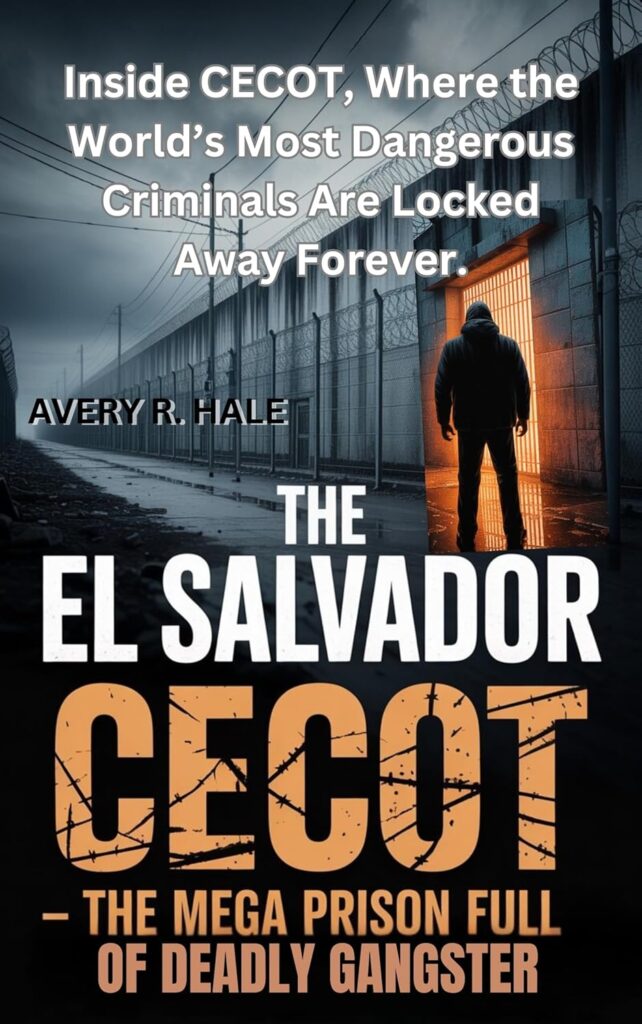
CECOT was designed not simply as another penitentiary, but as a physical demonstration of the state’s capacity to isolate and neutralize organized criminal leadership. Journalists permitted to enter describe an engineered fortress. The facility reportedly has a “Capacity for 40,000 inmates, making it one of the largest prisons in the world.” It stands in a remote area, ringed by multiple layers of security, including double perimeter walls, electrified fencing, thousands of cameras, and concrete guard towers. Inside, detainees face highly restrictive conditions, from constant monitoring, to limited space, to the suspension of visits and rehabilitative programs.
The government frames CECOT as a technical solution to a practical problem: gang bosses running criminal enterprises from inside existing jails. Concentrating high-risk detainees under tight surveillance, the state argued, would sever those lines of command and end the ability of incarcerated leaders to direct violence or extortion from behind bars. Politically, the transfers of shackled, tattooed inmates were staged as proof that Bukele had fulfilled his promise that gangs would “never again terrify the Salvadoran people.”
Immediate results, complex trade-offs
The short-term security gains have been dramatic and visible. Homicide rates fell sharply, extortion networks went quiet, and residents who once lived inside gang-imposed boundaries described new freedom of movement. Support for Bukele soared. As the source notes, “Public support for Bukele exceeded 85%, an almost unheard-of figure in the hemisphere.”
Yet the crackdown produced acute human rights concerns. Rights groups document thousands of arrests they describe as arbitrary, often based on appearance, tattoos, or anonymous denunciations. There are reports of deaths in custody and of detainees returned to families showing signs of violence or untreated illness. Observers point to opaque detention lists and limited access to legal counsel, raising alarms about due process.
The government has dismissed these criticisms, saying international actors “care more about criminals than about victims.” Human rights organizations counter that crime reduction cannot justify sweeping curbs on fundamental freedoms, and they warn that temporary emergency rules risk becoming permanent features of governance.
Regional ripple effects and the question of durability
Whether seen as a blueprint or a cautionary tale, El Salvador’s Carceral Revolution is already influencing policy debates across Latin America. Some governments facing similar gang violence have praised Bukele’s model, announced tougher measures, or started planning high-security facilities of their own. Political figures in other countries have held up CECOT as an image of decisive leadership, while international institutions warn about democratic backsliding.
Analysts outline several possible futures. In one scenario, the government maintains strict control over prisons and policing, and the security gains hold. In another, gangs adapt by shifting operations underground or across borders, potentially exporting violence to neighboring states. There is also the risk that emergency powers normalize authoritarian practices, undermining institutions over the long term. Finally, the state might institutionalize the emergency regime, reshaping El Salvador’s political identity for generations.
Importantly, some observers note a tactical paradox: while mass detention can neutralize street-level control, prisons themselves can become incubators for future criminal leadership if isolation, abuse, and neglect fuel loyalty and radicalization. That tension underscores why the long-term success of the model depends not only on containment, but on transparency, rule of law, and social policies that reduce the drivers of gang recruitment.
For many Salvadorans, the immediate relief is tangible. One commonly cited image from the country is the sense of ordinary life returning, residents saying they feel like they are “breathing free air” after years of living behind invisible borders. For critics, however, the cost in legal safeguards and human dignity raises questions about whether the price of safety undermines the foundations of democracy.
El Salvador’s Carceral Revolution has already altered regional conversations about security, state power, and criminal justice. Whether it becomes an exportable model, or a warning that deterrence without due process leads to a fragile peace, will depend on what unfolds inside CECOT’s walls, and on the legal and political choices the country makes next. The world is watching, because the outcome matters far beyond El Salvador’s borders.