A deep look at Chris Kyle, the life behind the legend, the controversies over medals and memoirs, and the lasting questions about veterans and trauma
Chris Kyle became a national figure long before a Hollywood film turned his life into a box office event, and his story continues to stir passion, pride, and debate. To many, he was a warrior defined by a single, stark metric, a man whose role on the battlefield seemed to distill into a number. That number, 160, according to official records, was repeated in headlines, conversations, and controversies, and it shaped how Americans saw Chris Kyle.

Kyle grew up in Odessa, Texas, in a culture where toughness and self-reliance were central, and he translated that background into a career as a Navy SEAL. From the rooftops of Ramadi to the streets of Fallujah, his role was simple in its intent, and complex in its reality. Through a sniper’s scope he viewed war in fragments, identifying and eliminating threats to protect fellow service members, a job that hardened him and narrowed his world to a single point of duty.
Roots, training, and the battlefield focus
His reputation as a marksman was not accidental. Raised handling rodeo horses and raised in a family and faith that prized responsibility, Chris Kyle carried into the SEAL teams a fierce sense of mission. Colleagues and profiles described a man who blended professional discipline with the instincts of someone raised outdoors, who believed in clear lines between friends and foes, and who embraced his role without equivocation.
War, however, rarely leaves clean lines. The Iraq conflict offered few uniforms and fewer clear front lines, and Kyle’s work often involved split-second decisions in urban chaos. He became known among some insurgents as the “Devil of Ramadi,” a sobriquet meant to intimidate that only heightened his mythic status in combat zones. For Kyle, each confirmed shot was framed as a protective act, a way to save Marines and soldiers at risk. In interviews he was direct, at times dispassionate, and at other times wry, yet there were unmistakable tremors below the surface.
The number, the memoir, and the controversies
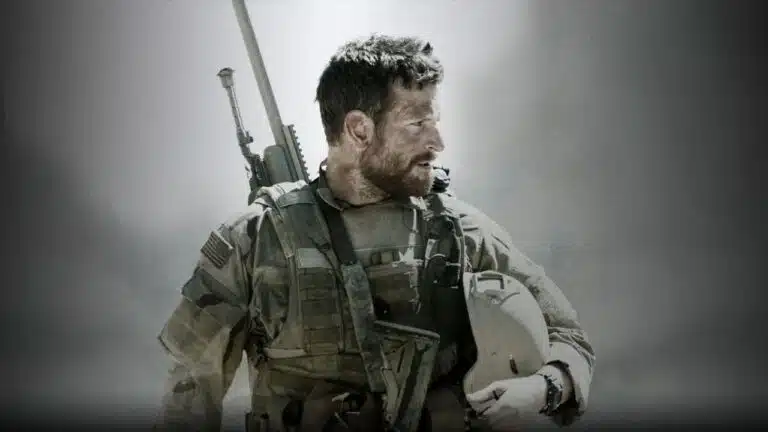
The metric of 160 confirmed kills became part of the public framing of Chris Kyle, though his legacy was not reducible to a count. He wrote about his experiences in American Sniper, and the book, and later Clint Eastwood’s film starring Bradley Cooper, amplified a particular portrait of him, a stoic protector standing between Americans and danger. Supporters argued the portrayal honored a soldier’s lived experience, and critics contended the film and the memoir smoothed over complexities of modern warfare.
Beyond cinematic debate, Kyle faced scrutiny over factual claims in his autobiography. Media outlets reported discrepancies tied to medals and specific accounts, and those investigations provoked fierce discussion about truth, memory, and hero worship. As one summary put it, the Navy confirmed that he had indeed earned significant honors, yet not to the extent he had stated publicly. That finding placed Chris Kyle back in a different kind of crosshairs, that of journalists and critics who sought to separate legend from record.
At the same time, many veterans and readers defended him, arguing that the moral and emotional truth of his service mattered more than the details under review. The debate revealed how America builds icons rapidly, and how difficult it can be to reconcile a public story with the messy, private aftermath of combat.
After the war, the struggle at home
Chris Kyle’s inner life was shaped by a stark transition, from the constant tension of combat to the relative quiet of civilian life. Profiles, including one in The New Yorker, depicted a man who oscillated between professional calm and personal turmoil, and who struggled to find a place after repeated deployments. His wife Taya described an emotional distance that grew, as Kyle navigated memories of firefights and the quieter, confusing rhythms of home.
He tried to convert purpose into healing, by helping wounded veterans and speaking about the challenges they faced. He sought to use his influence to assist others confronting trauma, even as he carried his own fractures. In public he could be humorous and direct, yet private witnesses noted the strain of a person trying to live with what the battlefield had carved into him. As he himself said about his actions, at one point, he insisted he felt neither pride nor regret about the lives he took, a sentence that revealed the complex moral armor he wore.
Death, memorial, and the long shadow
The end of Chris Kyle’s life was striking in its irony and tragedy. After years spent confronting danger overseas, he was killed on home soil in 2013, at a Texas gun range, by a fellow veteran he was attempting to help. The shooter, Eddie Ray Routh, was a former Marine who struggled with severe mental illness, and the killing prompted urgent conversations about PTSD, access to care, and the fragile intersections between veterans and the services intended to support them.
The public response was enormous, a blend of grief and patriotic ritual. Thousands attended his memorial service in a stadium, his coffin draped in the American flag, and the motorcade that carried him through Texas became a moment of national mourning. The spectacle underscored how a nation elevates its warriors, and how those public acts of honor can obscure deeper questions about how society treats the people it sends to war.
In the years since, Chris Kyle’s life has remained contested. To some he is a guardian on a rooftop, a man whose shots saved lives. To others he is a symbol of the complications of modern conflict, a reminder that heroism and error can coexist. His story invites a more mature national conversation, one that recognizes the courage of service, while also confronting why veterans return changed, and why the systems meant to help them often fall short.
Chris Kyle’s legacy is neither a tidy triumph, nor a simple scandal. It is a mixture of devotion, controversy, grief, and unresolved questions. His life, his memoir, and the film that followed, forced America to look at the paradox at the heart of its relationship with war, a paradox where society glorifies its warriors, and yet struggles to understand the personal costs they carry. The true contours of Chris Kyle’s story may lie beyond the crosshairs, in the shadows where memory, myth, and truth overlap, and where a nation still debates how to honor and care for those who have served.