A clear, step-by-step look at Operation Neptune Spear, the intelligence trail that led to Abbottabad, the legal debate, and why the raid still matters for modern counterterrorism
The decade-long manhunt and the “pacer” lead
After the attacks of September 11, 2001, U.S. agencies pursued Osama bin Laden for years across Afghanistan and Pakistan. The hunt was piecemeal, often frustrating, and based on a mosaic of sources, including signals intelligence, detainee interrogations, limited surveillance, and human networks across the region. Analysts repeatedly warned about false trails and past mistakes, such as Tora Bora, and the effort demanded extreme caution and compartmentalization.
By 2010, a narrow but decisive trail emerged from surveillance of a courier known to analysts as Abu Ahmed al-Kuwaiti. The CIA focused on an unusual compound in Abbottabad, a walled property with significant security measures, little outward communication, and a resident who rarely left. U.S. sources described that resident in shorthand as a “pacer,” a term that drew repeated attention during internal deliberations. No single piece of evidence proved bin Laden was inside, but the probability had risen to the point where American decision makers weighed action.

The legal debate: target, capture, or clearance to kill?
The operation raised immediate and sustained legal questions about sovereignty and the use of lethal force. Legal scholars framed the debate in competing terms. Some argued that bin Laden was a lawful military target because he remained a leader of an organized armed group engaged in hostilities against the United States, and that the Authorization for Use of Military Force (AUMF) provided legal cover for action wherever al-Qaeda operatives were found.
Other voices pressed harder on whether the U.S. had an obligation to attempt capture before using lethal force, especially when operation planners considered options such as a drone strike, a joint Pakistani operation, or a covert helicopter raid. Those tradeoffs framed the key legal questions of necessity, proportionality, and self-defense under international law. In the public record, commentators continue to cite the operation as a defining case in debates over the legality of targeted killings in the 21st century.
Pakistan, trust, and the White House decision
Relations with Pakistan complicated every step. U.S. leaders feared leaks and political fallout if Pakistan was informed beforehand, and the Obama administration chose to act without notifying Pakistani authorities. Analysts and commissions later asked how bin Laden could live so close to Pakistan’s military academy without detection. The Abbottabad inquiry raised the phrase “gross incompetence,” a critical characterization that underscored the depth of diplomatic strain, even as formal findings stopped short of proving deliberate complicity.
President Barack Obama faced a fraught strategic choice. He weighed three primary options, including a drone strike, a cooperative operation with Pakistan, and a helicopter raid. Each had risks. A drone attack risked destroying evidence and failing to confirm bin Laden’s death. Working with Pakistan risked leaks. Ultimately, the White House selected the most difficult option with the clearest chance of conclusive results. As the public record notes, “On April 29, 2011, Obama authorized the raid.”
The raid itself: 40 minutes that mattered
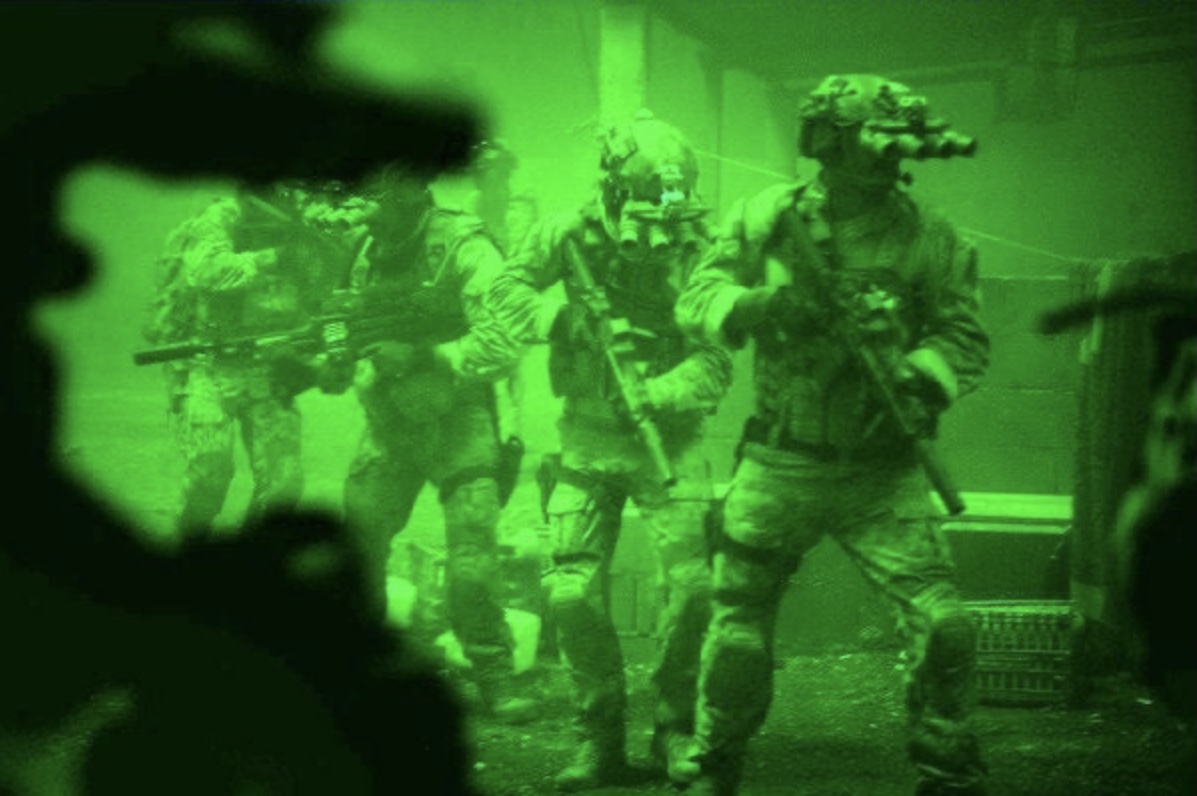
In the early hours of May 2, 2011, U.S. special operations forces executed the plan. Reports place the insertion “At approximately 1 A.M. local time,” when two modified Black Hawk helicopters crossed into Pakistani airspace. The operation moved quickly, with teams breaching the compound and clearing the house floor by floor. Unexpected conditions forced one helicopter to crash within the compound. The SEALs adapted to the loss of the aircraft, secured the site, and continued the mission.
On the third floor, they encountered Osama bin Laden. The encounter ended with bin Laden shot and killed, his identity later confirmed by DNA tests and other measures. The operation was fast and targeted. As after-action descriptions put it, “The entire mission lasted roughly 40 minutes.” U.S. forces collected materials from the compound, destroyed the downed helicopter, and departed, leaving behind a diplomatic and legal storm.
Aftermath, symbolism, and enduring debates
Bin Laden’s death produced immediate global reaction, from public celebrations to legal criticism. Strategists noted that al-Qaeda had by then become more decentralized, reducing bin Laden’s operational role, but the strike carried massive symbolic weight and demonstrated how intelligence-driven, small-team operations can produce outsized strategic effects.
For U.S.-Pakistan relations, the raid was a rupture. It exposed vulnerabilities in trust and prompted questions about Pakistani intelligence and military awareness. For lawyers and policy makers, it sharpened debates over targeted killing, the scope of executive authority, and how to balance sovereignty with the need to disrupt non-state threats. The operation also pushed counterterrorism practice toward a model that blends patient intelligence work with surgical, special-operations strikes.
Operation Neptune Spear remains a touchstone in modern security discussions because it crystallized tensions that have only grown more acute. It combined years of intelligence, difficult legal reasoning, and a White House decision that accepted acute operational risk in pursuit of a definitive result. The mission did not end global terrorism, but it closed a major chapter that began with the attacks of 2001, and it set precedents that continue to shape policy around targeted killings, international law, and the limits of state sovereignty.
Today, the raid is studied not as a single dramatic event, but as a case study in tradeoffs: the tradeoff between secrecy and partnership, the tradeoff between capture and lethal action, and the tradeoff between immediate tactical success and long-term diplomatic cost. Those tradeoffs remain central to how the United States, and many other countries, approach insurgent and terrorist threats in the 21st century.