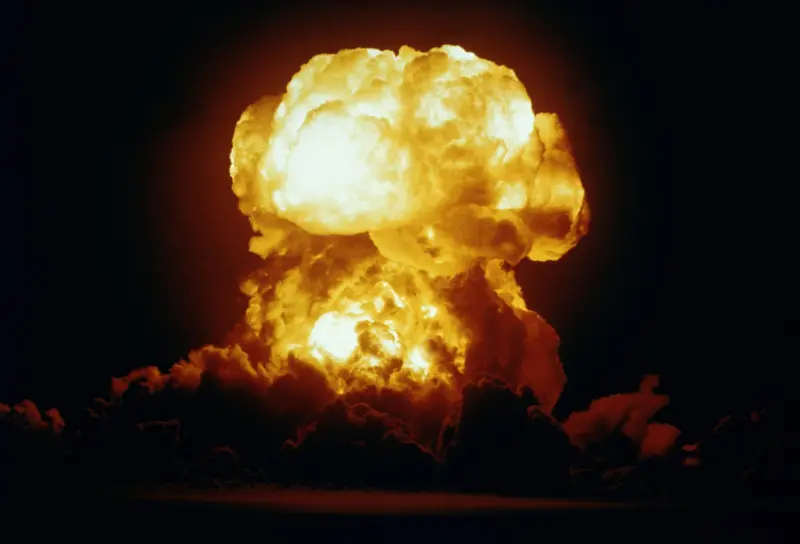
How Annie Jacobsen’s ‘Nuclear War’ uses a ‘minute-by-minute simulation’ to expose the fragility of modern deterrence and the danger of ‘launch-on-warning’
Annie Jacobsen’s book paints a stark, unsettling picture of how a modern Nuclear War might begin, and why the systems meant to prevent it are more fragile than many assume. Blending investigative reporting, expert interviews, and a dramatic narrative, Jacobsen creates what reviewers call “creative nonfiction”, using a “minute-by-minute simulation” to show how human error, outdated technology, and split-second protocols could cascade into catastrophe.
Method and credibility, why the story feels real
Jacobsen’s method is not academic abstraction, it is reportage that reads like a novel. She interviewed nuclear strategists, defense officials, and technical experts to construct a plausible scenario of escalation. Critics have argued that parts of the narrative feel dramatized, yet respected commentators, including Lawrence Freedman in Foreign Affairs, praise the book for clarifying how command and control systems work at the highest levels. The effect is a vivid, accessible account that brings technical, often arcane details into plain language, and forces readers to follow every decision that could lead from alarm to annihilation.

That accessibility is precisely what makes the book effective for a broad audience. Jacobsen’s narrative translates the complex mechanics of nuclear policy, such as early-warning detection and strategic command, into moments that ordinary readers can understand, and fear. The book’s dramatic structure intensifies the psychological impact, making the abstract risk of Nuclear War feel immediate.
The core vulnerability, ‘launch-on-warning’ and other risks
A central argument is that certain deterrence practices actually increase the danger of unintended escalation. Jacobsen focuses on protocols often summarized as “launch-on-warning”, which are intended to ensure a rapid response if incoming missiles are detected. While designed as a deterrent, these rapid-response rules can make the system brittle.
Experts and organizations referenced in the book, including analyses from the Arms Control Association and commentary attributed to the CIA, highlight how reliance on fast decisions, imperfect communications, and aging sensors can turn a false alarm into a launch order. Even minor technical glitches or misread data can be interpreted as an imminent strike, prompting decisions that leave almost no time for verification.
Reviewers such as Dr. Patricia Kellerman in Strategic Studies caution that Jacobsen’s scenarios may lean toward pessimism, yet they concede that the book effectively maps how small errors can have enormous consequences. The message is stark and simple: the apparent stability of nuclear deterrence is conditional, and it hinges on perfect judgment under pressure, which history shows is rarely guaranteed.
Human, ethical, and psychological consequences
Beyond the technical analysis, the narrative foregrounds the moral burden placed on those who might have to give life-or-death orders. By humanizing senior officials and military officers, Jacobsen forces readers to confront the ethical responsibilities tied to nuclear command. Publications like The Guardian and Iowa State Daily note that this perspective turns a strategic debate into a civic concern, asking citizens to consider how much control a few people should have over the fate of millions.
The book’s minute-by-minute construction deepens the psychological effect, creating a sustained sense of vulnerability. StoryGraph reviewers report that the text provokes fear and a heightened awareness of global risk, demonstrating how narrative can shape public perception and motivate civic engagement. In doing so, Jacobsen moves the conversation beyond policy circles to a wider audience, urging public scrutiny of systems that operate largely out of view.
Balancing alarmism and constructive action
One common critique is that the book risks sounding alarmist by portraying a near-total failure across multiple institutions simultaneously. Reviewers on Goodreads and Cybernews make this point. Yet proponents, and even some critical reviewers, argue that the dramatization is intentional, it is meant to illuminate the worst-case pathways so policymakers and the public take the necessary steps to avoid them.
The CIA review of the work notes that Jacobsen’s scenario functions as a structured exploration of what could occur if safeguards fail, rather than a literal prediction. That framing matters, because it shifts the book from sensationalism, to a tool for policy debate. The aim is to provoke meaningful reforms, including improved verification processes, modernization of early-warning systems, and international protocols to reduce the risk of reflexive escalation.
Policy implications, what needs to change
The implications for policy are immediate and practical. Jacobsen’s narrative underscores the need for modernization of command-and-control infrastructure, investments in reliable communications, and stricter rules that reduce the temptation to rely on split-second responses. Analysts suggest several concrete priorities: strengthen redundancy in detection systems, reduce incentives for hair-trigger postures, and increase transparency and dialogue among nuclear-armed states.
Equally important is democratic oversight. Iowa State Daily and other outlets emphasize that public awareness can compel elected officials to demand accountability and reforms from those in charge of the nuclear arsenal. If citizens understand the true fragility of deterrence, democratic pressure could lead to safer protocols and less risky postures.
Conclusion, a civic call to attention
Jacobsen’s book is a provocative wake-up call. By combining investigative reporting with a dramatized, technical reconstruction, the narrative highlights how a single misinterpreted signal, a software glitch, or a hurried order could trigger a catastrophic Nuclear War. While the book’s tone has spurred debate about its degree of alarmism, its core contribution is clear, it forces society to confront the ethical, technological, and institutional challenges that underpin deterrence.
For policymakers, scholars, and citizens alike, the lesson is urgent, deterrence cannot be taken for granted. The systems designed to keep the peace require constant oversight, modernization, and transparent debate, so that the world never has to test the terrible scenario Jacobsen lays out in chilling detail.