A clear timeline and analysis of The Benghazi Attack, the CIA Annex defense, and the policy breakdowns that left operators alone
On the night of September 11, 2012, what became known as The Benghazi Attack unfolded as militants overran a U.S. diplomatic outpost and later besieged a nearby CIA facility. The attack exposed how Libya’s post‑Gaddafi collapse, faulty threat assessments, and a thin security footprint combined to produce one of the most scrutinized crises of the decade. At the center of the story were the men on the ground, who fought through the night with discipline and skill while institutional responses above them faltered.

Libya after Gaddafi, and why the outpost was vulnerable
When the Libyan revolution succeeded in 2011, the state did not recover its monopoly on force. The result was a fractured landscape of armed militias, tribal networks, and Islamist groups, where weapons flowed from former regime stockpiles and foreign fighters found safe haven. In eastern Libya, intelligence reports warned that the region was becoming a hub for Ansar al‑Sharia, foreign mujahideen, and remnants of the Libyan Islamic Fighting Group, yet the U.S. presence in Benghazi stayed small and exposed.
Officials on the ground repeatedly flagged vulnerabilities. The diplomatic facility was not a formal consulate, it was a temporary outpost, supported by a CIA Annex several blocks away that conducted intelligence and counter‑smuggling work. The State Department’s Diplomatic Security Service requested reinforcements, noting perimeter walls were inadequate, local guards were inconsistent, and militia activity was rising. Those warnings were logged, but decisive action was limited.
The night the compound fell
On September 11, 2012, 9:42 PM, a large, coordinated group of armed militants approached the diplomatic compound. They attacked with rifles, RPGs, mortars, and incendiary devices. Within minutes, the perimeter was breached and the main building was burning. Ambassador Chris Stevens, Sean Smith, and Diplomatic Security agents were trapped in a smoke‑filled safe room. Repeated attempts to rescue them were made under heavy fire, but Ambassador Stevens and Sean Smith did not survive.
Survivors evacuated to the CIA Annex, where a small security team prepared to respond. The collapse of the outpost was not for lack of courage, it was the predictable result of under‑resourcing, misread threat assessments, and reliance on local militia forces that dispersed when the assault began.
“13 Hours” and the Annex security teams
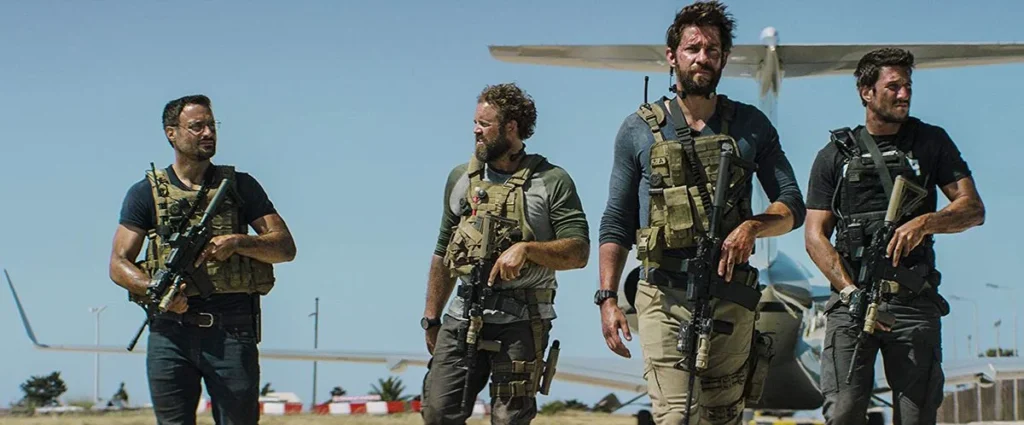
The story that has come to be called the “13 Hours” narrative focuses on the Annex security team, composed of former Marines, SEALs, Army Rangers, and contractors under the Global Response Staff. As the source summary put it, “The ’13 Hours’ narrative revolves around the Annex Security Team—former Marines, SEALs, Army Rangers, and contractors under the Global Response Staff.” Their names, Kris “Tanto” Paronto, Jack Silva, Mark “Oz” Geist, Tyrone Woods, Glen Doherty, John Tiegen, became emblematic of the raw, on‑the‑ground version of events.
The team reports they were prepared to move when the compound came under assault, but that they were delayed by CIA leadership who feared rapid action might escalate the situation or compromise covert operations. Whether a formal “stand down” order existed remains disputed; official congressional reports deny it, while the operators contend the delay was real. What is indisputable is that once the team moved, they executed disciplined small‑unit tactics, extracted survivors under fire, and returned to hold the Annex through a night of repeated attacks.
Assaults, casualties, and the limits of rapid response
From midnight until dawn, the Annex endured repeated, coordinated assaults using AK‑47s, RPG‑7s, PKM machine guns, and mortars. The security team used night‑vision optics and defensive firing positions to hold the perimeter, while calls for air support or rapid reinforcements were delayed by geography and bureaucracy. AFRICOM had limited assets within reach, European Command forces were hours away, and the State Department did not have a military rapid response force locally staged for Libya. In short, the men on the ground were effectively on their own.
Just after 5:15 AM, a mortar round struck the Annex roof, killing Tyrone Woods and Glen Doherty and wounding others. That precise, deadly strike underscored how well the attackers had coordinated by dawn. Reinforcements from Tripoli arrived only after the worst of the fighting had ended, and surviving personnel were evacuated the next morning.
Aftermath, controversy, and the larger lessons
The immediate aftermath of The Benghazi Attack sparked intense political debate and multiple investigations. Central questions included whether the assault was premeditated, why early public statements referenced spontaneous protests tied to an anti‑Islam video, why repeated security requests were not granted, and whether operators were told to stand down. Military and intelligence reports leaned toward the conclusion the attack was planned, while early public messaging and bureaucratic confusion fueled controversy.
Beyond partisanship, the episode highlighted systemic vulnerabilities. Libya’s collapse created fertile ground for jihadist expansion, diplomatic security in post‑revolution states proved insufficient, and the U.S. intelligence footprint, though significant, was operationally constrained. Perhaps most painfully, the episode showed how communication gaps between the CIA, the State Department, and military commands can leave capable operators without critical support.
As one assessment in the source concluded, the events were not caused by a single error, but by a chain: the misreading of Libya’s post‑revolution trajectory, the underestimation of jihadist capabilities, the vulnerabilities of a thin security footprint, communication gaps between agencies, and the slow mobilization of reinforcements. In that sense the episode serves as a cautionary tale: “even the strongest nation in the world can be caught unprepared when intelligence, diplomacy, and military readiness fall out of alignment.”
Today, the legacy of the attack is twofold. It prompted reforms in embassy security, crisis response protocols, and intelligence sharing. It also left a lasting tribute to the operators who, alone and outnumbered, fought with professionalism through a night of chaos. Their actions remain central to understanding not just what happened in Benghazi, but how policy and planning must change when nations operate inside failed or fragmented states.
The Benghazi Attack is, above all, a study of the costs of misreading a battlefield. It shows how local instability, inadequate protection, and slow interagency responses can turn a violent night into a prolonged crisis, and it reminds policymakers that strategic clarity and adequate resources are essential when deploying diplomatic and intelligence operations in dangerous environments.