A 30-year reassessment of The End of History and the Last Man, from insights on recognition and thymos to critiques of Eurocentrism and inequality
When Francis Fukuyama published The End of History and the Last Man in 1992, the world seemed to be turning a decisive page. The Berlin Wall had fallen, the Soviet Union was collapsing, and many Western observers believed that liberal democracy had emerged as the undisputed final form of human government. Fukuyama argued that history, in the Hegelian sense, had reached an endpoint, and that liberal democracy satisfied a deep human hunger for recognition, which he called thymos.
More than three decades later, the debate about that claim is richer and messier. The book remains influential, and the phrase The End of History and the Last Man still frames conversations about democracy, identity, and modern malaise. But a wave of criticism has exposed serious blind spots, cultural assumptions, and practical limits to Fukuyama’s thesis.

The argument that captured a moment
Fukuyama’s original claim mixed political science, history, and philosophy. Drawing on Hegel and Alexandre Kojève, he suggested that modern liberal democracy not only offered prosperity and stability, but also answered a deeper desire for dignity and mutual recognition. Reviewers at the time recognized the book’s intellectual sweep. As Kirkus Reviews called it, the book was “brilliant and elegantly structured,” a phrase that captured the sense that Fukuyama had produced a wide, ambitious synthesis.
At the same time, Fukuyama warned about a spiritual danger. Borrowing Nietzsche’s image of the “last man,” he worried that a peaceful, prosperous, post-historical society might breed apathy and a loss of higher purpose. That paradox — the success of liberalism producing a cultural or moral stagnation — is one thread that has kept the book relevant, even when its more confident claims have been challenged.
Where critics say he went wrong
Almost immediately, critics argued that Fukuyama read a particular moment as a universal future. One of the strongest complaints is about Eurocentrism. Scholars such as Maximillian Álvarez, in essays like The End of the End of History, contend that Fukuyama’s optimism reflected post–Cold War triumphalism more than an iron law of political development.
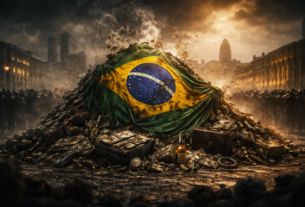
From Brazil to parts of Africa and Asia, critics pointed out that the liberal path is neither inevitable nor universally desirable. As Forigo and others noted, history’s arc looks different when seen from countries with colonial legacies, military dictatorships, or economic exclusion. The assumption that liberal democracy would simply spread and stabilize global politics ignored the particularities of culture, trauma, and power.
Another enduring critique is that Fukuyama underestimated inequality. Several academic reviews stressed that equating material abundance with democratic stability is dangerous. The late 20th and early 21st centuries show how economic liberalization can produce acute inequality, fueling populism, polarization, and social unrest. In many places the “last man” is not complacent, but resentful, and that anger can be harnessed by illiberal movements.
Did history end, or simply change chapters?
The central paradox of the book’s legacy is this: some of Fukuyama’s psychological and cultural diagnoses proved insightful, while the political certainty he described did not. Observers now point to the financial crisis of 2008, the rise of populist movements, democratic backsliding in established democracies, and the consolidation of authoritarian capitalism in places like China, as evidence that history did not close.
Tom Stafford captures the divide precisely, noting the difference between two readings of Fukuyama’s claim. He writes that the “weak version” of Fukuyama’s thesis, the idea that history has a general direction toward certain values, is defensible. By contrast, Stafford says the “strong version,” the claim that liberal democracy is the final destination, looks increasingly untenable.
That assessment helps explain why the book still matters. It is not a pristine prophecy, but a framework that foregrounded recognition, identity, and the psychological energy that drives politics. Many contemporary conflicts, from identity-driven culture wars to the resurgence of national myths, can be read through the lens of thymos. Fukuyama’s focus on dignity anticipated debates about identity politics, status competition, and the need for meaningful civic projects.
The last man, boredom, and the hunger for conflict
Across reviews, the figure of the “last man” and the idea of “post-historical boredom” recur. Critics such as Rafael Lopes Paixão, Hanen Sarkis Kanaan, and Maria Rita Guercio all emphasize that peace and comfort do not automatically secure human flourishing. Wealth can leave a moral void, and when people lack sources of recognition and sacrifice, they may gravitate toward tribalism, radical ideologies, or mythic politics.
That dynamic helps explain puzzling trends in established democracies, where voters sometimes support leaders who dismantle liberal norms, even at economic cost. The search for meaning and status can outweigh material comfort when institutions fail to offer a sense of worth and belonging.
Why the book is still a touchstone
After thirty years, The End of History and the Last Man reads less like a final verdict, and more like a provocation. It forced scholars and readers to confront what liberal democracy does and does not provide. The book exposed Western intellectual hubris, prompted debates about global inequality and cultural difference, and made recognition a central category for political analysis.
Fukuyama himself has adjusted his view over time, acknowledging the resilience of authoritarian models, and the limits of liberal democracy. Critics have sharpened the argument by pointing to Eurocentrism, inequality, and civilizational diversity, without discarding the book’s insight that human beings seek dignity, not just material goods.
In an era of intense technological change, rising authoritarian influence, and renewed identity politics, the questions Fukuyama posed remain urgent. What do societies owe their citizens beyond prosperity, and what gives life meaning in stable, affluent societies? As readers and policymakers wrestle with those problems, The End of History and the Last Man endures as a reference point, a diagnosis, and a prompt to ask whether we have written a sequel worth reading.
The book’s claim that history had reached an endpoint was never an uncontested fact, but it did mark a historical mood. Three decades on, its insights into recognition and its blind spots about inequality and culture both matter. History did not end, and perhaps Fukuyama never intended to suggest it had. Instead, he opened a conversation that continues to define how we think about democracy, dignity, and the unfinished work of modern political life.