Unveiling the Assyrian Wars of Expansion: 911-609 B.C. Conquest, Power, and Empire
The Neo-Assyrian Empire, flourishing from 911 to 609 B.C., stands as a testament to one of history’s most formidable and systematic military powers. From its Mesopotamian heartland, Assyria’s reach extended across the Levant, Anatolia, and even into Egypt. This vast dominion was not merely a product of brute force, but a sophisticated blend of military innovation, ruthless strategy, and meticulous administration. The Assyrian Wars of Expansion fundamentally reshaped the ancient Near East, leaving an indelible mark on political structures and cultural landscapes.
The Genesis of Neo-Assyrian Dominance
The resurgence of Assyrian power began with King Adad-nirari II (911–891 B.C.), who skillfully reasserted authority over Mesopotamia after a period of instability. His initial campaigns against neighboring Aramean city-states laid the groundwork for what would become a sprawling empire. This early phase established the core components of Assyrian military success: a highly organized military apparatus, a centralized administrative system, and the strategic implementation of vassalage. Assyria’s military innovations, including the deployment of a professional infantry, swift chariot units, and advanced siege engines, proved instrumental in overpowering smaller kingdoms and absorbing their valuable resources. These campaigns were not mere raids, but calculated endeavors aimed at securing vital trade routes, acquiring essential resources, and neutralizing potential threats to Assyrian hegemony.
Divine Mandate and the Ideology of Conquest
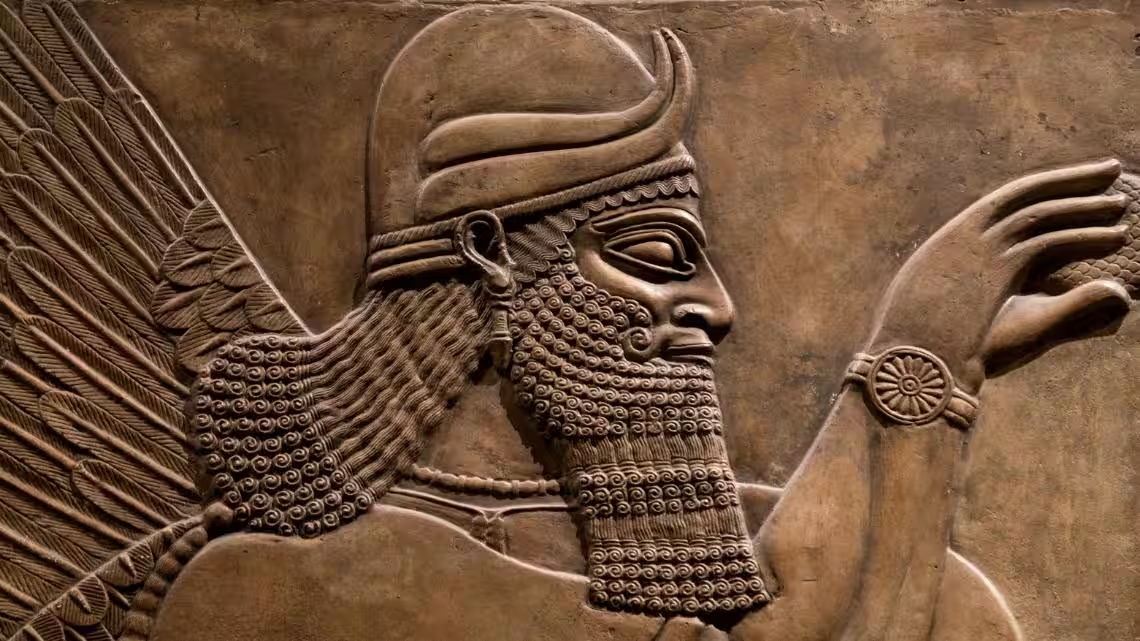
A crucial element of the Assyrian approach was the framing of their wars as divinely sanctioned missions. Assyrian kings consistently portrayed themselves, through inscriptions and monumental reliefs, as chosen by the god Ashur to punish transgressors and expand the empire’s borders. This powerful ideology, reinforced by religious rituals, ceremonies, and pervasive propaganda, served to legitimize violence as a sacred and moral duty. Kings like Shalmaneser III masterfully employed both military might and extensive inscriptions to convey the inevitability of Assyrian victory, using this ideological framing not only to justify conquest but also as a potent psychological weapon to intimidate both external enemies and internal dissenters within the empire.
Military Prowess and Strategic Acumen
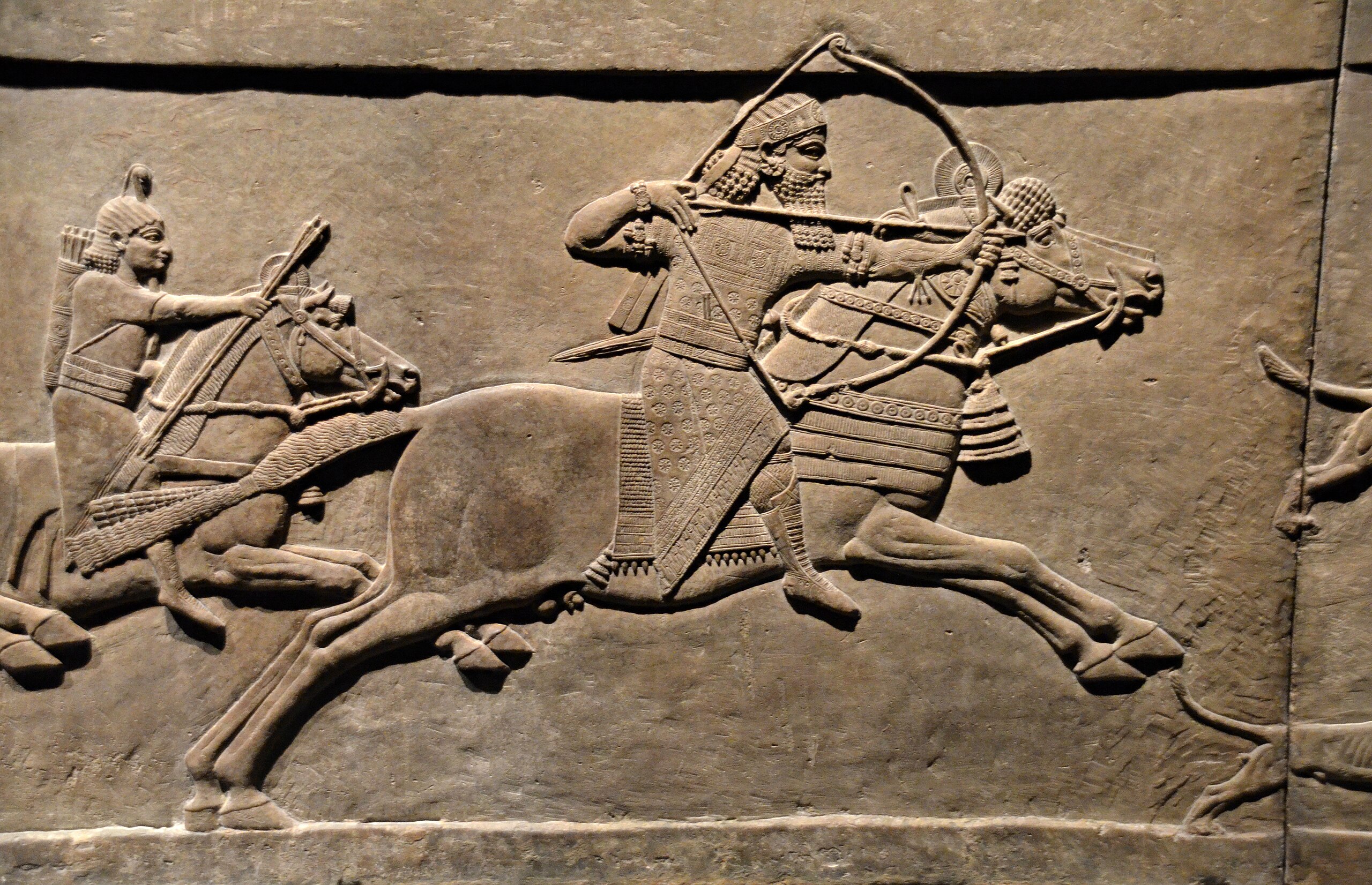
The Assyrian military machine was characterized by its exceptional organization and strategic brilliance. Their armies were a formidable combination of highly trained infantry, armed with spears, swords, and shields, and agile chariot units that provided crucial mobility and battlefield shock. Furthermore, Assyrians developed and deployed sophisticated siege technology, including battering rams and towering siege engines, to overcome even the most fortified cities. Assyrian campaigns often involved complex, coordinated maneuvers, seamlessly blending frontal assaults with flanking attacks. Psychological intimidation, including mass executions and public displays of conquered peoples, was a deliberate tactic to instill fear and discourage resistance. Logistics were managed with meticulous care, ensuring that supply lines, the transport of heavy siege equipment, and timely reinforcements allowed for sustained military operations far from the Assyrian heartland.
Westward Expansion and Control of the Levant
From the 9th century B.C. onwards, Assyria aggressively expanded westward into the strategically vital regions of Syria, Israel, and Judah. The campaigns led by Tiglath-Pileser III (745–727 B.C.) proved particularly transformative. By skillfully exploiting the political fragmentation and rivalries among local kingdoms, Assyria imposed vassalage on states like Aram-Damascus and Israel, effectively controlling key trade routes and extracting substantial tribute. The Assyrian strategy was a calculated blend of direct military force and shrewd diplomacy, often allowing local rulers to remain in power under strict Assyrian oversight. However, any sign of resistance was met with swift and brutal responses, including devastating sieges, mass deportations, and harsh executions, demonstrating a calculated balance between punishment and administrative efficiency.
Conquering the North: Anatolia and Urartu
Assyria also directed its expansionist ambitions northward, pushing into Anatolia and the powerful kingdom of Urartu. These regions held significant strategic importance due to their control over crucial trade networks and rich mineral resources. The campaigns in these northern territories were notoriously brutal and methodical. Historical records vividly describe the systematic destruction of fortresses, the forced deportation of entire populations, and the imposition of heavy tribute. This consistent pattern of subjugation, resource acquisition, and territorial integration solidified Assyria’s geopolitical influence, ensuring that no rival power could effectively challenge its dominance in Mesopotamia or the Levant. These northern campaigns underscore Assyria’s sophisticated understanding of geography, logistics, and the projection of overwhelming military power.
Psychological Warfare and the Power of Deportation
Assyrian military policy extended far beyond mere physical conquest, incorporating psychological warfare as a central tenet. Reliefs found in the great Assyrian capitals, such as Nineveh and Kalhu, graphically depict terror tactics, including impalement, flaying, and the public parading of captives. These acts were not random acts of cruelty but deliberate strategies designed to instill terror, deter future rebellion, and unequivocally communicate Assyrian supremacy throughout the vast empire. Deportations played an equally critical role in Assyrian imperial strategy. By forcibly relocating conquered populations, Assyrians deliberately mixed ethnic groups, significantly reducing the likelihood of organized revolts. These forced migrations also served to populate underdeveloped regions of the empire, ensuring loyalty and facilitating cultural assimilation into the broader Assyrian framework.
Rivalries with Babylonia and Elam
Assyria’s relentless expansion inevitably led to prolonged and strategically complex conflicts with the powerful states of Babylonia and Elam to the south and east. These campaigns involved intricate river crossings, coordinated assaults, and devastating sieges. The capture of Babylon itself under Sennacherib (705–681 B.C.) exemplifies the extreme measures Assyria was willing to take to assert absolute control, while simultaneously working to incorporate local religious and political structures to stabilize governance. These monumental efforts required not only immense military might but also significant diplomatic skill and administrative acumen, highlighting the Assyrian capacity to consolidate power over culturally diverse and deeply entrenched regions. These conflicts showcase the dual approach of overwhelming force coupled with strategic integration that defined Assyrian imperialism.
The Administrative Backbone of Empire
The remarkable military successes of the Neo-Assyrian Empire were inextricably linked to its robust and sophisticated administrative institutions. Provincial governors, known as *šaknu*, were appointed to manage conquered territories, efficiently collect tribute, and provide regular reports to the central Assyrian authority. An extensive network of roads and communication systems facilitated the rapid movement of troops and information across vast distances. A standardized system of taxation ensured a consistent and substantial flow of resources to fuel the empire’s military campaigns and administrative needs. These well-developed governance structures were the institutional backbone that enabled the Assyrian state to sustain prolonged military campaigns and maintain effective control over its distant provinces, proving that military victories alone were insufficient without this sophisticated administrative framework.
Lasting Cultural and Psychological Impact
The Assyrian Wars of Expansion left a profound and lasting imprint on the societies they conquered. Biblical texts, such as the narratives detailing the fall of Israel and Judah, vividly recount the Assyrians’ brutal deportations, heavy tributes, and relentless military campaigns, reflecting both the terror and the efficiency of their rule. Artistic depictions, monumental inscriptions, and grand reliefs further served to reinforce the memory of Assyrian power, projecting an image of divine sanction and unshakeable invincibility. This cultural and psychological dominance was as critical to maintaining the empire as any military victory, establishing a legacy of fear and respect that helped sustain Assyrian rule across multiple generations.
The Inevitable Decline and Enduring Lessons
Despite their extraordinary military and administrative achievements, the Neo-Assyrian Empire ultimately succumbed by 609 B.C. This decline was precipitated by a confluence of factors, including internal strife, the immense strain of overextension, and coordinated assaults from a coalition of Babylonians, Medes, and other resentful regional powers. The fall of Assyria serves as a stark illustration of the inherent limits of imperial expansion. Even the most sophisticated military machine cannot indefinitely suppress widespread revolts or effectively absorb vast, distant territories without strategic flexibility and a sustainable imperial model. The Assyrian example offers enduring lessons in the dynamics of power projection, the crucial role of military innovation, and the complex integration of conquest with effective governance. These insights continue to illuminate the timeless complexities of warfare, statecraft, and the rise and fall of empires throughout human history.