The Enduring Legacy of Sargon of Akkad: Architect of the First Empire
In the ancient Near East, a region rich with city-states, bustling trade routes, and complex mythologies, one figure stands out with unparalleled significance: Sargon of Akkad. Ruling from roughly 2334 to 2279 BCE, Sargon is widely credited with establishing one of the world’s first true empires. His monumental achievement wasn’t solely built on military might, but on a sophisticated blend of political innovation, strategic use of religion, and administrative brilliance. Sargon’s conquests fundamentally reshaped Mesopotamia, bringing diverse city-states under a single, centralized rule and setting a precedent for imperial governance that would echo for centuries.
The era of Sargon of Akkad marks a critical turning point in human history, signaling the shift from fragmented, independent city-states to a unified, multi-regional empire. By examining his groundbreaking campaigns, the organization of his formidable army, and his innovative administrative approaches, we gain invaluable insights into how early rulers effectively wielded military force, ideological narratives, and diplomatic maneuvers to construct lasting political structures.
The Fragmented Landscape Before Sargon
Prior to Sargon’s rise, southern Mesopotamia was characterized by a mosaic of independent Sumerian city-states, including prominent centers like Ur, Uruk, Lagash, and Kish. Each city was governed by its own ruler, known as an ensi, and maintained stability through agricultural output, trade, and religious authority. While these cities shared a common culture, including the cuneiform writing system, temple-based economies, and a pantheon of gods, political unity was a rare commodity.
Archaeological findings and ancient texts reveal a history of frequent conflicts, often driven by competition for vital resources such as water and arable land, as well as disputes over trade routes. These intercity wars, fueled by scarcity, dynastic rivalries, or territorial ambitions, created a volatile environment where a charismatic and militarily gifted leader like Sargon could emerge and seize power. Legend, whether factual or propagandistic, often portrays Sargon as a ruler of humble origins, emphasizing his self-made ascent through sheer military and political talent, elevating him from obscurity to an unprecedented level of power.
Sargon’s Rise and the Dawn of Imperial Conquest
Sargon’s ascent to power in Akkad, a region in central Mesopotamia, heralded an era of remarkable military and political expansion. Historical sources suggest that Sargon established a professional standing army, a radical innovation for its time. Unlike the ad-hoc city militias of earlier periods, his forces were highly organized, disciplined, and directly loyal to the central authority, enabling swift and coordinated attacks against rival city-states.
His initial campaigns were focused on consolidating control over southern Sumer, subduing rebellious cities, and integrating them into his burgeoning administrative network. The conquests of major cities like Uruk and Ur were particularly significant, as these were not merely captured but incorporated into a larger political framework. Often, local rulers were retained as vassals under Sargon’s overarching authority.
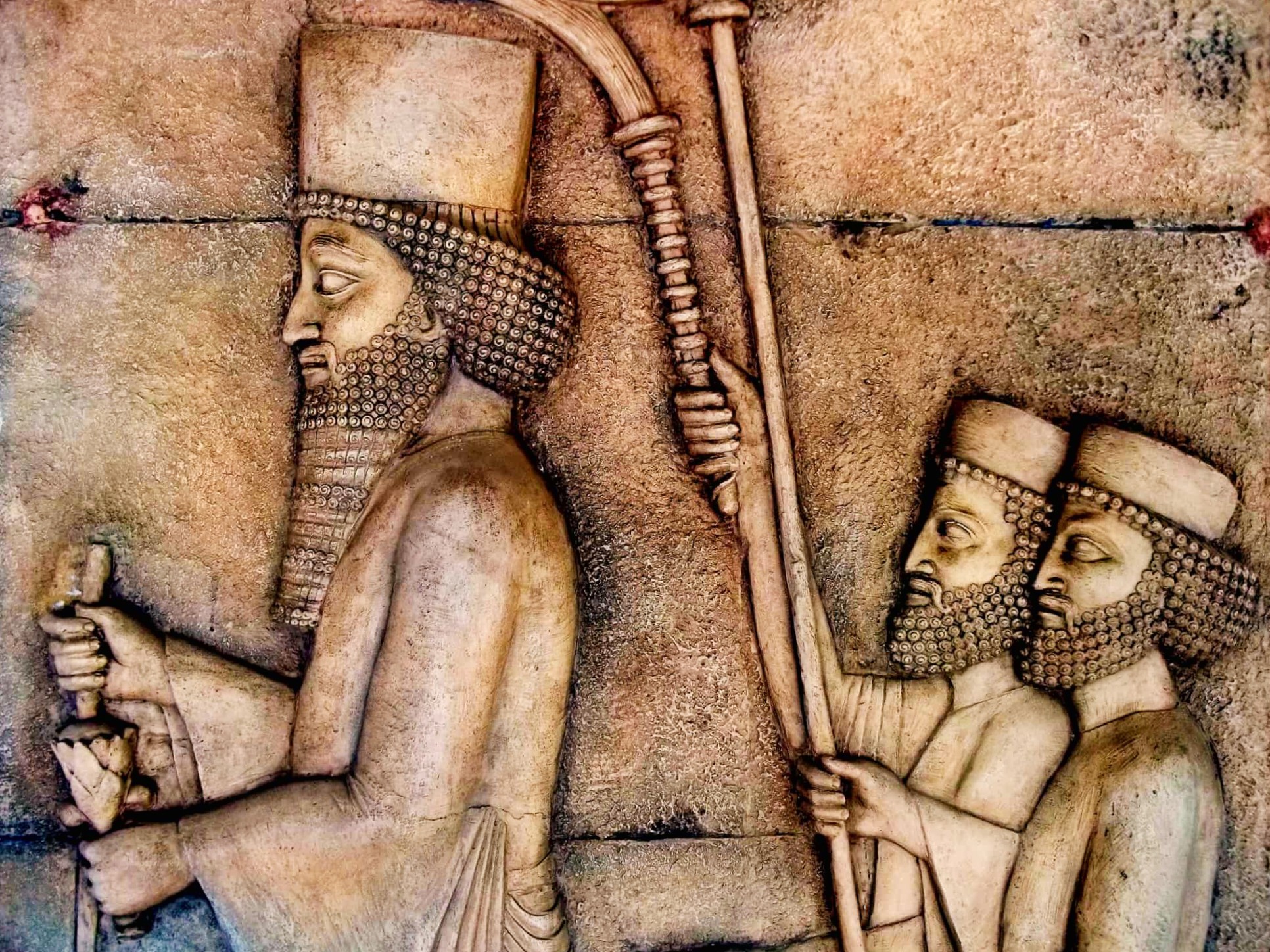
Sargon’s military strategy was characterized by its adaptability, skillfully combining direct confrontation, siege warfare, and diplomatic incentives. Accounts suggest he favored rapid, decisive campaigns to minimize prolonged resistance, a hallmark of effective imperial expansion. Inscriptions on clay tablets and iconographic evidence vividly depict his victories, illustrating armies on the march, cities falling, and enemies subdued, blending historical reporting with powerful propaganda.
Expanding Horizons: Campaigns Beyond Sumer
With southern Mesopotamia pacified, Sargon directed his attention towards the northern and eastern regions, extending Akkadian influence over areas like Akkad itself, Mari, and Elam. These campaigns were not merely about territorial gain, but also strategically crucial for securing vital trade routes, river crossings, and access to essential resources such as timber and metal ores.
Sargon’s inscriptions and later literary accounts describe campaigns that stretched hundreds of miles, indicating a sophisticated logistical capability. This required meticulous planning of supply lines, troop movements, and the establishment of local governance in conquered territories. Scholars note that such long-range military operations necessitated the development of intelligence networks and standardized military procedures, laying the groundwork for the administrative structures found in later empires.
Furthermore, Sargon’s eastern campaigns likely served a dual purpose of punishment and deterrence. By projecting Akkadian power into distant lands, he aimed to minimize the risk of future rebellions and firmly establish the Akkadian state as the dominant political force in the region. This emphasis on both physical conquest and symbolic submission highlights the multifaceted nature of Mesopotamian warfare, encompassing practical control and ideological assertion.
Ideology, Kingship, and Divine Legitimacy
Sargon’s military campaigns were intrinsically linked to a powerful ideological narrative. Later texts, such as the “Legend of Sargon,” portray him as divinely sanctioned, suggesting that his authority stemmed from both earthly and sacred sources. His association with prominent deities like Enlil and Ishtar served to bolster his legitimacy and justify the subjugation of other city-states.
Evidence indicates that Sargon and his successors skillfully integrated the religious institutions of conquered cities into the imperial framework. This approach allowed local traditions to persist while simultaneously reinforcing loyalty to the Akkadian king. Such a strategy not only ensured administrative control but also helped to mitigate resistance, demonstrating an early and sophisticated understanding of the interplay between ideology and governance. Religious symbolism was also a potent tool during military campaigns, with victory stelae and inscriptions often depicting divine endorsement of Sargon’s actions, transforming acts of war into manifestations of a divinely ordained cosmic order. By intertwining religious legitimacy with military success, Sargon established a powerful precedent for future Mesopotamian rulers, who would continue to present conquest as a divinely mandated undertaking.
Military Innovations and the Akkadian Army
The army assembled by Sargon of Akkad was remarkable for its professionalism and cohesive organization. Several key innovations stand out from the historical record:
- Standing Armies: Soldiers were permanently organized and under royal command, rather than being conscripted only for specific campaigns.
- Hierarchical Structure: A clear chain of command, with commanders, officers, and specialized units, allowed for strategic deployment and efficient communication.
- Siege Tactics and Logistics: Evidence of planned assaults on fortified cities points to advancements in both military engineering and the provisioning of troops.
- Propaganda Through Warfare: Inscriptions and visual depictions served not only to intimidate enemies but also to reinforce loyalty among his own populace.
By centralizing military power, Sargon could effectively enforce his authority across vast distances, maintain order in conquered territories, and establish an enduring administrative network essential for revenue collection and territorial stability. These advancements clearly distinguished the Akkadian Empire from previous coalitions of city-states and provided the foundation for sustained expansion.
Governing a Vast Empire
Conquest, while crucial, was only the first step in building and sustaining an empire. Sargon implemented a sophisticated administrative system that balanced centralized authority with effective local governance. Key components of this system included:
- Appointment of Loyal Governors: Vassals and officials loyal to Akkad were strategically placed in key cities throughout the empire.
- Tributary Arrangements: Conquered cities were obligated to provide resources, labor, and military support to the central government.
- Standardized Communication: The widespread use of cuneiform and trained scribes ensured efficient record-keeping and administrative communication across the empire.
- Cultural Integration: Religious and cultural practices were often co-opted into the imperial ideology, helping to reduce friction and foster a sense of unity.
This strategic blend of coercion, incentive, and administrative oversight enabled Sargon to maintain cohesion across a diverse, multi-ethnic empire. Historians emphasize that without such comprehensive integration, the empire would have been vulnerable to rebellion and fragmentation, a pattern observed in many later imperial systems throughout history.
Facing Constant Challenges and Rebellions
Despite his remarkable successes, Sargon of Akkad faced continuous resistance and numerous challenges throughout his reign. Textual evidence points to urban uprisings, ongoing border conflicts, and persistent opposition from neighboring states. His campaigns against the Elamites, Gutians, and various Mesopotamian cities underscore the fact that empire-building was a constant and demanding struggle.
The available sources suggest that Sargon effectively countered rebellion through a combination of swift military suppression, strategic marriage alliances to forge political ties, and a robust propaganda machine. His ability to rapidly quell internal revolts while simultaneously conducting military campaigns on multiple fronts demonstrates the sophisticated integration of his military, political, and ideological strategies. The persistent threat of revolt highlights a fundamental characteristic of early empires: maintaining control required continuous vigilance, remarkable adaptability, and a skillful application of both force and persuasion.
The Lasting Impact of Sargon’s Reign
Sargon’s military campaigns and state-building efforts left an indelible mark on history, with several enduring consequences:
- Creation of the First Empire: Sargon’s consolidation of previously independent Mesopotamian city-states into a unified political entity was an unprecedented achievement.
- Foundation of Centralized Bureaucracy: His administrative innovations facilitated the efficient collection of tribute, management of labor, and maintenance of vital infrastructure across the empire.
- Model of Divine Kingship: Sargon’s successful fusion of military prowess with religious legitimacy profoundly influenced subsequent Mesopotamian rulers.
- Cultural Unification: The integration of diverse religious, linguistic, and cultural practices helped to foster a more cohesive imperial identity.
- Military Precedent: The Akkadian use of standing armies, sophisticated logistics, and coordinated campaigns set a crucial model for later empires in the region and beyond.
Sargon’s reign powerfully demonstrated that empire-building was far more than mere territorial conquest. It was a complex and dynamic fusion of military strategy, effective administration, and compelling ideology—a lesson that continues to resonate through history, from ancient Mesopotamia to the modern era. His legacy is a testament to the power of vision and organization in shaping human civilization.
Conclusion: Sargon’s Enduring Blueprint for Empire
The campaigns and achievements of Sargon of Akkad represent a truly formative chapter in the grand narrative of human civilization. They vividly illustrate how a single, determined leader could transform a landscape of fragmented city-states into a cohesive, multi-regional empire. This transformation was driven by a potent combination of military innovation, shrewd political maneuvering, the strategic use of religious legitimacy, and remarkable administrative foresight.
Sargon’s ability to integrate diverse peoples, maintain control over distant territories, and codify his authority through both written records and enduring symbols marks him as a visionary architect of early statehood. Through his transformative campaigns, Sargon not only redrew the political map of Mesopotamia but also established enduring patterns of empire-building, governance, and propaganda that would influence subsequent civilizations for millennia. His legacy serves as a powerful reminder that the rise of complex societies depends not only on conquest but equally on the organization, ideology, and integration that sustain human communities across generations. Studying Sargon of Akkad offers a profound glimpse into the origins of political centralization, military sophistication, and imperial ambition—fundamental elements that continue to shape the world we inhabit today.