Alexander the Great: Architect of a New World
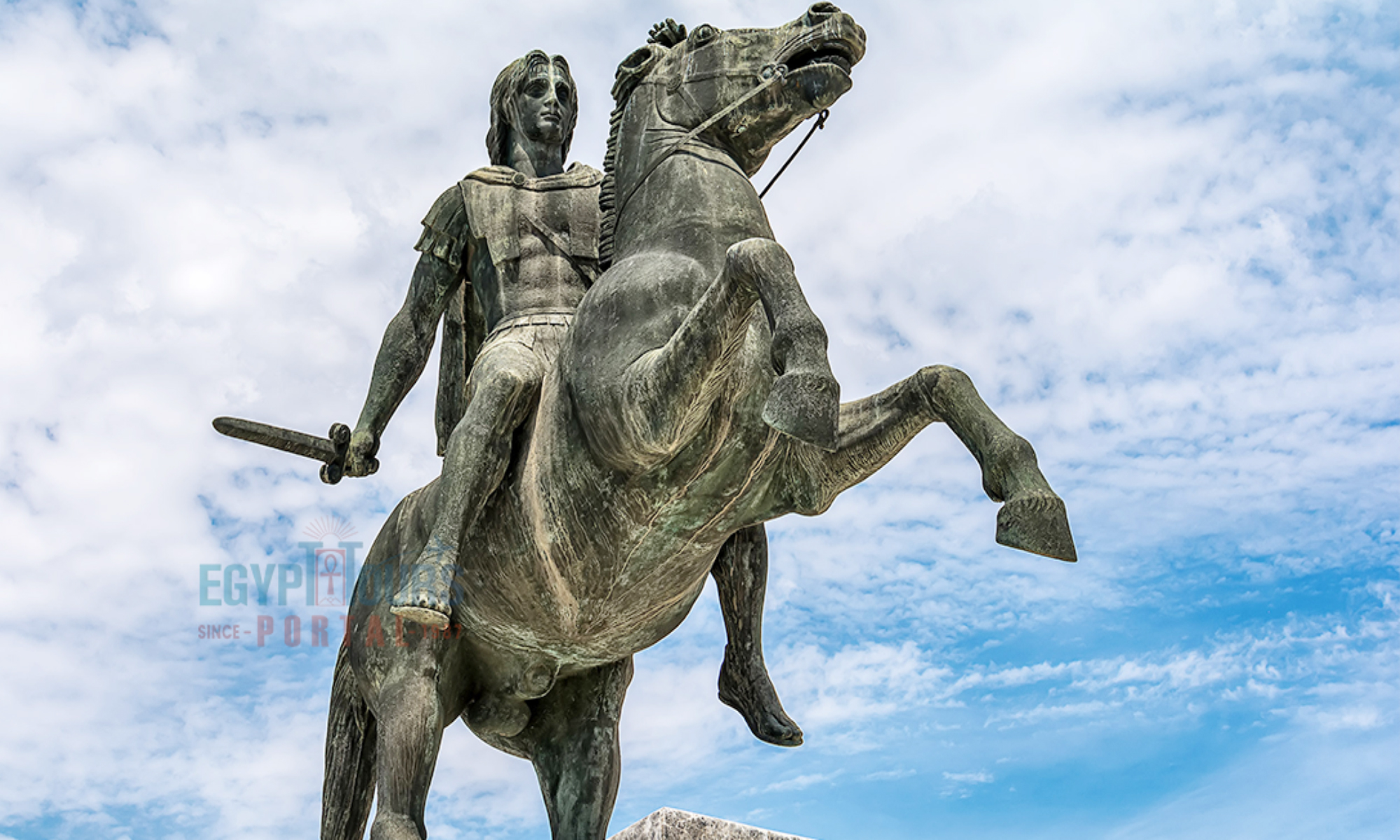
Alexander the Great, born Alexander III of Macedon, remains one of history’s most captivating figures. Between 336 and 323 B.C., he didn’t just conquer; he engineered an empire that spanned from Greece through Egypt, Persia, and into the very edges of India. His lasting impact, however, transcends mere military might. It’s a profound narrative of **cultural fusion**, **urban innovation**, **political transformation**, and persistent **resistance**.
The Vision Behind the Conquests
Alexander’s campaigns were fueled by a grand vision. Supported by Macedonia’s internal stability and a firm grasp on Greek dominance, his imperial ambitions took flight. The formidable Macedonian phalanx, coupled with his exceptional tactical brilliance, secured swift victories. Yet, as Waldemar Heckel’s study, In the Path of Conquest, emphasizes, Alexander’s interactions with conquered peoples were far from uniform. He navigated a complex landscape, employing not just force, but also **negotiation and incorporation**.
The political environment Alexander inherited was deeply divided, particularly among the Greek city-states like Athens, Thebes, and Sparta. This disunity made them vulnerable, and Heckel notes that Alexander masterfully exploited these divisions, employing a political strategy akin to “divide and conquer.”
Resistance, Adaptation, and the Nuances of Power
Resistance was not a minor detail in Alexander’s story; it was a central theme. Heckel’s research highlights the perspectives of those who were conquered. In many regions, populations didn’t simply surrender. They actively negotiated, rebelled, and found ways to preserve or adapt their traditions. Raúl Navas‑Moreno’s review of Heckel’s work points out that the intensity of resistance varied greatly, influenced by local factors such as prior relationships with the Persians, regional political structures, and even geography.
Furthermore, excessive force often proved counterproductive. Heckel argues that a blend of **coercion and accommodation** was far more effective than brute force alone. This approach reveals Alexander not merely as a conqueror, but as a sophisticated architect of a multi-ethnic empire.
Forging a Hellenistic World: Cultural Integration
One of Alexander’s most significant achievements was the deliberate **fusion of Greek and Eastern cultures**. Instead of imposing Hellenic norms, he embraced Persian attire, respected local customs, and actively encouraged intermarriage. A prime example is the mass wedding in Susa in 324 B.C., where many of his officers married Persian noblewomen. This cultural hybridity was the bedrock of the **Hellenistic world**, a new globalized civilization where Greek language, art, philosophy, and social structures intertwined with local traditions.
Across his vast empire, Greek-speaking cities, known as poleis, emerged as vibrant hubs of cross-cultural exchange. These urban centers were more than just administrative outposts; they became crucibles for cultural synthesis, laying the foundation for a new era.
Urban Design as Symbolism and Divine Kingship
Alexander’s legacy is etched in the very stones of the cities he founded, with Alexandria in Egypt standing as a prime example. According to Luisa Ferro and Giulio Magli, the urban plan of Alexandria was deeply symbolic. Its main axis, the Canopic Road, was meticulously aligned with the rising sun on the day of Alexander’s birth. Archaeoastronomical evidence suggests that the “King’s Star,” Regulus in the constellation Leo, also rose along this axis at the time of the city’s founding.
This deliberate design transcended mere urban planning, serving as a powerful symbol of Alexander’s **divine kingship**. The city itself became a monument, positioning him not just as a ruler, but as a cosmic figure whose reign was divinely ordained. This model of “king’s town” was replicated in other Hellenistic cities, embedding his divine legacy into the fabric of urban life.
The Evolving Polis and Political Culture
In classical Greece, the polis signified local autonomy and civic freedom. However, Alexander’s empire challenged these traditional notions. Scholarship on Hellenistic political culture reveals how Greek cities adapted to the presence of monarchy. Concepts like eleutheria (freedom) and autonomia (self-rule) did not disappear but evolved. Shane Wallace’s research indicates that these ideals became flexible tools used by city elites to negotiate with kings.
In this new, centralized yet culturally Greek world, city-states maintained certain civic traditions while accepting monarchical rule. Hellenistic monarchs skillfully granted limited autonomy, preserving the symbolic importance of the polis while simultaneously consolidating their own power.
Memory, Legitimacy, and the Fragile Empire
Alexander the Great understood that building an empire required more than just conquest; it demanded legitimacy rooted in memory, ritual, and future projection. After his death in 323 B.C., his empire fractured, but his ideological influence endured. The ways in which Alexander was remembered—through monuments, festivals, and inscriptions—provided a crucial foundation for the legitimacy of the successor dynasties, the Diadochi.
These successors drew upon Alexander’s memory to claim divine favor, lineage, or continuity. Cities across his former domains honored him through rituals, urban planning, and royal propaganda. The alignment of Alexandria serves as a potent example of how spatial and symbolic memory was strategically employed for political ends.
Despite its vast reach and cultural sophistication, Alexander’s empire proved inherently fragile. His death exposed deep fissures. Heckel’s epilogue highlights that his success was heavily reliant on personal authority and a lack of a robust succession plan. The ensuing rivalries among his generals tore his realm apart, with each successor vying for legitimacy through military might or ideological inheritance.
The Enduring Global Legacy of Alexander the Great
Ultimately, **Alexander the Great’s** most profound legacy may not be his military victories, but his role as a catalyst for **globalization** in the ancient world. By founding cities, fostering mixed elites, and promoting cultural exchange, he paved the way for a Hellenistic world where knowledge, religion, and commerce flowed seamlessly across continents.
The development of Koine Greek as a lingua franca facilitated communication, scholarship, and trade throughout the eastern Mediterranean and Near East. These Hellenistic networks proved vital for transmitting ideas in science, philosophy, and religion. Alexander’s empire acted as a bridge between East and West, setting the stage for subsequent imperial systems, including the Roman Empire and the spread of Christianity.
Alexander the Great was more than a conqueror; he was a visionary who shaped a radically new world. His campaigns were formidable, but his true enduring legacy lies in his ability to weave diverse cultures into a single, albeit fragile, tapestry. Through strategic action, cultural integration, city-building, and symbolic design, he reshaped the ancient world and ushered in the Hellenistic age. The resistance he encountered, both before, during, and after his reign, serves as a powerful reminder that empire-building is a process of constant negotiation, not absolute domination.