How oil, ideology, and new intelligence from Hugo “El Pollo” Carvajal could push Washington and Caracas toward a dangerous confrontation.
The rivalry between the United States and Venezuela has evolved from diplomatic friction into an ideological standoff that now risks becoming a regional crisis. Almost two decades after Hugo Chávez transformed Venezuelan politics, the country remains at the center of a geopolitical contest, with Moscow, Beijing, and Tehran deepening ties to Caracas, and Washington recalibrating pressure and influence. In recent reporting, one name has resurfaced as a possible game changer, Hugo “El Pollo” Carvajal, and his potential cooperation with U.S. prosecutors has reignited speculation about a tougher U.S. posture.
Roots of the confrontation, oil, and the legacy of Chavismo
Venezuela’s modern conflict with the United States is rooted in history, oil, and ideology. For most of the 20th century, the country was a close U.S. ally, funneling crude to American refineries while enjoying political and economic cooperation. That relationship changed sharply when Chávez took office in 1999 and launched his Bolivarian Revolution, framing decades of perceived foreign exploitation as a call for sovereignty. Chávez’s rhetoric, which mixed nationalism and Marxist themes, polarized Venezuelan society and positioned Caracas as an ideological challenger to Washington.
Under Chávez, and later Nicolás Maduro, the state redirected oil revenues to social programs and political projects, while cultivating partnerships with Cuba, Russia, China, and Iran. The result was a transformed Venezuela, one that for supporters represented liberation, and for critics, an increasingly authoritarian state. The country slipped into economic collapse and humanitarian emergency, what the sources describe as “one of the largest humanitarian crises in modern South American history.” That crisis underpins both regional instability and the hardline responses from foreign capitals.
The Carvajal factor, intelligence, and the tipping point
Hugo “El Pollo” Carvajal, the former Venezuelan military intelligence chief, has become the most discussed wildcard. Arrested in Spain and extradited to the United States, Carvajal is reported to be negotiating cooperation with U.S. prosecutors. Unconfirmed reports indicate he may possess detailed knowledge of money laundering, narcotics trafficking, and political financing linked to Venezuelan officials and allied movements across Latin America. If Carvajal’s testimony corroborates those claims, it could provide Washington with legal and political justifications for a much harder line, including covert operations aimed at dismantling networks described as a hemispheric criminal apparatus.
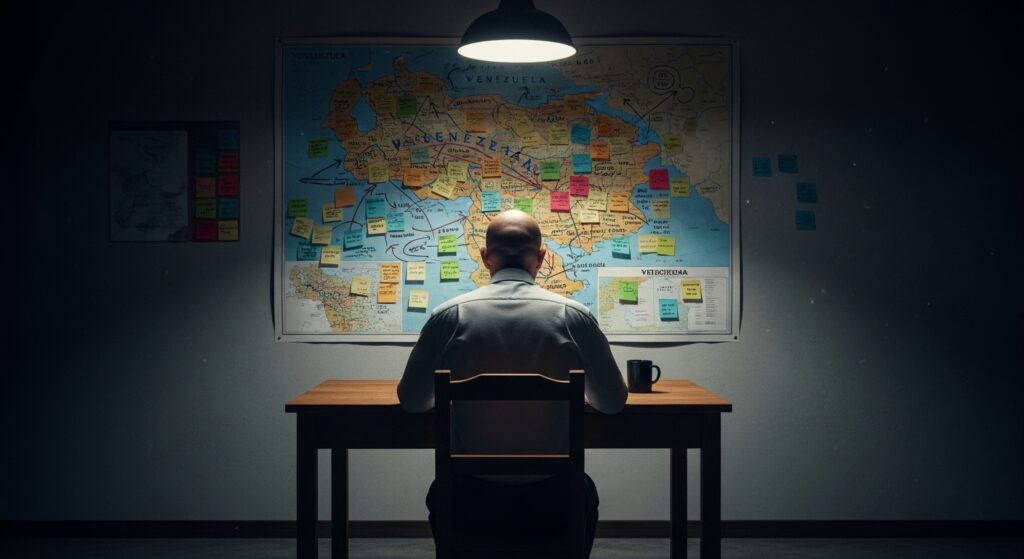
Intelligence circles now say Carvajal’s potential revelations could reshape strategic calculations. Moscow, Beijing, and Tehran already support Caracas with arms, investments, and political cover, and a U.S. move citing illicit networks could escalate the confrontation into a broader geopolitical clash. In the current environment, the terrain of conflict is not just military, it is legal and informational, and Carvajal’s files could be the spark for a new phase of pressure on Venezuela.
Possible scenarios, from limited strikes to protracted proxy wars
Analysts outline several possible trajectories, each carrying serious consequences for Venezuela and the wider region. The first, a limited intervention, would aim to cripple military command and capture key figures quickly, leveraging internal dissent within the armed forces. Such an operation could deliver short-term objectives, but would likely produce a humanitarian catastrophe and massive regional displacement.
A second scenario envisions a prolonged proxy conflict, where foreign mercenaries, militias, and regional proxies engage in asymmetric warfare under ideological banners. This outcome would resemble recent conflicts in Syria and Ukraine, with heavy human and political costs, and sustained international polarization.
The third possibility is a negotiated transition, where internal fractures in the Maduro government, combined with diplomatic pressure and targeted sanctions, open a path to a transitional administration under international supervision. While this is the most desirable outcome for many policymakers, it remains the least likely, given the cohesion the regime has maintained through military loyalty and foreign backing.
Whatever the path, the regional effects would be significant, creating refugee flows, economic shockwaves, and renewed anti-American sentiment across Latin America. The piece that brought these scenarios into focus warned that “The skies above Caracas grow heavier by the day,” a line that captures the sense of mounting peril and uncertainty.
Alliances, global stakes, and the risk of wider confrontation
Venezuela has strategically positioned itself as an irritant to the United States, hosting Russian military and technical support, Chinese investments secured against future oil deliveries, and increasingly visible interaction with Tehran. That trilateral relationship reframes Venezuela not as a failing state, but as a testing ground for multipolar resistance to U.S. influence.
Regional allies such as Cuba, Nicaragua, and Bolivia provide ideological sympathy and, in some cases, logistical coordination with Caracas. A direct U.S. military intervention would therefore not be a narrow, local operation, but a collision between global spheres of influence, with risks of escalation far beyond Venezuelan borders. The analysis cautioned that “it would represent not only a regional operation but a collision between global spheres of influence, the West and its authoritarian rivals.” This framing shows how an intervention in Venezuela could ripple across diplomatic, economic, and military arenas.
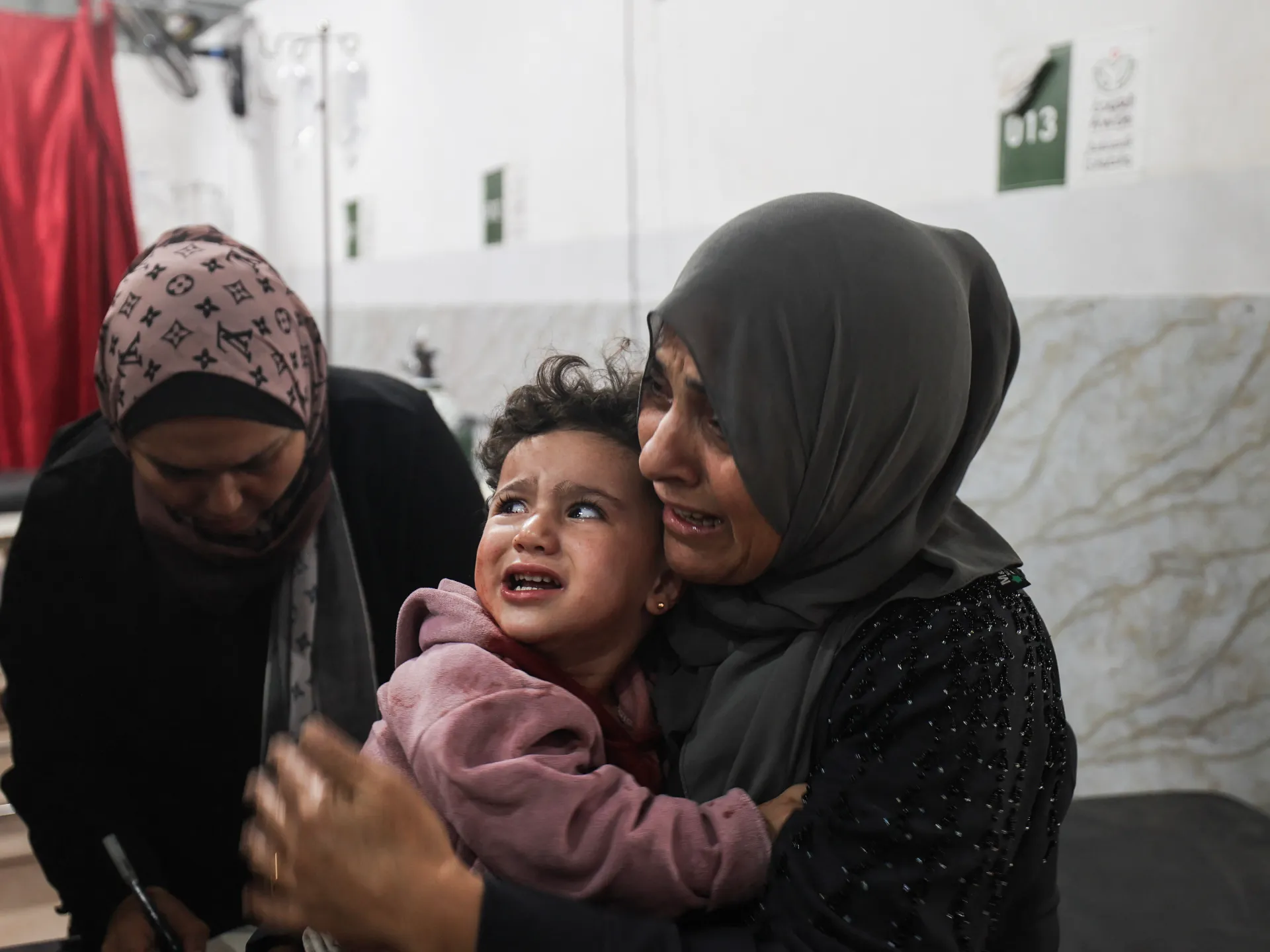
At the center of this geopolitical chessboard are millions of Venezuelans facing collapsing infrastructure, shortages, and displacement. International responses that focus solely on strategic objectives without addressing the humanitarian consequences risk deepening instability and eroding moral authority. As one sober line in the background reporting noted, “When empires and revolutions collide, the first casualty is truth.” That warning matters because information, narratives, and legal pretexts will shape public support for any action.
What comes next, choices for Washington and for the region
The United States now faces a calculus with no easy answers. Sanctions and diplomatic isolation have not toppled Maduro, and covert support for opposition figures has produced mixed results. If Carvajal’s testimony yields concrete evidence of transnational criminal activity tied to Venezuelan officials, Washington may feel compelled to escalate, even if only to preserve credibility with regional partners.
Policymakers must weigh the immediate gains of coercive measures against the long-term costs of regional destabilization. Any intervention, limited or expansive, would carry heavy humanitarian implications, and would likely sharpen ideological divides across Latin America. The most constructive path would combine credible legal action against illicit networks, multilateral diplomacy to build a coalition for transition, and robust humanitarian aid designed to stabilize civilian populations.
As pressures mount, the future of Venezuela will depend on the alignment of internal fractures, external incentives, and the choices of major powers. For now, observers are left with an urgent image, that “the skies above Caracas grow heavier by the day,” and a sobering reminder that if crisis deepens, the consequences will be felt from Bogotá to Brasília, and beyond. The coming months may determine whether the region avoids a full storm, or whether a new chapter of confrontation reshapes hemispheric politics for years to come.