How COMANDO VERMELHO emerged from dictatorship prisons to rule favelas, adopt insurgent tactics, and force a national debate on criminal groups as terrorist threats
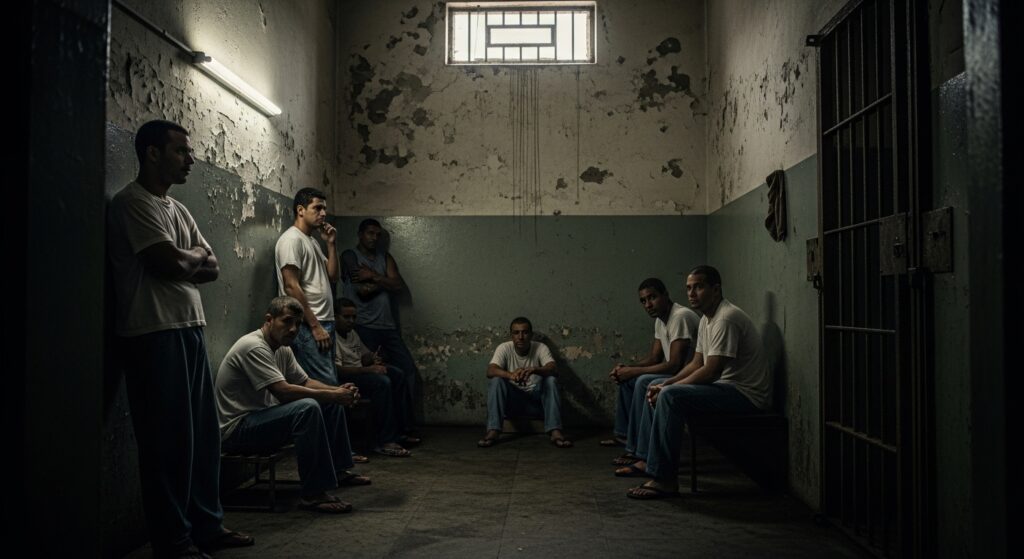
The story of COMANDO VERMELHO begins inside Brazil’s prisons during the country’s military dictatorship, a period that shaped both the organisation’s structure and its reach. In the 1970s, the regime mixed common criminals with political prisoners, left wing militants, and dissidents, creating an environment where survival bred cooperation. That experience, especially in places like Block B of Cândido Mendes on Ilha Grande, fused the militants’ discipline and solidarity with the street skills and violence of hardened criminals.
By 1979 the group left cells for streets, seizing the moment of a booming cocaine trade to expand into Rio de Janeiro’s favelas. Within a few years, by the mid 1980s, they had secured a major share of the city’s illicit drug market. From those beginnings, COMANDO VERMELHO evolved from a prison network into a sprawling criminal governance system, and the line between gang activity and insurgent behaviour began to blur.
Genesis: prisons, dictatorship, and the making of a movement
Under the military government, mixing political prisoners with common inmates produced unlikely alliances. Political militants brought ideas of organisation, secrecy, and mutual aid. Criminals brought practical knowledge of violence, trafficking, and street networks. The initial names varied, from “Falange Vermelha” to other monikers, before the label COMANDO VERMELHO became common.
Isolated prison cells functioned as incubators, but they also became command centres. Leaders who were incarcerated kept lines to crews outside, using coded systems and internal funds to maintain control. Over time the group institutionalised practices that turned prison-born solidarity into a blueprint for territorial control.
Expansion and the making of a favela government
When COMANDO VERMELHO moved into the favelas, it was not only trafficking drugs. The group layered criminal economics with social control. In many neighborhoods they distributed food, offered rough social services, and imposed their version of justice, operating as a parallel authority where the state was absent.
The organisation adopted guerrilla style tactics. Cells, compartmentalisation, and coded communication, honed in prison, were repurposed for urban conflict. The group also formed international ties, working with Colombian cartels and opening channels for drugs and weapons. Over time, CV expanded beyond Rio into other states, and developed trans state networks with regional reach.
When criminality looks like insurgency: tactics that terrify
As CV gained power, its methods escalated into forms of public terror. Reports and analysts point to extreme violence meant to intimidate civilians, brutal clashes with police, and public executions. The Global Initiative highlighted this pattern with a stark description, noting “bodies hanging from bridges; beheadings; violent control of territory”, features that push the group toward what some analysts call “terror adjacent” behaviour.
That kind of violent spectacle does more than enforce local control, it sends a message. It aims to shape behavior, silence rivals, and weaken public trust in state institutions. For many residents of the favelas, the reality is clear: when police presence is minimal, COMANDO VERMELHO often functions as the de facto power.
PCC, legal frameworks, and the debate over terrorist labels
The First Command of the Capital, known as PCC, followed a parallel path from São Paulo’s prisons in the early 1990s, adopting similar prison to street dynamics. Both groups share tactics, transnational networks, and extreme violence, raising the question, should they be treated as terrorist organisations?
Legal frameworks matter here. The U.S. criteria for designation are explicit. The Department of State defines a qualifying group as one that, “The group engages in violent acts or acts dangerous to human life that are intended to intimidate or coerce a civilian population, influence government policy, or affect the conduct of a government by mass destruction, assassination, kidnapping, or terrorism.” This wording focuses on violent intent to influence political outcomes, a core element in the definition of terrorism.
Applying that test to COMANDO VERMELHO and PCC reveals a tension. Both meet the violence and territorial control elements. They traffic drugs, launder money, and run cross border operations. Yet, critics note, their primary motivation appears to be profit and power rather than an articulated political ideology aimed at overthrowing the state. That ambiguity helps explain why formal terrorist labels remain rare.
Still, state actors have used other tools. For example, the U.S. Department of the Treasury sanctioned a PCC operative for laundering hundreds of millions of dollars, a move that shows how international financial measures are being used to disrupt criminal networks even without formal terrorism designations.
Why the debate matters, and what it implies for policy
How Brazil classifies groups like COMANDO VERMELHO shapes responses. If treated strictly as organised crime, responses emphasize policing, prosecutions, and criminal justice solutions. If considered insurgent or terrorist, governments may deploy national security measures, intelligence operations, and international counterterror frameworks. Each path has consequences.
Police heavy approaches can reduce short term violence, but without investment in governance and services, parallel powers tend to reemerge. Conversely, a securitized approach risks militarizing urban spaces and further eroding trust between citizens and the state. Analysts warn that hybrid strategies are necessary, combining law enforcement with social policy, local governance, and financial disruption.
There is also a regional dimension. As groups like COMANDO VERMELHO and PCC deepen transnational ties, they become part of a wider challenge involving drug cartels, arms flows, and money laundering, and that raises stakes beyond Brazil’s borders.
Today the question is urgent. The journey from cells on Ilha Grande to favela empires illustrates how criminal organisations can evolve into complex, adaptive forces that both govern and terrorize. Whether policymakers choose criminal justice tools, counterinsurgency measures, or a mix of both will determine how Brazilian cities, and the region, confront the next phase of urban violence.
COMANDO VERMELHO remains central to that debate, a symbol of how state neglect, prison policies, and lucrative illegal markets can combine to produce a power that terrifies communities and challenges national security alike.